The Return of a Master: Lee Chang-dong Unveils ‘Possible Love’ Ahead of Venice Premiere

After an eight-year hiatus that left the global cinephile community yearning for his distinct brand of poetic melancholy, acclaimed South Korean auteur Lee Chang-dong has finally broken his silence. Netflix has officially dropped the first trailer for Possible Love, the director’s highly anticipated follow-up to his 2018 masterpiece, Burning. As the film prepares for its grand unveiling at the 83rd Venice Film Festival next week, the industry is abuzz with the potential for yet another career-defining work from one of world cinema’s most meticulous storytellers.
The Long-Awaited Return: A Chronicle of Lee Chang-dong’s Hiatus
The trajectory of Lee Chang-dong’s career is marked by a deliberate, painstaking approach to filmmaking. Known for his sparse but incredibly dense filmography—including Green Fish, Peppermint Candy, Oasis, Secret Sunshine, and Poetry—Lee has rarely rushed his projects. However, the eight-year gap between Burning and Possible Love has been the longest in his professional life, leading to rampant speculation about the director’s future.
Following the international acclaim of Burning, which introduced Lee to a wider Western audience and cemented his status as a master of mystery and social commentary, Lee retreated from the spotlight. During this period, rumors circulated regarding various potential projects, but the director remained famously reclusive. The announcement of Possible Love earlier this year came as a sudden, welcome shock to the industry. With a screenplay co-written by Lee and Jungmi Oh, the film represents a return to the intimate, character-driven dramas that initially established his reputation as the "director’s director" of South Korean cinema.

The Narrative Core: Intertwined Lives and Uncomfortable Truths
At its heart, Possible Love is an exploration of the fragility of human connection. The story centers on the collision between two married couples whose lives are ostensibly separated by class, professional ambition, and personal history.
On one side are Mi-ok (played by the legendary Jeon Do-yeon) and her husband, Ho-seok (Sul Kyung-gu). Their life is one of quiet, post-industrial struggle; Ho-seok is a laid-off worker, and the couple’s daily existence is colored by the limitations of their socio-economic reality. On the other side are Ye-ji (Cho Yeo-jeong), an affluent documentary filmmaker, and her husband, Sang-woo (Zo In-sung).
The catalyst for their intersection is a funeral—a classic Lee Chang-dong trope where death acts as the bridge between disparate social worlds. Ye-ji, looking to document the plight of laid-off workers, enters Mi-ok’s orbit. What begins as a professional project quickly descends into a psychological labyrinth. As the two women grow closer, Mi-ok finds herself drawn to the enigmatic Sang-woo, creating an emotional geometry that threatens to shatter the existing structures of both marriages.

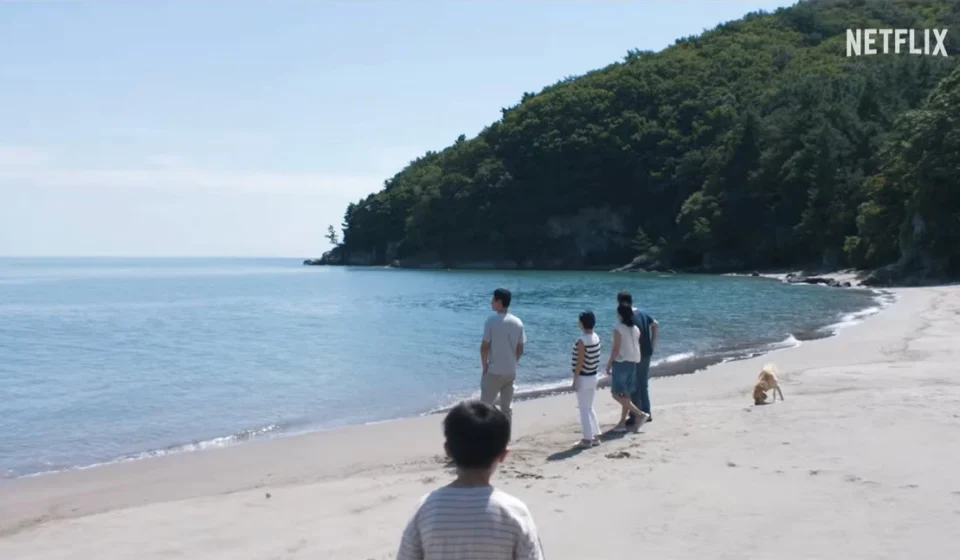
The trailer, while brief, hints at the signature visual style fans have come to expect: naturalistic lighting, long, contemplative takes, and an underlying sense of impending dread masked by the mundane. The final shots of the trailer, which have already sparked intense debate on social media, suggest a tonal shift—perhaps a lean into the surreal or the psychological thriller elements that made Burning so compelling.
The Cast: A Powerhouse of Korean Talent
One of the most exciting aspects of Possible Love is its ensemble cast, which reads like a "who’s who" of the South Korean acting elite.
- Jeon Do-yeon (Mi-ok): A powerhouse performer known for her Cannes-winning turn in Secret Sunshine, Jeon is arguably the most versatile actress in Korea. Her role as Mi-ok, a woman caught between her domestic reality and newfound desires, promises to be a masterclass in subtlety.
- Sul Kyung-gu (Ho-seok): A long-time collaborator with Lee Chang-dong, Sul’s partnership with the director dates back to Peppermint Candy. His ability to portray the weariness and dignity of the working class is unparalleled.
- Zo In-sung (Sang-woo): Known for his charismatic leading man roles, Zo’s casting as the "unreadable" husband suggests a performance that will likely peel back the layers of privilege and detachment inherent in his character’s affluent lifestyle.
- Cho Yeo-jeong (Ye-ji): Having gained international recognition for her role in Bong Joon-ho’s Parasite, Cho brings a contemporary edge to the cast, playing a character whose documentary lens serves as the audience’s entry point into the film’s emotional conflict.
Production and Global Distribution
The production of Possible Love was a massive undertaking, overseen by producers Lee Joon-dong, David Levine, and Chadwick Prichard. By partnering with Netflix, the film is positioned for an unprecedented global reach for a director of Lee’s stature.

The distribution strategy is as calculated as the film’s narrative. Following its world premiere at the 2026 Venice Film Festival, Netflix has scheduled a limited theatrical run in the United States beginning October 23rd, 2026. This "event cinema" approach is designed to cater to the cinephile demographic, allowing for the critical buzz to build before the film arrives on the streaming platform for a wider audience on November 6th. This hybrid model reflects the shifting landscape of high-art cinema, where prestigious festival films are increasingly finding their primary audience through digital platforms.
Implications for Contemporary World Cinema
The release of Possible Love arrives at a pivotal moment for South Korean cinema. In the wake of the "Hallyu" (Korean Wave) explosion that saw films like Parasite and series like Squid Game dominate global culture, Lee Chang-dong represents a different, more introspective tradition. While he shares the social critique common in much of contemporary Korean art, his work remains deeply rooted in the philosophical tradition of literature—Lee was a published novelist and Minister of Culture before he ever picked up a camera.
The implications of this film are twofold. First, it serves as a litmus test for the "prestige streamer" model. Can a film that is fundamentally an auteur-driven, slow-burn drama sustain the massive investment provided by a platform like Netflix? If Possible Love resonates with audiences as deeply as Burning did, it may pave the way for more high-risk, high-reward collaborations between streaming giants and established world-cinema auteurs.

Second, the film continues Lee’s long-standing project of examining the "invisible" people of Korea. By pitting the struggles of a laid-off worker against the detached observation of a documentary filmmaker, Lee is essentially turning his lens on the medium of filmmaking itself. The act of "documenting" someone’s pain, the film seems to argue, is never neutral. It is an intrusion, a power dynamic, and, in the case of Possible Love, a potential catalyst for destruction.
Conclusion: A Must-Watch Event
As we head into the fall festival season, the expectation surrounding Possible Love is palpable. It is not merely a movie; it is an event. For the fans who have spent nearly a decade waiting for Lee Chang-dong to return to the director’s chair, the trailer serves as a reminder of what has been missing: a filmmaker who respects the audience’s intelligence, who trusts in the power of silence, and who isn’t afraid to ask the most uncomfortable questions about the nature of love and the lies we tell ourselves to sustain it.
Whether it will live up to the gargantuan expectations remains to be seen, but one thing is certain: come October, the world will be watching. Lee Chang-dong has returned, and he has brought with him a story that promises to be as haunting as it is beautiful. As the Venice Film Festival prepares its red carpet, the rest of the world waits for the chance to confront the "possible" loves and impossible truths hidden within the frames of this extraordinary new work.