
By [Your Name/Agency]
September 4, 2026
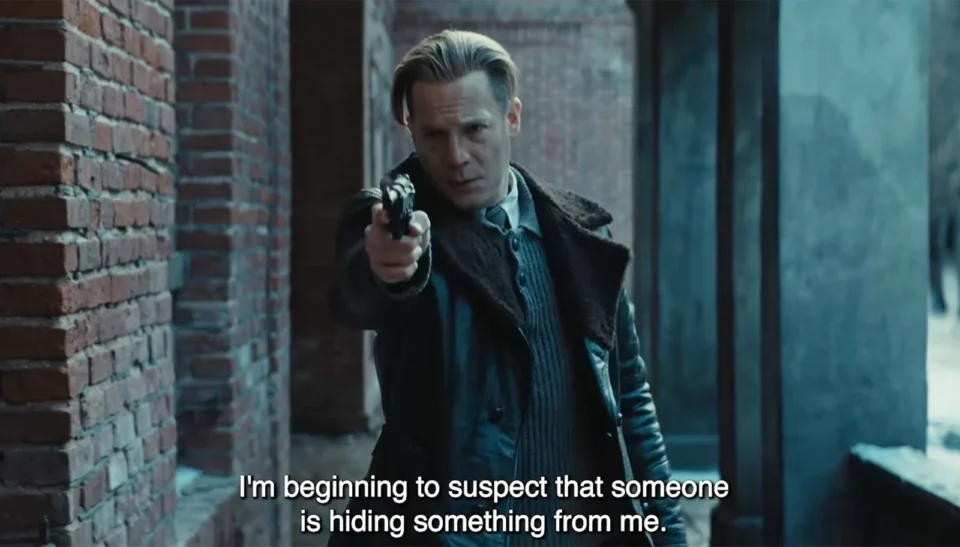
The intersection of history and genre fiction often yields the most potent cinematic experiences, and the 2026 Toronto International Film Festival (TIFF) is set to host one of the most anticipated experiments of the year. Global Constellation has officially unveiled the festival trailer for Wild, Wild East (Dziki Dziki Wschód), the latest tour-de-force from acclaimed Polish director Jan Holoubek. Blending the desolate, moral ambiguity of a classic Western with the suffocating dread of a World War II noir, the film promises to be a haunting addition to the canon of European historical cinema.
As the industry prepares for its imminent premiere, the buzz surrounding the film suggests it will be more than just a period piece; it is being positioned as a visceral examination of human desperation under the yoke of total occupation.
The Core Narrative: A Crucible of Greed and Survival
Set in the frozen, claustrophobic landscape of occupied Poland in the winter of 1943, the narrative centers on the remote village of Małe Zalesie. The geopolitical backdrop is grim: nearly two years after the German invasion of the USSR, the Third Reich is beginning to buckle under the weight of mounting losses, yet the machinery of the Holocaust continues its systematic, horrific progression.
The plot is ignited by the arrival of Martin Wolff, played with icy precision by Itay Tiran. Wolff is a German official tasked with an investigation that carries lethal stakes: the disappearance of a Polish lawyer rumored to be the custodian of a vast stockpile of gold belonging to a Jewish family. In a town where survival is a daily negotiation with death, the presence of such a bounty acts as a catalyst for latent rivalries.

As Wolff peels back the layers of the town’s secrets, he finds himself navigating a treacherous ecosystem of impoverished locals, opportunistic collaborators, and deeply paranoid Nazi authorities. The film’s tagline, "How can I be sure you won’t deceive me?" captures the essence of a story where loyalty is a luxury that no one in Małe Zalesie can afford.
A Director’s Evolution: The Craft of Jan Holoubek
To understand the weight of Wild, Wild East, one must look at the trajectory of its creator. Jan Holoubek has spent the last decade establishing himself as a master of atmospheric tension. With works such as 25 Years of Innocence and the psychological thriller Doppelganger. The Double, Holoubek has demonstrated a unique ability to find the human heart within systemic corruption.
For Wild, Wild East, Holoubek collaborated with screenwriter Aleksandra Takuska to craft a script that avoids the pitfalls of standard wartime tropes. Instead of a binary "good vs. evil" conflict, the film opts for the moral gray zones of the "Eastern Western." The film is supported by an ensemble cast that reads like a who’s-who of contemporary European acting talent:
- Itay Tiran as Martin Wolff
- Joanna Kulig (Cold War) as the resilient, scrappy village wife
- Robert Więckiewicz as Kaim
- Piotr Trojan as Kuliś
- Supporting turns by Jan Bülow, Aleksander Yatsentyuk, Borys Otawa, Magdalena Różczka, and Jacek Beler.
The score, composed by Jan Komar, is reported to be an integral part of the film’s identity, utilizing a sparse, haunting soundscape that underscores the biting cold and the isolation of the Polish wilderness.
Chronology of Production and Release
The path to the screen for Wild, Wild East has been characterized by meticulous planning and a deliberate release strategy.

- Development: Conceptualized in the early 2020s, the film spent years in development as Holoubek and his production team, including Bogna Szewczyk-Skupień and Ewa Puszczyńska, sought to capture the specific aesthetic of the Polish "Wild East"—a term historically used to describe the lawless, dangerous borderlands of the era.
- Principal Photography: Filming took place across various Polish locations chosen for their authentic, brutalist winter landscapes, concluding in early 2026.
- TIFF Selection: In August 2026, the film was officially selected for a high-profile premiere at the Toronto International Film Festival, signaling its potential as a major contender for international awards.
- Marketing Debut: On September 4, 2026, the official trailer was released globally, coinciding with the festival’s promotional push to pique the interest of international distributors and critics.
Supporting Data: Why This Genre Blend Matters
Critics and festival programmers are noting that Wild, Wild East represents a shift in how European filmmakers are approaching the trauma of World War II. By adopting the stylistic language of the Western—a genre defined by frontier justice, isolation, and the absence of law—Holoubek is able to translate the specific, localized horror of 1943 Poland into a universal language of suspense.
The production team, which includes the prestigious Klaudia Śmieja-Rostworowska, has emphasized the importance of authenticity. The film does not shy away from the brutality of the period; rather, it uses that brutality to heighten the tension of the central "heist" or "treasure hunt" plot. This hybrid approach is designed to draw in audiences who might be fatigued by traditional war dramas, offering instead a high-stakes, character-driven noir.
Official Responses and Critical Anticipation
The reception to the trailer has been swift, with industry observers praising the cinematography’s emphasis on long, desolate shots of snow-covered forests and the palpable sense of paranoia within the village sets.
TIFF’s official programming note captures the excitement surrounding the project: "A suspenseful western meets wartime noir, this genre-blending film will resonate far and wide. Holoubek has crafted a world where every shadow hides a motive, and the pursuit of gold is inextricably linked to the pursuit of survival."
The casting of Joanna Kulig, who gained international acclaim for her role in Paweł Pawlikowski’s Cold War, is seen as a significant draw. Her ability to portray complex, internal struggles makes her a perfect foil for Itay Tiran’s calculated, enigmatic German officer.

Implications: The Future of Polish Noir
The release of Wild, Wild East carries several implications for the Polish film industry and its place in the global market:
- Genre Diversification: For years, Polish cinema has been categorized by either deep historical trauma dramas or domestic comedies. Wild, Wild East suggests a maturation of the industry into "prestige genre" filmmaking—films that possess both high artistic merit and broad, commercial narrative appeal.
- International Co-productions: The involvement of high-profile producers and a diverse cast underscores the trend of Polish cinema moving toward international co-production models. This not only increases production budgets but also facilitates easier distribution across European and North American markets.
- Reframing History: By utilizing the Western template, the film forces a new perspective on the occupation. It asks the audience to consider the "Wild East" not as a place of adventure, but as a place where the collapse of social order created a vacuum filled by greed, fear, and a desperate, often ugly, search for agency.
As the premiere at TIFF approaches, the question remains: Can a film so steeped in the specific misery of 1943 succeed as a global thriller? If the early buzz is any indication, the answer is a resounding yes. Jan Holoubek has not merely filmed a story; he has constructed a trap for the audience, and he is betting that the viewer, much like the characters in the village of Małe Zalesie, will be unable to look away from the unfolding disaster.
With no further release dates confirmed beyond the Toronto festival, Wild, Wild East remains one of the most mysterious and enticing prospects of the fall season. For those who enjoy their history with a side of cold-blooded suspense, it is a film that demands to be seen on the largest screen possible.