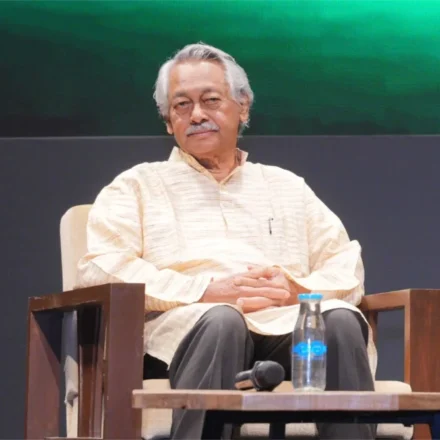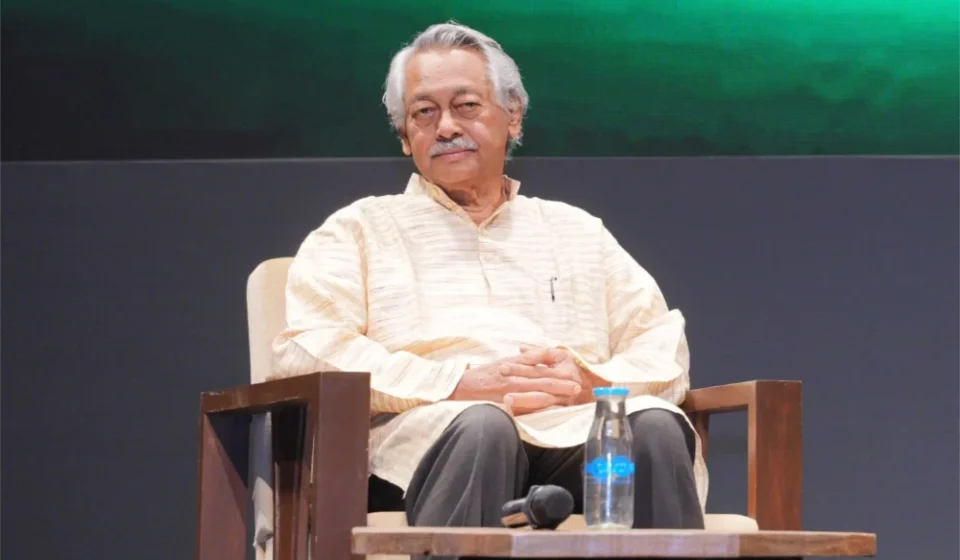

At the 57th International Film Festival of India (IFFI) in Goa, the air was thick with the weight of cinematic history as legendary Kannada auteur Girish Kasaravalli took the stage. The masterclass, titled "The Moral Universe of Parallel Cinema: 50 Years of Girish Kasaravalli," served as more than a retrospective; it was a profound interrogation of the role of the filmmaker in a fractured society. Moderated by Variety’s Asia editor Naman Ramachandran, the 75-year-old director offered a masterclass not just in craft, but in the ethical obligations of the lens.
A Legacy of Moral Inquiry
For half a century, Kasaravalli has been the conscience of Indian parallel cinema. His filmography is not merely a collection of titles but a persistent, evolving inquiry into the human condition. From his seminal debut Ghatashraddha (1977) to Tabarana Kathe (1986), Thaayi Saheba (1997), Dweepa (2002), and Gulabi Talkies (2008), Kasaravalli has fixated on the mechanisms of social exclusion.
His work is characterized by a recurring focus on the "othering" of individuals. He examines how society systematically marginalizes those who do not fit the dominant mold, and, more disturbingly, how those who are themselves victims of oppressive structures often become the very agents of that oppression. "All my films talk about othering," Kasaravalli noted during the session. "I always talk about how society looks at some people through a different lens, and in that process, they make them ‘other.’ It is the biggest cruelty an individual or a group of people can impart on another person."
The Inevitability of the Political Act
Perhaps the most striking takeaway from the masterclass was Kasaravalli’s firm rejection of the "pure entertainment" myth. In a polarized media landscape, the filmmaker asserted that neutrality is a fallacy.
"Whoever makes something, whether he makes mainstream cinema or art cinema, he is making a political statement," he declared. "He is either in support of the dominant ideology or opposing it. He cannot avoid it." According to Kasaravalli, the claim that a film is "just for entertainment" is a political stance in itself, often serving to reinforce the status quo by masking the underlying ideological currents that shape every narrative. For the veteran director, the act of framing a shot is an act of asserting a worldview.
Cinematic Form as a Moral Compass
Kasaravalli’s approach to filmmaking is famously rigorous. He does not view the camera as a mere recording device, but as an instrument of empathy. Drawing an analogy from the works of Jean-Luc Godard, he described the process of character development as similar to buying a house: one must examine the structure from the outside before venturing within.
He cautioned against the filmmaker acting as a moral arbiter or using characters as mere mouthpieces for specific ideologies. "I don’t want any of my characters to become a kind of mouthpiece to a certain ideology," he stated. "A filmmaker must inhabit a character and then step back to assess it. Characters are simply too complex to take sides easily."
This commitment to complexity is reflected in his meticulous pre-production. Kasaravalli confessed that he cannot write a script until he has absolute clarity on the visual grammar of the film. He provides granular instructions to his crew—down to the specific hand a character uses to hold a glass—because he understands that the slightest shift in gesture alters the composition and, consequently, the audience’s psychological response.
Chronology of Aesthetic Evolution: From Ritual to Reality
The evolution of Kasaravalli’s style is a testament to his adaptability. In Ghatashraddha, which deals with the rigid, exclusionary nature of religious orthodoxy, he employed what he calls "ritualistic cinema." He argued that the style was not an aesthetic imposition but a requirement dictated by the subject matter. Because the film dealt with the rigid, repetitive structures of tradition, the cinematic form itself had to reflect that ritualistic cadence.
In contrast, his work on Gulabi Talkies saw a move toward "actuality." Seeking to move away from the "pretty" aesthetic often favored by Indian cinema, he instructed his cinematographer, S. Ramachandra, to avoid conventional, scenic shots of the sea and rocks. "Film should not have any pretty image," he insisted. By opting for 16mm film, they allowed the grain to enhance the sense of immediacy, ensuring the coastal community felt like a living, breathing character rather than a backdrop.
Defying the Western Gaze: The "Imperfect" Ideal
A significant portion of the discussion centered on the influence of Cuban filmmaker Julio García Espinosa’s concept of "imperfect cinema." Kasaravalli used this framework to challenge the hegemony of Western aesthetic standards in Indian film.
"I don’t want to take your aesthetic sensibility as my sensibility," he remarked, emphasizing that the compulsion to replicate Western standards of "perfection" is a form of colonial hang-over. For Kasaravalli, a filmmaker’s duty is to their own milieu. If the environment is raw, the film should be raw. "Why should I be perfect?" he asked. "I should be loyal to my own milieu." This rejection of polish in favor of authenticity is what has allowed his films to retain their power decades after their release.
Implications for Modern Distribution
The discussion inevitably turned to the current state of independent cinema. When asked if the era of "parallel cinema" has passed, Kasaravalli offered a nuanced perspective. He argued that the spirit of parallel cinema remains vibrant across India, but the mechanism for delivery is broken.
He expressed skepticism regarding streaming platforms (OTT), which many had hoped would democratize access to independent films. "We all thought it was going to be a solution for all of us," he noted. "But OTT is exactly doing what the mainstream distribution network was doing earlier." The algorithms and corporate control of these platforms, he suggested, are merely the new gatekeepers, continuing to stifle the visibility of films that do not adhere to commercial formulas.
Official Responses and Peer Reverence
The masterclass concluded with a tribute from IFFI festival director and acclaimed filmmaker Ashutosh Gowariker. Reflecting on Kasaravalli’s impact, Gowariker referred to his films as "textbooks" for any aspiring director.
"You let your actors simply be," Gowariker noted, highlighting the director’s signature close-ups. "You make the audience think and anticipate what the character is going through." Gowariker revealed that he had revisited Ghatashraddha while developing his own projects, underscoring the enduring relevance of Kasaravalli’s technical and emotional precision.
The Courage of the Open Ending
Perhaps the most poignant moment of the masterclass came during the audience Q&A, when Kasaravalli addressed his penchant for open-ended narratives. In an age of blockbuster resolutions and tidy denouements, his refusal to provide "answers" stands as a radical act of humility.
"A filmmaker who says that he knows the answers for all the questions in life is telling a lie," he said. "He is as confused as you are. He only throws up options so that you can start thinking. There is nothing called closure; life is always open."
In this philosophy lies the core of Girish Kasaravalli’s half-century journey. He does not seek to provide the audience with a destination; he invites them to walk the path with him, observing the moral contradictions of the world with an unblinking, compassionate eye. As the festival concluded, the consensus among attendees was clear: Kasaravalli’s work is not a relic of the past, but an essential blueprint for a cinema that dares to be human, uncomfortable, and, ultimately, profoundly true.