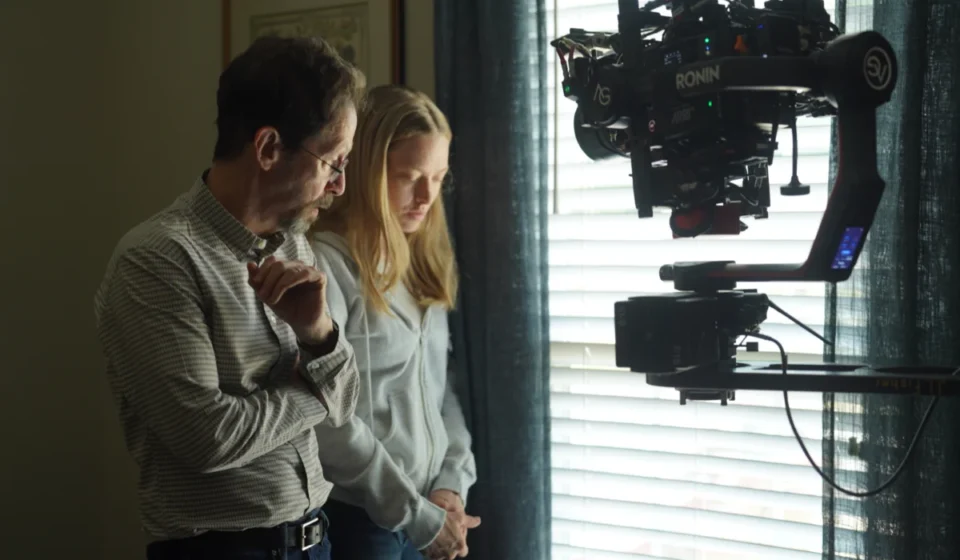
A Decade of Despair and Redemption: Inside Tim Blake Nelson’s Journey to ‘The Life and Deaths of Wilson Shedd’

After twelve years of creative purgatory, stalled financing, and the crushing weight of industry rejection, Tim Blake Nelson is finally witnessing the culmination of his most arduous labor of love. The veteran actor and director, known for his indelible contributions to cinema, is set to premiere his latest directorial effort, The Life and Deaths of Wilson Shedd, at the Toronto International Film Festival this Sunday. For Nelson, the journey from initial script draft to the festival screen has been a harrowing marathon—one marked by a journal filled with entries of professional heartbreak and the stubborn persistence of an artist refusing to let a story die.
The Long Road to Production
The production history of The Life and Deaths of Wilson Shedd reads like a cautionary tale of the modern independent film landscape. For over a decade, Nelson occupied a cycle of false starts: assembling a cast, securing tentative interest from backers, only to watch the entire infrastructure evaporate.
"It was a nightmare," Nelson admitted during a recent Zoom interview. "I’m an avid journal writer, and there’s so much despair in the pages of my journal over my failure to get it made. It became a weight I carried with me through every other project I took on."
The difficulty in securing support was compounded by the film’s grim, uncompromising subject matter. The narrative is largely set within the claustrophobic confines of a maximum-security prison, focusing on an English teacher—played by Amanda Seyfried—who finds her life inextricably linked to a charismatic, doomed inmate, Wilson (Scoot McNairy). The film’s harrowing descent into the realities of death row proved to be a hurdle for traditional financiers.
"People would say, ‘Well, we’re not going to finance this, but show us the final product, and then we’re really going to be interested in seeing it,’" Nelson recalled. This "catch-22" of the independent film sector—needing success to build a project, yet needing the project to prove success—was exacerbated by the lukewarm reception to his 2015 ensemble drama, Anesthesia. "It didn’t perform well, so that didn’t help," he noted. "The nature of getting movies financed right now is that they require a level of past success, and my previous outing didn’t provide that cushion."

A Change in Fortunes: The V42 Connection
The pivot point for the production arrived through Miles David Romney, founder of V42, a production entity dedicated to backing socially conscious storytelling. Romney, who produced the 2022 animated project Ninety-Five Senses—which featured Nelson—saw potential in the script that others had overlooked. With the financial backing of V42, production finally commenced in Georgia last year, effectively ending a twelve-year hibernation period.
Nelson, reflecting on the delay, argues that the time served in development hell was ultimately fortuitous. Had the film been made a decade ago, it would have been a fundamentally different, and perhaps lesser, work. The delay allowed him to assemble his ideal cast: Amanda Seyfried and Scoot McNairy.
Character-Driven Dynamics
The casting of the lead roles was a serendipitous affair. While filming the 2025 religious drama The Testament of Ann Lee in Hungary, Nelson found himself in a base camp conversation with Seyfried that would change the trajectory of his film.
"Within 30 seconds of us meeting for the first time in base camp in Budapest, I knew she was perfect for this role," Nelson said. "She has an openness, an unpredictability, a preternatural decency, a wit, and an incredible work ethic. There are little turns that Amanda makes when she’s teaching, where she’s surprising even herself in that ineffable way that we do as humans. She’s so in the moment, and then it’s just mercurial, and it flits away. You would never think that there was a camera on her."
For the titular role of Wilson, Nelson turned to Scoot McNairy, a character actor whose star has been steadily rising, particularly following his turn in the Hulu breakout series Furious. Nelson, who is known for writing roles that challenge the boundaries of his own capabilities, was mesmerized by McNairy’s audition.

"I like to write roles I could never play," Nelson said. "For actors, you know, who can do things I can’t do." When asked why he didn’t take the role himself, he was characteristically humble. "I don’t think you would believe me as Wilson Shedd, just physically. No matter what I did as an actor in the milieu of this movie, I don’t think that I could make myself attractive to a character like the one that Amanda plays. It’s just not my role. I’m playing the role I should be playing in the movie—the warden."
Themes of Human Capacity
While the film features a grueling, unflinching execution sequence, Nelson is careful to clarify that The Life and Deaths of Wilson Shedd is not a piece of political propaganda. Despite his own personal opposition to the death penalty, he does not intend for the film to serve as a polemic.
"I have no issue with the movie not changing someone’s mind if they’re for capital punishment, because it’s not a polemical movie, and its main issue isn’t capital punishment," Nelson explained. "Its issue is what we are capable of doing to one another." By grounding the story in the relationship between the teacher and the inmate, Nelson moves away from the structural arguments of the legal system and toward the deeper, more painful questions of human connection and empathy in the face of inevitable loss.
The Future: Directing and Acting
As The Life and Deaths of Wilson Shedd heads to Toronto with hopes of securing a robust distribution deal, Nelson finds himself in a curious professional position. He is already fine-tuning new scripts and eager to continue his directorial career, now armed with the proof that he can bring a challenging, long-gestating project to completion.
However, his first love—acting—remains a core component of his identity. In the weeks leading up to the festival, Nelson has been on the ground in Pennsylvania, filming the highly anticipated second season of HBO’s Task, working alongside an ensemble that includes Mark Ruffalo, Mahershala Ali, Édgar Ramírez, and Harry Melling.

"The creator, Brad Ingelsby, is such a great writer, and they offered me a really challenging, interesting character," Nelson said. "I get to be around some of my favorite actors. I was in a scene the other day with Mark, with whom I’ve always wanted to work, and it’s been an absolute privilege to get to be a part of that world."
The only regret in his current schedule is the lack of screen time with Julianne Nicholson, who reprises her role from Mare of Easttown. "It’s the last thing I need to be doing right now while I try to get Shedd out there," he admitted, "but I just couldn’t say no to this material."
Industry Implications
The success of The Life and Deaths of Wilson Shedd will likely be a litmus test for the viability of character-driven, mid-budget dramas in a market increasingly dominated by IP-driven blockbusters. If a veteran filmmaker like Nelson—with a resume boasting collaborations with Spielberg and the Coen brothers—can struggle for twelve years to fund a project, it underscores the precarious nature of independent filmmaking.
However, the emergence of companies like V42 suggests that there is still a pathway for "socially conscious" films that don’t fit the standard studio mold. As the film makes its debut, the industry will be watching to see if the raw, humanistic power of the performances by Seyfried and McNairy can break through the noise of the festival circuit and secure a wide audience. For Nelson, the goal is simpler: the closure of a chapter that has haunted him for over a decade, and the beginning of a new one where his stories find the light they deserve.