The Silent Crescendo: Women Composers Defy Industry Trends Through Innovation and Storytelling

In the high-stakes world of Hollywood film scoring, a sobering reality persists: the gender gap in the industry’s most prestigious positions remains stubbornly wide. Despite the artistic brilliance of female composers, the quantitative data reveals a trend that is moving in the wrong direction. Yet, even as they navigate a landscape that often overlooks their contributions, women composers are redefining the craft through profound storytelling, sonic innovation, and cross-cultural collaboration.
The State of the Industry: A Statistical Stagnation
The numbers paint a stark picture of the current landscape. According to the latest industry reports, only eight of this year’s top 100 grossing films feature original scores composed by women. This figure is not an anomaly; it is the continuation of a worrying decline. Over the past two years, the percentage of female composers hired for major studio films has hovered between 7% and 9%. This is a significant regression from the 14% peak observed in 2023, leaving industry analysts and advocates to question why, in an era of supposed progress, the needle has slipped backward.
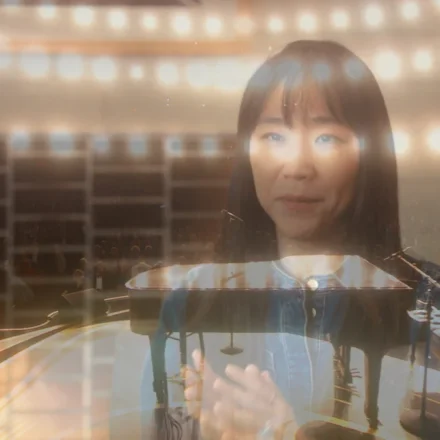
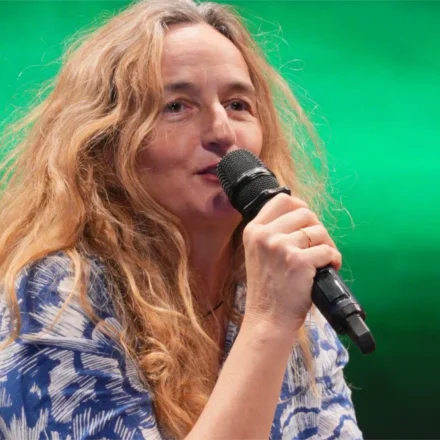
For those within the industry, the lack of representation is not a question of talent, but of systemic barriers. Scoring, particularly for major studio projects, is a highly insular field. As composer Rebekka Karijord notes, "It is a deeply empathetic craft to score films, and it is a deeply collaborative craft. I know a lot of women who are both very empathetic and collaborative and brave. So, I think there should be more of us doing it."
Beyond the Podium: Composers as Storytellers
While the statistical battle continues, individual composers are refusing to be confined by the limitations of the "scoring" label. They are moving into directorial roles and conceptual authorship, ensuring their voices are heard even when the industry’s hiring practices remain stagnant.
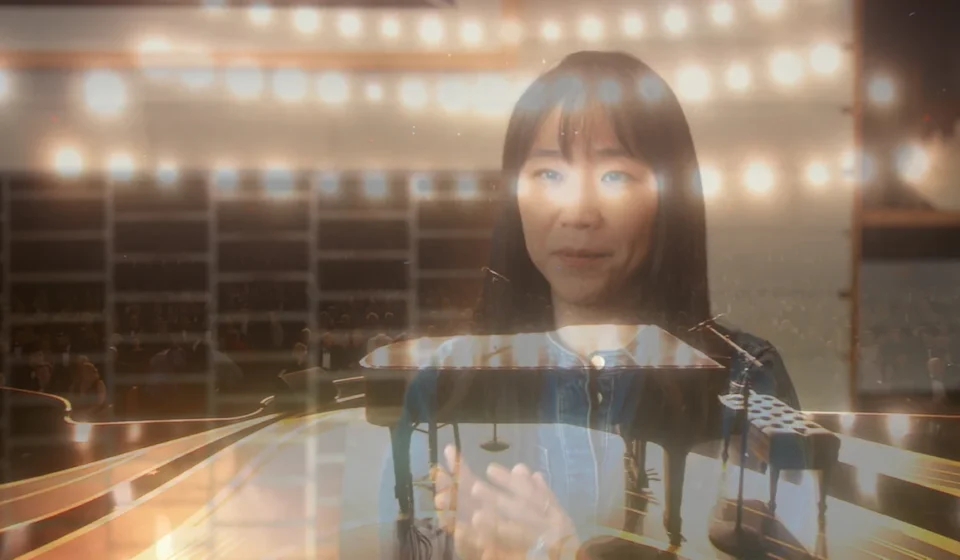
A prime example is Laura Karpman, an acclaimed composer known for her work on American Fiction and the Netflix miniseries East of Eden. This year, Karpman has expanded her reach, entering the awards race as a director with the documentary short Cosmic Symphony.
The Chronology of Loss: The Palisades and Eaton Fires
Cosmic Symphony is more than a film; it is an elegy for the soul of music. In January 2025, the Palisades and Eaton fires devastated the Los Angeles area, consuming thousands of instruments. Karpman’s documentary focuses on four artists—Starr Parodi, Diane Warren, John Clayton, and Susie Chung—who lost instruments that were not merely tools, but historical artifacts.
- 1928–2025: The lifespan of Starr Parodi’s Steinway, a piano that provided the voice for countless MGM classics, including The Wizard of Oz.
- January 2025: The catastrophic fires that claimed the instruments, prompting an outpouring of grief from the musical community.
- The Aftermath: The realization that these instruments possessed individual "souls."
"I believe my piano has a soul," says educator Susie Chung, whose brown Steinway was featured in A Star Is Born and the 2019 Academy Awards. This sentiment is shared by Diane Warren, a 17-time Oscar nominee who lost a beloved Yamaha grand. "Instruments have hearts, they have souls, they have lives," Warren asserts. The film captures the harrowing moment Parodi watched her home burn via a doorbell camera, eventually unearthing the charred remains of her MGM piano from the ash.
The Sound of Innovation: Creative Constraints and Cultural Depth
While some composers turn to documentary to explore the humanity of music, others are reinventing the film score itself by imposing radical constraints or embracing global perspectives.
Anna Meredith: The "Tiny Lens" Approach
In the romantic fantasy Wicker, directed by Alex Huston Fischer and Eleanor Wilson, composer Anna Meredith opted for a minimalist but daring approach. Rather than relying on a massive orchestral palette, Meredith chose to score the entire film with just four performers: a violist, a cellist, a recorder player, and herself.
"I’d much rather start small with a tiny lens, and see what you can do with it, rather than have every sound in the world," Meredith explains. Her choice of instrumentation was deliberate. The wood of the recorders was chosen to reflect the medieval setting, while the strings—viola and cello—were played to produce "slithery, nasty sounds" that represented the intrusion of villagers into the lives of the protagonists.
The technical feat was as impressive as the artistic one. Meredith utilized a massive array of recorders, ranging from tiny 20-centimeter instruments to a massive seven-foot contrabass recorder that required a specialized recording studio with a skylight just to fit the instrument’s neck.
Rebekka Karijord: A Deep Collaboration for Tenzing
In the film Tenzing, which explores the life of the Sherpa who accompanied Edmund Hillary on the first successful ascent of Mount Everest, Norwegian composer Rebekka Karijord took a different path: radical cultural immersion.
Karijord insisted that the score avoid "exotic tropes" or "colors," seeking instead a genuine partnership with Nepalese musicians. She brought in Buddhist nun Ani Choying Drolma for traditional chants, flautist Manose Singh, and actress Thinley Lhamo, whose background in Tibetan opera provided the "voice of the mountain."
"It needed the big cinematic muscles, a meeting between Western and Eastern," Karijord says. To capture the sheer scale of the landscape and the danger of the climb, she utilized a 40-piece string section from the London Contemporary Orchestra, layered with regional sounds like prayer wheels, yak bells, and Tibetan gongs. The result is a score that breathes with the mountain itself, emphasizing the spiritual stakes of the physical journey.
Official Responses and Industry Implications
The disconnect between the quality of work produced by these women and their limited access to top-tier film scoring assignments remains a point of contention. Industry advocacy groups have pointed to these projects as proof that the "pipeline problem" is a myth. When provided with the opportunity, female composers are producing some of the most innovative and critically acclaimed work in the business.
The Role of the "Female Lens"
The projects highlighted here—Karpman’s Cosmic Symphony, Meredith’s Wicker, and Karijord’s Tenzing—demonstrate a recurring theme: the value of the "female lens" in composition. Whether it is the empathy required to tell the story of lost instruments, the creative courage to strip back a score to its wood-and-string essentials, or the collaborative humility required to integrate indigenous music into a global narrative, these composers are redefining what a film score can be.
Moving Forward
The implications for the industry are clear. If Hollywood continues to prioritize traditional, often male-dominated networks, it risks stagnation. The artistry shown by these composers indicates that the future of film music lies in diversity—not just in terms of identity, but in terms of musical methodology.
As the industry looks toward the next awards season, the works of Karpman, Meredith, and Karijord serve as a reminder that the creative pulse of cinema is beating strong, even if the executive suites are slow to recognize it. The resilience shown by these composers—who move between directing, scoring, and cultural advocacy—suggests that while the institutional barriers are high, the talent required to overcome them is already present and, quite literally, playing at the highest level.
The question remains: will the industry follow their lead, or will it continue to let this extraordinary, and vital, talent pool go underutilized? For now, the music speaks for itself, and it is louder, bolder, and more diverse than ever before.