The Alchemy of the Galaxy: John Knoll on Defining the Visual Language of The Mandalorian and Grogu

In the pantheon of modern cinema, few figures command as much reverence for the marriage of technology and storytelling as John Knoll. As an Oscar-winning visual effects supervisor at Industrial Light & Magic (ILM), Knoll has spent decades navigating the shifting tides of filmmaking—from the era of analog optical printers and intricate miniatures to the modern age of volumetric LED stages and complex fluid simulations.
In a recent deep-dive podcast with fxguide, Knoll discussed his latest challenge: The Mandalorian and Grogu. More than just a technical breakdown of a blockbuster, the conversation served as a meditation on what it means to preserve the "Star Wars aesthetic" nearly half a century after George Lucas first brought a galaxy far, far away to the screen. For Knoll, the task is not merely to maintain a brand, but to solve a perpetual ILM riddle: how to make the impossible feel tactile, physical, and emotionally grounded.
The Evolution of an Aesthetic: From Inconsistency to Iconography
A central theme of the discussion is the surprising revelation that the "classic" Star Wars look was, at its inception, a work in progress. Audiences often perceive the original trilogy as having a singular, ironclad visual language. However, as Knoll points out, consistency was a luxury the original production teams rarely enjoyed. Star fields, the glow of blaster bolts, the flicker of lightsabers, and the density of energy shields shifted significantly from shot to shot.
"What we think of as the ‘Star Wars style’ was, in many ways, an emergent property of the limitations and trial-and-error of the 70s and 80s," Knoll explains. Over the decades, ILM has had to retroactively codify these variations into a "style book." Yet, this is not a manual of rigid constraints; rather, it is a living document intended to protect the "soul" of the franchise while providing enough creative latitude for each new generation of filmmakers to leave their mark. The goal is to honor the visual memory of the audience while preventing the franchise from becoming a museum piece.
A Chronology of Craft: Bridging Eras
Knoll’s career trajectory is uniquely tied to the history of the franchise. His tenure spans:
- The Miniature/Optical Era: Working within the constraints of physical models, motion-control cameras, and matte paintings.
- The Digital Turn: The integration of computer-generated imagery during the prequel trilogy and the transition to non-linear digital pipelines.
- The Virtual Production Revolution: The advent of real-time rendering, pioneered by The Mandalorian series, which utilizes massive LED volumes to replace green screens.
By treating these eras not as distinct chapters but as a singular, evolving "ILM problem," Knoll maintains a continuity of thought that few others in the industry possess. Whether using a state-of-the-art GPU or a motorized camera rig, the objective remains identical: to trick the viewer’s eye into believing in the physical existence of an object that does not exist.
The Hybrid Approach: Miniatures Meet the LED Volume
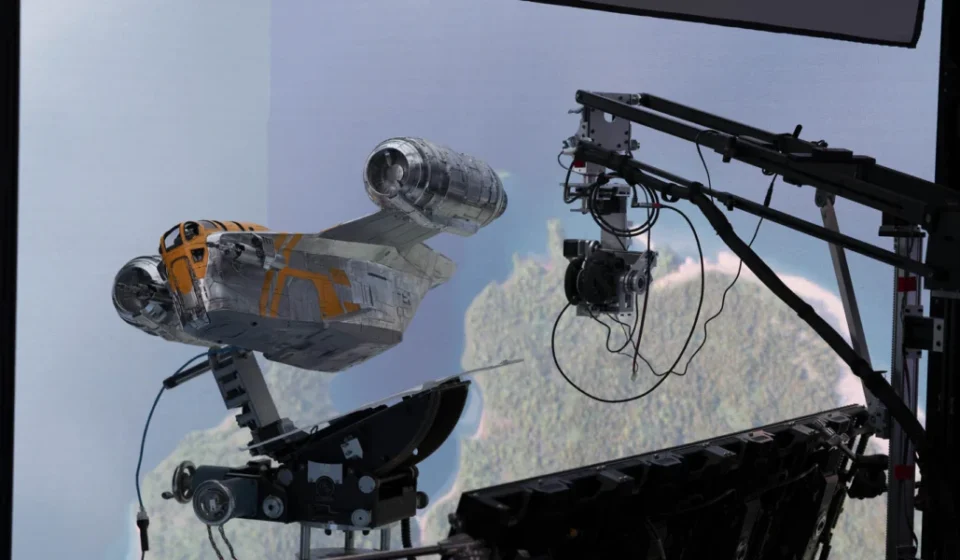
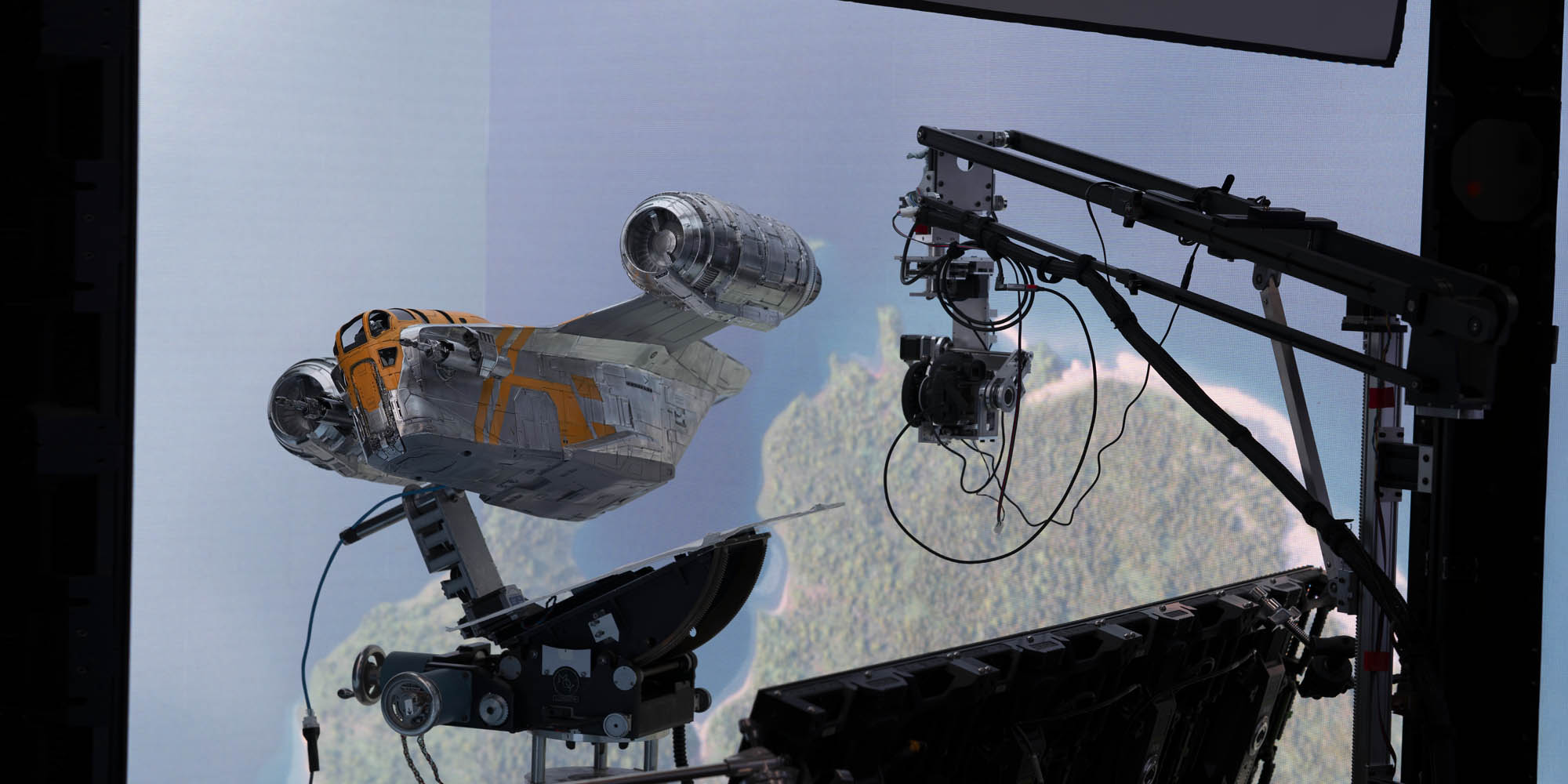
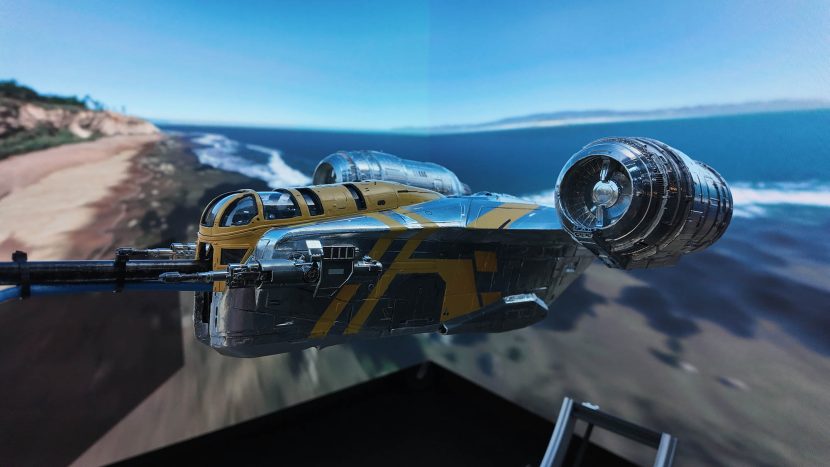
Perhaps the most compelling revelation from The Mandalorian and Grogu is the team’s decision to blend the old with the new. In a move that celebrates the tactile nature of practical effects, the production utilized miniature photography—specifically for the Razor Crest—but with a contemporary twist.
Rather than relying on traditional blue screen compositing, the team built a bespoke, eight-foot-wide LED environment around the physical model. This allowed the bare-metal surfaces of the ship to capture real-time, interactive lighting from the digital world displayed on the panels. This "hybrid technique" represents the pinnacle of modern VFX: combining motion-control miniature photography with LED-based environmental illumination.
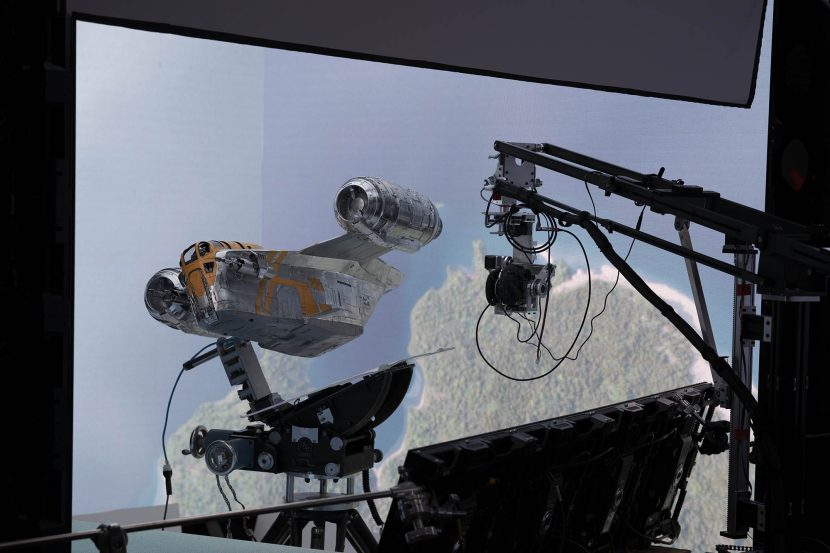
The complexity involved in this process is significant. Knoll notes the logistical hurdles of shooting with LEDs at a miniature scale, where the raster pattern of the panels can become visible or cause edge aliasing. Solving these issues requires a high degree of precision in compositing and lighting, but the payoff is an image that possesses a weight and texture impossible to replicate through pure CG.
Supporting Data: The Craft of Invisible Complexity
The technical depth of the production is further highlighted by the team’s commitment to "invisible" details. The miniature shoot for the Razor Crest was not a one-and-done affair; it involved multiple passes for lighting, engines, running lights, and blue screen elements. By isolating these layers, the compositors gained the flexibility needed to achieve perfect integration.
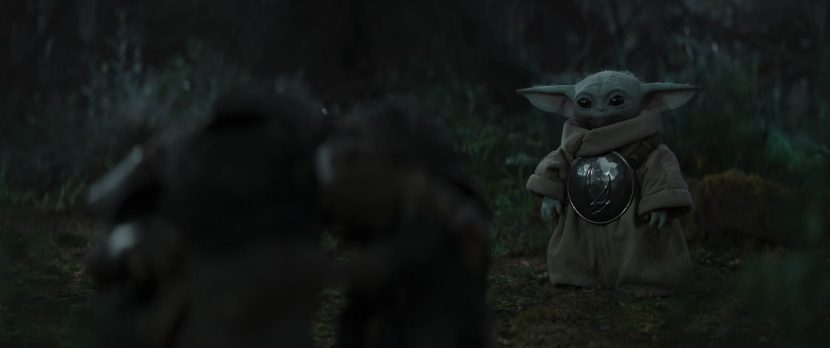
This level of rigor extends to the film’s creature work. The shift in production logic for Grogu is a case study in practical-first design. Initially, the team considered a digital-first approach for the character. However, once the physical puppet from Legacy Effects was on set, its charm and physical presence proved so compelling that the digital work had to be re-calibrated. ILM’s animators were tasked not with creating an "anatomically perfect" CG version of Grogu, but with emulating the limits and "handcrafted quality" of the puppet. The digital performance is subservient to the physical one, ensuring that the transition between the two is seamless to the audience.
Official Insights: Challenging the Limits of Alien Expression
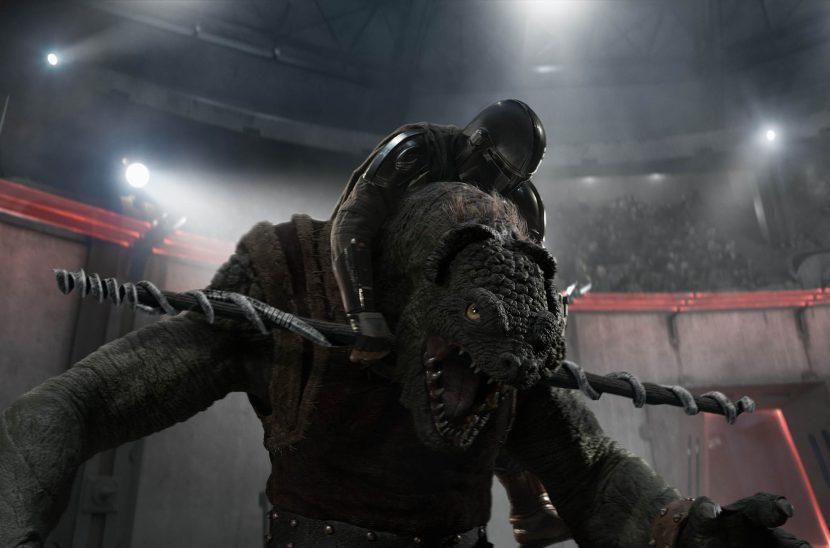
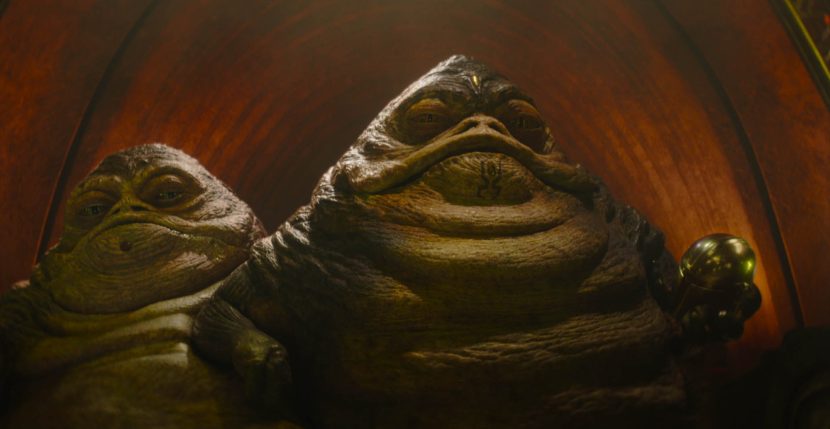
As the franchise expands, so too does the need for more complex creature interactions. Knoll addresses the challenge of evolving the familiar Star Wars creature language, particularly regarding characters like the Hutts. These characters are being pushed into new roles—moving with greater speed, engaging in combat, and delivering nuanced dialogue—that move beyond the "static" alien archetypes of the past.
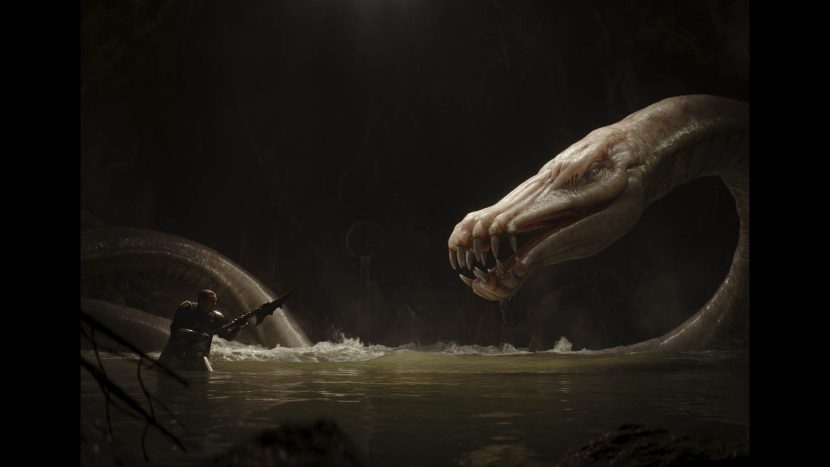
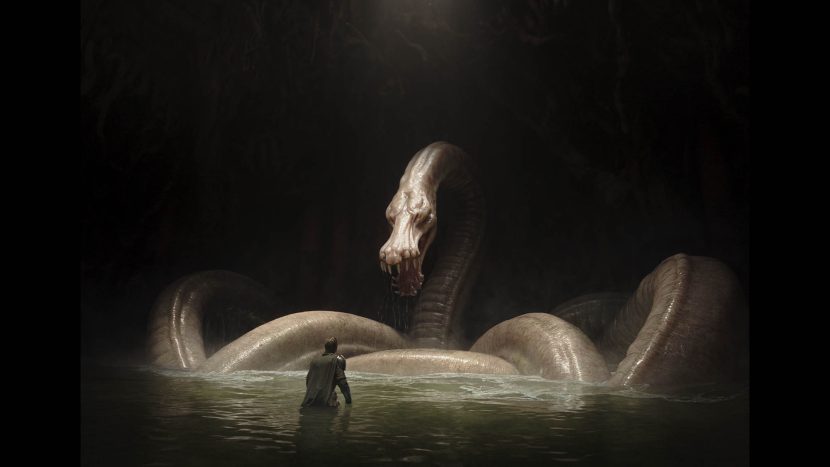
The challenge is one of "taste and restraint." How much can a character be pushed before it loses its identity within the Star Wars universe? The answer lies in maintaining the established logic of the world. For example, during a complex water-based sequence, the production had to integrate live-action performers with digital creatures and water simulations. Water is notoriously difficult to render because it carries so many simultaneous cues: reflections, refractions, surface tension, and contact interactions. By keeping photographed water elements whenever possible and using simulations only when creature interaction required it, the Vancouver team achieved a sense of realism that the audience feels on an instinctual level.
Implications: The Future of Collaborative Filmmaking
The ultimate takeaway from Knoll’s perspective is a philosophical shift in how we categorize visual effects. The traditional binary of "practical vs. digital" is, according to Knoll, an outdated framework. He posits that VFX is not a trick to compensate for the lack of reality, but a core, collaborative discipline of modern filmmaking.
Whether through an LED wall, a digital animation rig, or a physical miniature, the medium is secondary to the message. The success of The Mandalorian and Grogu rests on the team’s ability to create a coherent world where the boundaries between these technologies vanish.
For the next generation of filmmakers, the implication is clear: the most effective visual effects are those that serve the story and maintain emotional weight. By treating the entire filmmaking process as a continuum, Knoll and his team at ILM are ensuring that while the tools of the trade may change, the "Star Wars feeling"—that sense of a lived-in, tactile, and wondrous reality—remains constant.
As the industry continues to experiment with AI, virtual production, and real-time rendering, the lessons from the Mandalorian production serve as a vital reminder: the most sophisticated technology in the world is useless without a deep, foundational respect for the craft of the image. For John Knoll, the future of the galaxy is as much about the light hitting a model as it is about the code rendering a creature—and it is in that synthesis that the magic truly lives.