The High Cost of Hollywood Glamour: From Modest Beginnings to Industry-Shifting Paychecks

In the shimmering world of red carpets, blockbuster franchises, and prestige television, the perception of celebrity wealth is often vastly different from the reality of the industry’s payroll. While the public often equates fame with an endless stream of zeroes, a recent candid admission from celebrity stylist Law Roach has pulled back the curtain on the "slow crawl" of professional growth and the financial realities that govern even the most elite corners of the entertainment industry.
The Architect of Image: Law Roach’s Professional Evolution
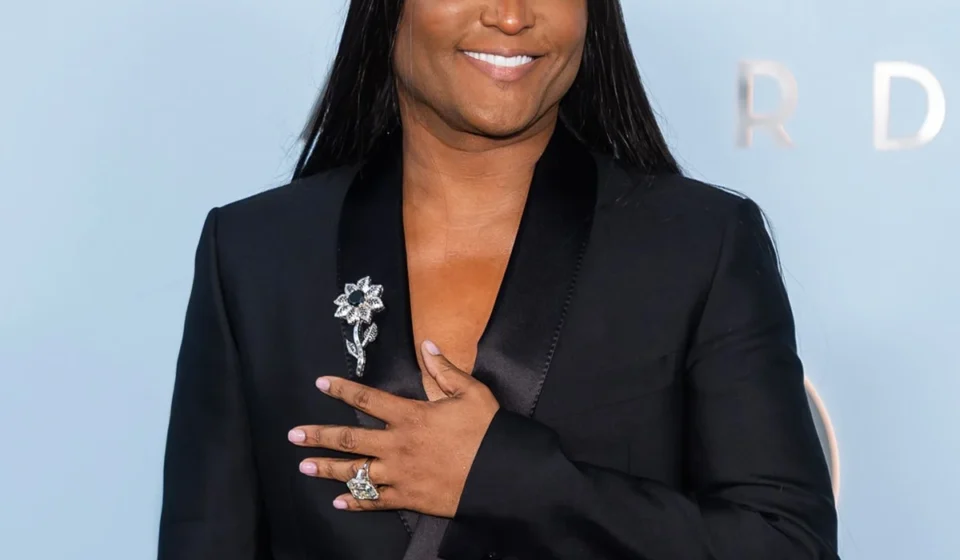
Law Roach, the self-described "Image Architect" responsible for the iconic looks of stars like Zendaya, Ariana Grande, and Céline Dion, recently provided a rare, granular look at the economics of styling. In an August 27 interview with GQ, Roach detailed his journey from the modest beginnings of his career to his current status as a Hollywood power player.
"When I first started styling, I was charging maybe somewhere around $700 a day," Roach revealed. "When I was getting better at the job, I raised my prices. So it was $700, then it was $1,500, then it was $3,000, then it was $6,000."
Roach, who entered the styling industry around 2010 after finding initial success with his Chicago-based vintage boutique, emphasized that his success was not an overnight phenomenon. Before he was a staple of the Project Runway and RuPaul’s Drag Race judging panels, he worked at a mental health facility, earning approximately $22,000 a year. He recalls the friction with his family when he pivoted careers, as they viewed his clinical job as a secure, long-term prospect with benefits.
Today, Roach characterizes his financial status not as "rich," but as "comfortable." This stability allows him to indulge in specific, albeit unconventional, passions. Beyond collecting Hermès bags, Roach has a self-professed addiction to auctions. "I don’t really drink. I never was into drugs. I don’t smoke cigarettes. I’m not a partyer… My real vice is auctions—that’s my addiction," he admitted, describing how he often finds himself bidding in international auctions at 2:00 a.m. in Los Angeles, only to wake up to surprise invoices.
A Chronology of Financial Realities: From Stunts to Stardom
Roach’s candid reflection on his journey is part of a larger, evolving narrative within Hollywood regarding pay equity, transparency, and the often-baffling discrepancies in compensation across the industry. Looking back at the historical pay scales of various stars reveals a complex tapestry of "dues-paying" that persists even among A-listers.
The Era of "Doing It for the Love": 1970s–2000s
Many stars who eventually became household names began their careers with paychecks that, in hindsight, seem almost comically low. In 1978, Jamie Lee Curtis earned a mere $8,000 for her breakout role in Halloween. Similarly, in 2000, Christian Bale was paid the "absolute minimum" legal requirement for his role in American Psycho, a disparity he noted was so severe that makeup artists on set laughed at his meager earnings.
The trend of trading high pay for high-impact projects continued into the early 2000s. Steve-O, reflecting on his time with the original Jackass cast, revealed that after taxes, he earned less than $1,500 for the entire first season. "I was broke, unemployed, and homeless, and a star on this big MTV show," he noted.
The Blockbuster Disparity: The 2010s
Even as franchises grew into multi-billion dollar entities, the actors were not always the primary beneficiaries. Cate Blanchett famously noted that for her role as Galadriel in The Lord of the Rings—a franchise that grossed $2.9 billion—she was paid essentially nothing, jokingly remarking that she "basically got free sandwiches." Her co-star, Orlando Bloom, reportedly earned $175,000 for the entire trilogy, a figure that pales in comparison to modern blockbuster compensation.
The Architecture of Pay Equity: Challenging the Status Quo
The conversation surrounding compensation has evolved from simple "rags to riches" anecdotes to serious discussions about gender pay gaps and systemic inequality.
The Jennifer Lawrence Precedent
Perhaps no modern star has done more to bring the issue of the gender pay gap into the mainstream than Jennifer Lawrence. When it was revealed that she earned significantly less than her male co-stars in American Hustle (a fact unearthed during the 2014 Sony email hack), it sparked an industry-wide reckoning.
Lawrence has remained consistently vocal on the subject, noting that while she is "extremely fortunate" and happy with her compensation, the discomfort of negotiating is a hurdle that women face disproportionately. She clarified in interviews that her frustration was never about the amount of money itself, but the inherent unfairness of the bargaining process, where women are often told their concerns are not about gender disparity, despite evidence to the contrary.
The "Grey’s Anatomy" Model
Ellen Pompeo, the long-standing lead of Grey’s Anatomy, successfully navigated this landscape by securing a historic contract in 2017. Her deal included $575,000 per episode, a seven-figure signing bonus, and equity points. Pompeo’s reflections on her tenure underscore a critical point about the industry: longevity is a skill. "Anybody can be good on a show season one and two. Can you be good 14 years later? Now, that’s a f–kin’ skill," she stated.
Official Responses and Industry Implications
The industry has been forced to respond to these critiques, particularly through the lens of union strikes and public discourse. The 2023 SAG-AFTRA and WGA strikes highlighted the plight of actors like Tommy Dorfman, who revealed that for the first season of the global hit 13 Reasons Why, she earned less than $30,000 for six months of work. The lack of residual payments for streaming content became a flashpoint for the movement.
Other figures, like Taraji P. Henson, have highlighted the "invisible" costs of being a working actor. After taxes, agent fees, manager commissions, and business expenses, a "six-figure" movie salary is often reduced to a fraction of the gross amount. Henson’s transparency regarding the math of Hollywood earnings—where a $150,000 offer can net the performer as little as $40,000—has helped demystify the "millionaire" myth for the general public.
The Future of Hollywood Compensation: Transparency as the New Normal
The path forward for Hollywood appears to be trending toward greater transparency. As veteran stars continue to pull back the curtain on their early-career struggles and ongoing negotiations, the power dynamic between studios and talent is slowly shifting.
Key Takeaways for the Future
- The Myth of Instant Wealth: The vast majority of working actors and industry professionals experience a "slow crawl" to financial stability, often relying on side hustles or secondary income streams for years.
- The "Prestige" Trap: Studios often use the prestige of a director or a project to justify underpaying talent, a tactic that is increasingly being challenged by both stars and unions.
- The Power of Advocacy: Figures like Law Roach, Jennifer Lawrence, and Ellen Pompeo are setting a new standard. By speaking openly about what they earn—and what they deserve—they are providing a blueprint for the next generation of talent to negotiate with greater leverage.
As the industry continues to evolve, the narrative is moving away from the glamour of the red carpet and toward the boardroom. Whether it is a stylist buying the house next door to ensure privacy, or an Oscar-winning actress demanding equal pay for equal work, the "business" of show business is being redefined by those who understand that in Hollywood, money—like image—is something that must be architected with intention and transparency.
Ultimately, Law Roach’s journey serves as a poignant reminder that while the industry is built on the appearance of perfection, the foundation is built on the grit, negotiation, and fiscal reality of the individuals who make the magic happen. Whether it’s $700 a day or a multi-million dollar contract, the value of one’s labor remains the most critical currency in the entertainment industry.