
The modern horror gaming landscape has become increasingly polarized. On one side, we have the "stream-bait" era—a period defined by asymmetrical multiplayer titles like Dead by Daylight, Friday the 13th: The Game, and Killer Klowns from Outer Space. These titles prioritize "emergent gameplay"—the spontaneous, funny, or terrifying moments that play well on Twitch and TikTok. While Dead by Daylight has successfully carved out a permanent niche, many of its peers have withered, struggling to maintain player counts or suffering from server shutdowns.
This shift toward multiplayer-centric horror has, arguably, left a void for the single-player, narrative-driven experiences that defined the early 2000s. Amidst this cultural shift, one title stands out as a stark, uncompromising reminder of what survival horror can achieve when it focuses on atmosphere and isolation: Condemned: Criminal Origins. Released in 2005 for the Xbox 360, Monolith Productions’ masterpiece remains a benchmark for visceral, grounded, and terrifying psychological horror.
The Genesis of Fear: A Chronology of a Cult Classic
To understand the impact of Condemned, one must look at the landscape of 2005. The gaming world was transitioning into the high-definition era of the Xbox 360. Players were accustomed to shooters like Halo or Call of Duty, where the player character was an unstoppable force of nature. Condemned: Criminal Origins subverted these expectations entirely.
- 2005 (The Launch): Condemned debuted as a launch window title for the Xbox 360. It was praised for its sophisticated lighting engines and the then-novel integration of visceral melee combat.
- 2008 (The Sequel): Monolith followed up with Condemned 2: Bloodshot, which leaned further into supernatural elements and refined the combat mechanics, though it struggled to capture the same raw, grounded tension of the original.
- The Post-2010s Slump: Following the release of the sequel, the IP entered a state of limbo. Sega, the publisher, retained the rights, but as trends shifted toward multiplayer games, the series faded from the public consciousness, eventually being delisted from digital storefronts.
- The Modern Era: Today, the game exists primarily as a "cult classic," maintained by a dedicated community of physical media collectors and backward-compatibility enthusiasts on Xbox platforms.
Forensic Fright: The Anatomy of Gameplay
Condemned differentiates itself through a dual-pronged gameplay loop: the cerebral investigation of crime scenes and the desperate, brutal reality of survival.
The Detective’s Lens
Players take on the role of Ethan Thomas, an FBI investigator framed for murder. Unlike other horror titles that rely on scripted events, Condemned asks the player to actively participate in the investigation. Players must utilize specialized tools—UV lights, digital cameras, and laser scanners—to identify particulate matter, match blood spatter patterns, and catalogue evidence. This mechanical layer serves two purposes: it grounds the narrative in a gritty, Silence of the Lambs-inspired reality, and it forces the player to slow down and observe their environment, heightening the tension before a combat encounter occurs.
Visceral Melee Combat
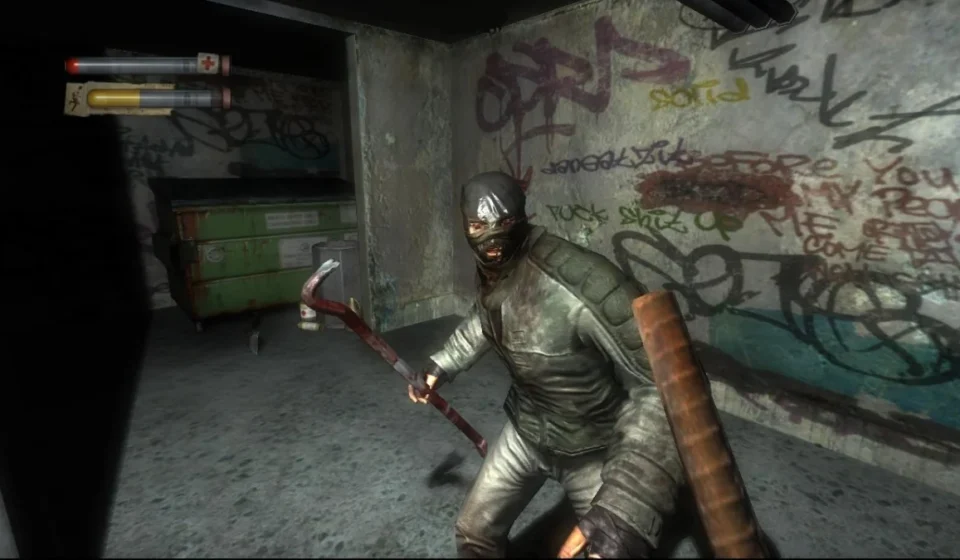
If the investigation is the brain, the combat is the gut. Condemned is famously devoid of the "power fantasy" found in modern shooters. Ammunition is a luxury, rarely found and quickly exhausted. Consequently, combat is intimate and ugly. Players rely on whatever implements of destruction they can scavenge: lead pipes, splintered wooden planks, rebar, and fire axes.
The weight of each strike is palpable. The game forces players to block, counter, and exploit enemy weaknesses. Because the enemies—crazed, urban derelicts and addicts—are as desperate as the player, every fight feels like a genuine struggle for survival. It is not about racking up kills; it is about managing the psychological toll of a constant, overwhelming threat.

Supporting Data: Atmosphere as a Mechanic
The horror of Condemned is not just in its enemies; it is in its geography. The setting of "Metro City" is a character in itself. The game utilizes architectural horror, turning mundane locations—a dilapidated department store, a rotting apartment complex, a subway tunnel—into labyrinths of dread.
Technically, the game was a pioneer in environmental storytelling. By using a limited field of view and masterfully utilizing shadow and sound design, the developers forced players to listen for the shifting of debris or the distant, guttural growls of enemies. The lighting, specifically, was decades ahead of its time, creating a sense of "unsafe space" where the player never feels truly hidden.
The infamous "Mannequin Level" remains one of the most cited moments in horror gaming history. By utilizing the subconscious fear of inanimate objects, the game plays with the player’s perception of reality. It is a psychological masterclass in gaslighting the audience, making them question if the threats they see are real or merely manifestations of Ethan Thomas’s deteriorating mental state.
The Industry Perspective: A Forgotten Genre?
While there has been no official "revival" announcement from Sega or Monolith Productions, the industry has seen a resurgence in interest regarding the Condemned IP. In recent years, developers and industry analysts have pointed toward Condemned as a blueprint for the "immersive sim" horror subgenre.
When discussing the lack of modern Condemned content, developers often cite the "difficulty of the market." As one industry analyst noted in a 2024 roundtable, "The mid-tier, single-player horror game is a hard sell in an era where publishers demand live-service longevity. However, the success of titles like Resident Evil Village and Alan Wake 2 suggests that the appetite for high-quality, narrative-heavy horror is stronger than ever."
Despite the lack of an official sequel, the community’s vocal demand for a remaster or a modern remake has been persistent. The fact that the game is still playable on modern Xbox consoles via backward compatibility is a testament to its technical longevity, but fans are increasingly calling for a full-scale reimagining that could leverage modern ray-tracing and haptic feedback to bring Metro City back to life.
Implications for the Future of Horror
The disappearance of Condemned from digital storefronts is a microcosm of a larger issue in the gaming industry: the loss of historical legacy. As digital distribution becomes the standard, titles that are delisted due to licensing issues or publisher apathy risk being erased from the cultural conversation.

However, the enduring relevance of Condemned implies a clear lesson for developers: atmosphere and tension will always outperform spectacle. Modern developers looking to innovate in the horror space would do well to study the "less is more" philosophy of Monolith’s classic.
If we look at the current market, we see a clear divide. On one side, we have the massive, budget-heavy AAA titles; on the other, the indie horror scene is exploding with creative, experimental projects. Condemned sits comfortably between these two worlds—it had the polish of a major production but the creative focus of an indie project.
Conclusion: A Call for Redemption
Condemned: Criminal Origins is more than just a relic of the Xbox 360 era; it is a masterclass in how to build a world that feels both grounded and deeply unsettling. It understood that horror doesn’t always need supernatural monsters or jump scares—sometimes, it just needs a dark hallway, a rusty pipe, and the creeping realization that you are being watched.
As we look toward the future, the hope remains that some publisher will recognize the value of this intellectual property. Whether it be a faithful remaster or a bold, new reimagining of Ethan Thomas’s descent into the darkness of Metro City, the audience is waiting. Until then, the original remains a vital piece of horror history—a chilling, gritty, and unforgettable journey that every fan of the genre should experience at least once.
If you have a chance to track down a physical copy, do so. In an age of ephemeral multiplayer experiences, Condemned offers something rare: a nightmare that stays with you long after the power is turned off.