Echoes of the Bronze Age: How ‘The Odyssey’ and ‘Primal’ Reclaim the Mystery of the Sea People

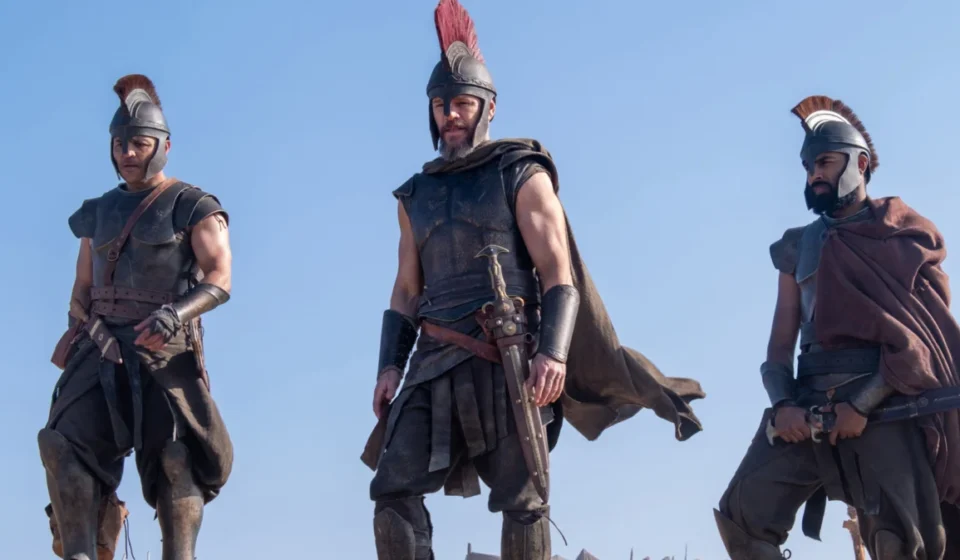
The release of Christopher Nolan’s The Odyssey has reignited a global fascination with the ancient world, transforming Homer’s epic into a visceral, tactile cinematic experience. Beyond the massive set pieces and the technical mastery of the production, the film’s narrative core hinges on a provocative historical interpretation: the identification of the mysterious "People from the Sea."
While Nolan’s film treats these raiders as a haunting, recurring shadow that defines the protagonist’s guilt, he is not the first creator to pull this enigmatic historical force from the pages of academic journals and into the spotlight of modern entertainment. Genndy Tartakovsky’s acclaimed animated series Primal navigated these same waters, utilizing the Sea People as a catalyst for a harrowing exploration of human corruption. By analyzing both works, we can better understand the historical trauma of the Late Bronze Age collapse and why these faceless invaders remain the ultimate archetype of societal destruction.
The Historical Context: Who Were the Sea People?
To understand the weight of these portrayals, one must first understand the historical mystery. The "Sea Peoples" are not merely a creation of myth; they appear in the historical record as a loose confederation of maritime raiders who destabilized the Eastern Mediterranean during the late 13th and early 12th centuries BCE.
Egyptian inscriptions, most notably those from the mortuary temple of Ramesses III at Medinet Habu, describe a "confederation" of disparate tribes arriving by both land and sea. They are credited—or blamed—for the rapid, systemic collapse of the Mycenaean, Hittite, and Ugaritic civilizations. For decades, historians have debated their origins: were they refugees from a famine-stricken north? Displaced mercenaries? Or simply the byproduct of a failing international trade system?
The beauty of the Sea People as a narrative device lies in this ambiguity. Because they represent an "unknown" threat, they function as a perfect mirror for the anxieties of the civilizations they toppled. They are the harbinger of the end, the physical embodiment of a world losing its grip on law and order.
Chronology of a Narrative Trend
The "Primal" Perspective (2022)
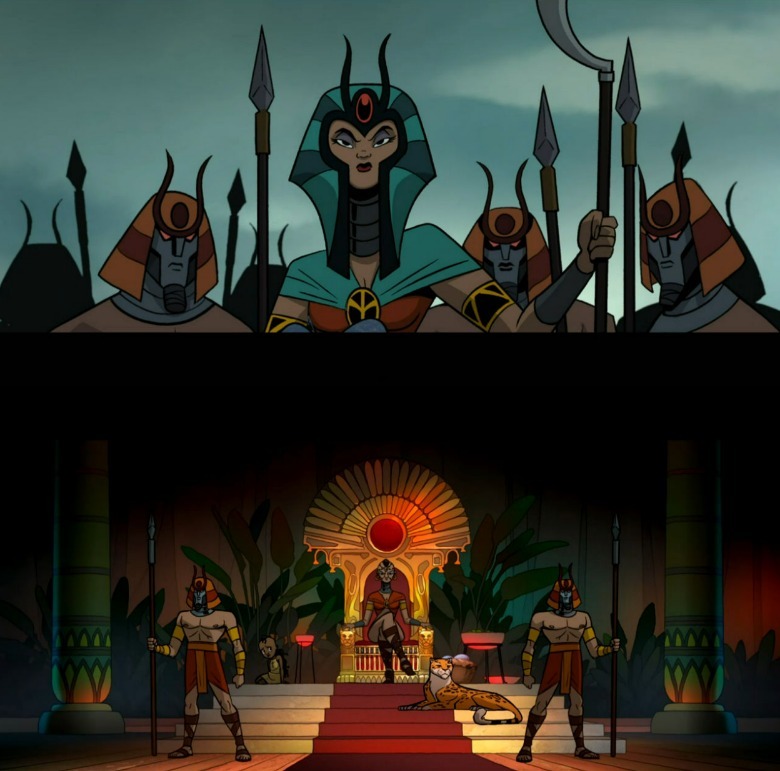
In the second season of Primal, Genndy Tartakovsky shifted the focus of his caveman-and-dinosaur saga from primal survival to the complexity of human civilizations. As Spear and Fang encounter various cultures—from Vikings to Romans—they eventually come face-to-face with a sea-faring empire that draws unmistakable aesthetic and tactical inspiration from the historical Sea People.
Tartakovsky’s portrayal is defined by its brutality. These raiders are not just soldiers; they are a mobile society living entirely on a massive, singular warship. They represent a perversion of order, using their advanced technology to plunder, enslave, and erase the cultures that came before them. In Primal, the Sea People serve to show that even in a world of magic and dinosaurs, the most dangerous entity remains a human population stripped of its moral compass.
The Nolan Reinterpretation (2025)
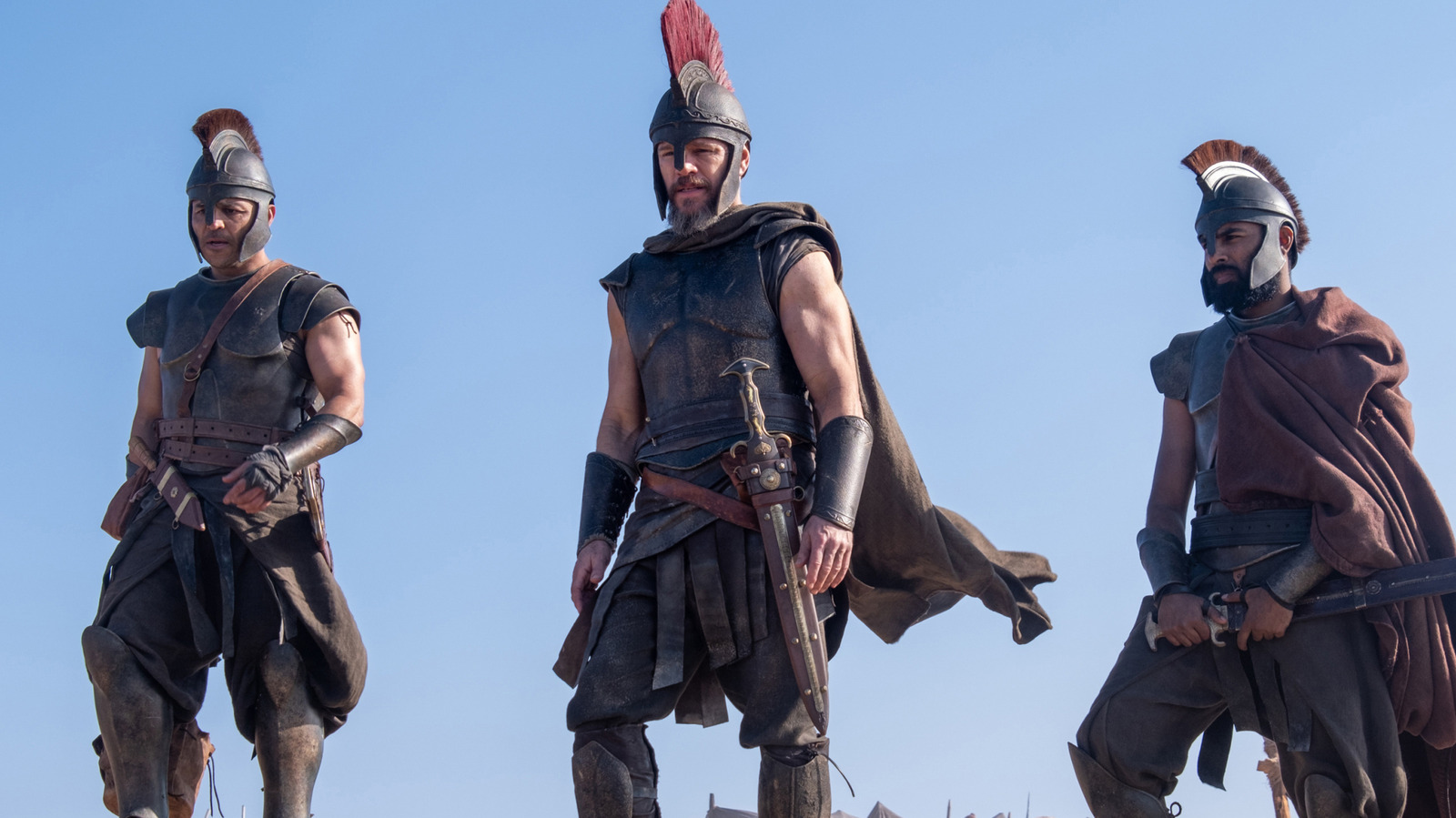
Christopher Nolan’s The Odyssey takes a more psychological approach. In his version, the Sea People are not just an external threat to be fought; they are a manifestation of the protagonist’s own moral decay. Throughout the film, characters live in constant fear of these maritime marauders.
The masterstroke of Nolan’s script is the late-act reveal: the Sea People are not a foreign invasion force, but the very men who fought alongside Odysseus at Troy. By framing the raiders as veterans who became addicted to the chaos of war, Nolan draws a direct line between the Trojan War and the dissolution of the Bronze Age. It is a cynical, yet deeply compelling, commentary on the "Oppenheimer-esque" guilt of a man whose tactical genius (the Trojan Horse) ultimately burned down the world he sought to protect.
Supporting Data: The Mycenaean Connection
The theory that the Greeks themselves were responsible for the widespread destruction of the Mediterranean is not merely a Hollywood invention; it has been the subject of significant archaeological discourse. Scholars such as Susan Sherratt and John Bennet have long argued that the collapse of the Mycenaean palaces was an internal, systemic failure rather than an external conquest.
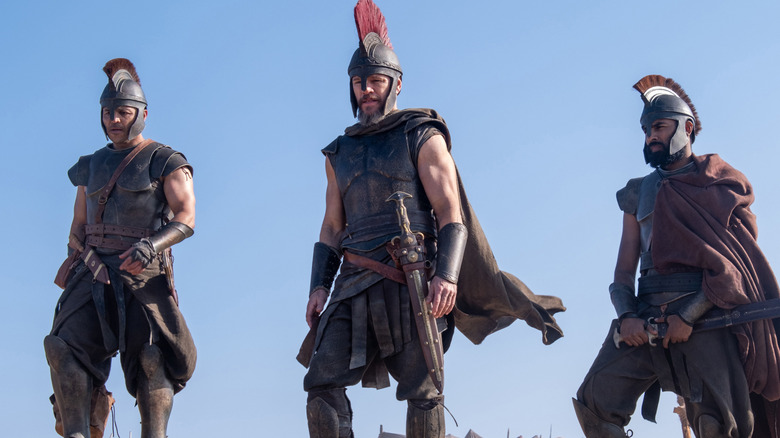
Homer’s Odyssey itself contains seeds of this reality. Odysseus, a wandering warrior returning from a decade-long conflict, often acts with the same predatory instincts as the raiders described in Egyptian texts. His crew, frequently disregarding laws of hospitality and property, embodies the "wandering mercenary" archetype that many historians believe composed the ranks of the Sea People.
Nolan’s film bridges this gap by suggesting that the "Odyssean" myth is actually a story of a war criminal trying to find his way home, only to realize that the world he destroyed was rebuilt in his own image—a world of piracy, desperation, and violence.
Official Responses and Creative Intent
When questioned about the thematic overlap between The Odyssey and modern depictions of ancient collapse, production insiders have pointed to the universality of the "collapse" narrative. In an era of geopolitical uncertainty, the idea of a civilization that simply "stops working" is inherently terrifying.
"We wanted the Sea People to feel like a force of nature," noted a source close to the Odyssey production. "They aren’t just villains in helmets. They are the consequence of a broken promise. When a society puts everything into war, eventually, the war comes home to roost."
Similarly, Tartakovsky’s work on Primal emphasized that the Sea People were intended to show the "dehumanization of conquest." By placing these characters on a mega-ship, he stripped them of their connection to land, tradition, and history, rendering them rootless, efficient, and horrifyingly focused on the destruction of others.

Implications: Why the Sea People Still Matter
The inclusion of the Sea People in these high-profile projects is more than just a nod to historical trivia. It serves as a warning about the fragility of global interconnectedness.
1. The Erosion of Law
In both Primal and The Odyssey, the primary driver of the Sea People’s success is the breakdown of "Zeus’ Law"—a proxy for international diplomacy. Once the treaties of the Bronze Age were discarded, there was nothing to stop the descent into total, chaotic plunder.
2. The Cycle of Violence
Nolan’s narrative makes a chilling point: the hero of one era is the antagonist of the next. By linking Odysseus to the raiders, the film suggests that the "glory" of the Trojan War was actually the catalyst for the dark ages that followed. This perspective forces the audience to view the epic not as a heroic journey, but as a tragedy of ego.
3. The Power of Ambiguity
The fact that we still do not know who the Sea People were—or if they were a unified group at all—is their greatest strength as a narrative device. They are a blank slate upon which writers can project modern fears about systemic collapse, climate-induced migration, and the failure of government.
Conclusion
Whether it is the animated intensity of Primal or the grand, IMAX-filling scope of The Odyssey, the Sea People have firmly cemented their place in our cultural consciousness. They are the ghosts of the Bronze Age, serving as a reminder that civilizations are not always brought down by titans or gods, but by the slow, grinding loss of the common values that hold society together.
As audiences continue to grapple with the complexities of these stories, one thing is clear: the mystery of the people from the sea will continue to haunt us. They remain the ultimate cautionary tale of what happens when the lines between soldier and marauder blur, and when the desire for conquest finally outweighs the necessity of peace. In the silence of the sea, their legacy remains—a testament to the fact that when a civilization falls, it is often the people who lived within it who strike the final blow.