A Master of the American Soul: Locarno to Bestow Lifetime Achievement Honor on James Gray

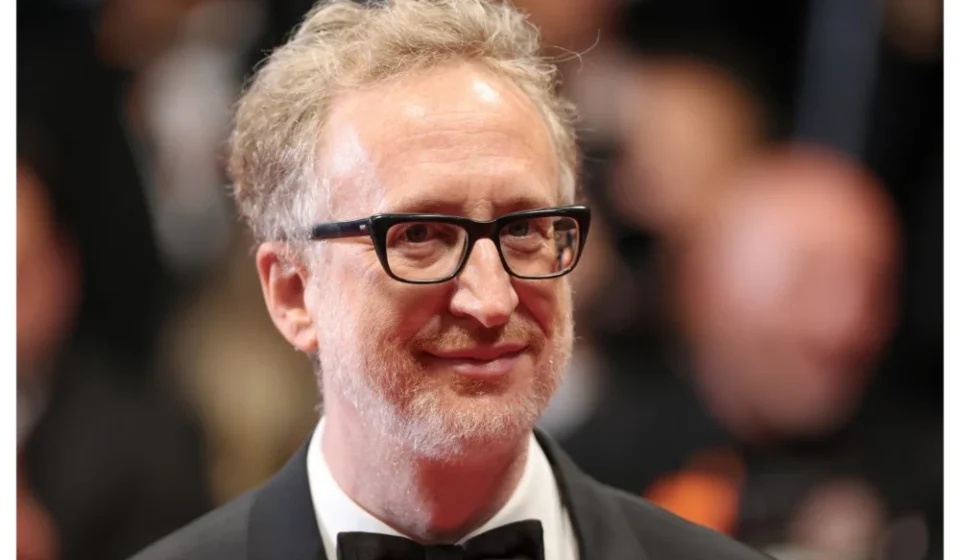
The Locarno Film Festival has announced that its prestigious Pardo alla Carriera (Lifetime Achievement Award) will be presented this year to James Gray, the visionary American auteur whose career has redefined the landscape of contemporary independent cinema. The tribute, which serves as a cornerstone of the festival’s 79th edition, recognizes Gray not merely as a director, but as a chronicler of the human condition whose work bridges the gap between classic European sensibilities and the grit of the American experience.
As part of the festivities, the festival will showcase Gray’s latest feature, Paper Tiger, which will be presented at the festival’s iconic outdoor Piazza Grande venue on August 9. The screening marks a major international stop for the film, which first gained momentum during its launch at the Cannes Film Festival in May.
The Latest Chapter: ‘Paper Tiger’ and a Return to Form
Paper Tiger represents a return to the thematic intensity that first brought Gray to international acclaim. Set against the backdrop of 1986, the film centers on the strained, complex relationship between two brothers: the impulsive Irwin (Miles Teller) and the grounded, former police officer Gary (Adam Driver).
The narrative unfolds with the tension and high stakes characteristic of Gray’s best work. When Irwin entangles himself with the Russian mob through a ill-fated, get-rich-quick scheme centered on the cleanup of the Gowanus Canal, his brother Gary is forced to navigate a treacherous criminal underworld to secure his release. Following its Swiss showcase, Paper Tiger is set to cement its status in the American awards circuit as the opening night film of the 64th New York Film Festival on September 25.
Beyond the premiere of his latest work, the Locarno retrospective will offer audiences a chance to revisit two of Gray’s most influential mid-career triumphs: We Own the Night (2007) and Two Lovers (2008). These screenings are intended to provide a cohesive view of Gray’s stylistic evolution, highlighting his ability to blend genre mechanics with intimate family drama.
A Chronology of Artistic Evolution: From Brighton Beach to the Stars
To understand the significance of this award, one must look at the trajectory of James Gray’s career, which began with startling precocity.
The Early Years (1994–2000)
Gray burst onto the global stage at the age of 25, winning the Silver Lion at the Venice Film Festival for his debut feature, Little Odessa. The film served as a manifesto for his future work, introducing the world to his deeply personal exploration of the Russian-Jewish immigrant experience in Brighton Beach, New York. This period was characterized by a "piercing realism," an exacting detail that prioritized the interior lives of characters struggling with the weight of tradition and the lure of criminal activity.
The Middle Period (2000–2013)
Throughout the early 2000s, Gray refined his craft with films like The Yards (2000) and the aforementioned We Own the Night. These films solidified his standing as a master of neo-noir. By the time he released The Immigrant (2013), it was clear that Gray was doing something few American directors dared to do: he was engaging in a rigorous dialogue with classic European auteur cinema. His work was no longer just about the "criminal underworld"; it was becoming a meticulous study of family dynamics and the tragedy of the American dream.
The Period of Expansion (2016–Present)
In the last decade, Gray’s scope has broadened significantly. With The Lost City of Z (2016), he moved into the territory of colonial exploration; with Ad Astra (2019), he tackled the cold, existential vacuum of space travel; and with Armageddon Time (2022), he returned to the intimate, autobiographical roots of his childhood. These projects demonstrated a rare willingness to adapt his thematic concerns—racial prejudice, the pursuit of legacy, and the isolation of the individual—to varied genres, proving that his artistic identity remained intact regardless of the scale of the production.
Official Perspectives: Why James Gray Matters
The festival’s decision to honor Gray was accompanied by a statement that frames him as a singular voice in the modern film canon. "Since winning the Silver Lion… James Gray has forged a singular career rooted in his upbringing in New York’s Russian-Jewish community," the festival remarked. "He is a filmmaker as concerned with criminal underworlds, rendered with exacting detail, as with meticulous family portraiture."
Giona A. Nazzaro, the artistic director of the Locarno Film Festival, provided a more poetic assessment of the honoree. "James Gray is the last great novelist of American cinema," Nazzaro stated. "His films form a rich body of work that echoes the Jewish diaspora, film noir, and Russian as well as North American literature. He is a filmmaker with a humanist sensibility and profound cinephile knowledge who has experimented with genres such as science fiction and adventure while retaining his own artistic identity and voice."
Implications for the Industry
The decision to present the Pardo alla Carriera to James Gray places him in the company of cinema’s most revered figures. Previous recipients of the award include titans of the craft such as Francesco Rosi, Bruno Ganz, Claudia Cardinale, Johnnie To, Harry Belafonte, Jane Birkin, Costa-Gavras, Tsai Ming-liang, Shah Rukh Khan, and Jackie Chan. By adding Gray to this list, Locarno is signaling that his work is not merely contemporary—it is foundational.
The implications for the industry are twofold. First, it validates the "auteur" model at a time when big-budget, franchise-driven filmmaking threatens to eclipse character-driven narratives. Second, it highlights the enduring importance of the European festival circuit in providing a sanctuary for American directors who refuse to compromise their vision.
As Gray prepares to accept the award on August 9, the industry will be watching. In an era where the definition of "cinema" is constantly being debated, James Gray remains a steadfast reminder that the most compelling stories are often those that look inward, examining the shadows of our own history and the elusive nature of our dreams.
Festival Logistics: The 79th Edition
The Locarno Film Festival, set in the picturesque Swiss town on the shores of Lake Maggiore, will run from August 5 to August 15. The festival has long been recognized as a premier destination for discovering new talent and celebrating the masters of the medium. The presentation of the Pardo alla Carriera to Gray will likely serve as the emotional and intellectual centerpiece of this year’s event.
For attendees, the combination of a retrospective of his work, the outdoor atmosphere of the Piazza Grande, and the opportunity to engage with Gray himself creates a rare pedagogical and cultural moment. It is a celebration of a filmmaker who has managed to traverse the vast distance between the intimate streets of Brighton Beach and the infinite reaches of the stars, all while keeping his feet firmly planted in the soil of his own singular, honest, and unflinching worldview.
As we look toward the future of cinema, the work of James Gray serves as a lighthouse—guiding audiences through the complexity of the human condition with the steady, reliable hand of a true master. The Locarno Film Festival is not just honoring a man; it is honoring the very spirit of artistic integrity that keeps the soul of the cinema alive.