The Evolution of Intimacy: How Gregg Araki Transformed His Approach to Erotic Cinema

For over three decades, Gregg Araki has been a provocateur of the highest order. From the grimy, hyper-stylized streets of 1990s Los Angeles in The Living End to the surrealist malaise of Nowhere, Araki’s filmography has been defined by a singular, unflinching exploration of desire. In his world, sex is never merely window dressing; it is the engine of the narrative, a rhythmic pulse that exposes the fragile, often volatile psyches of his characters.
However, as the industry undergoes a seismic shift in how it handles on-set safety, Araki—a director who once famously operated on shoestring budgets with crews that barely numbered more than a handful—is adapting. With his latest feature, I Want Your Sex, a sharp, dark, and frequently hilarious exploration of power dynamics between a manipulative artist and her subordinate, the director has embraced the modern standard of the intimacy coordinator. This evolution marks a significant milestone for a filmmaker whose career was built on a DIY ethos that arguably left no room for additional personnel, let alone specialized safety advocates.
The Aesthetic of Desire: Sex as Narrative Utility
To understand why Araki is reconsidering his production protocols, one must first understand his philosophy regarding the camera’s gaze. For Araki, sex is functional. He likens a choreographed sexual encounter to the iconic dance sequences in Singin’ in the Rain or the tension-drenched, clinical precision of the crop-dusting scene in Alfred Hitchcock’s North by Northwest.
"The sex in my movies has always been specific, bold, and relatively explicit," Araki noted in a recent interview. He views these moments as vital character beats, where the physical act serves as a window into the unspoken vulnerabilities of the protagonists. Whether it is the messy, nihilistic threesome between James Duval, Rose McGowan, and Johnathon Schaech in The Doom Generation, or the power-play dynamics in I Want Your Sex, the goal remains consistent: the act must reveal something essential that dialogue cannot convey.
A Chronology of Artistic Independence
Araki’s career began in the early 1990s, an era characterized by a "guerrilla" approach to independent filmmaking. His breakout works—The Living End (1992), Totally Fucked Up (1993), and Nowhere (1997)—were products of necessity. With budgets that barely covered film stock, the concept of an "intimacy coordinator" was not just absent from the industry lexicon; it would have been a financial impossibility.

For years, Araki operated with a profound, intuitive trust between himself and his actors. He cultivated a closed-set environment where vulnerability was the currency, and he acted as the sole protector of that space. As he moved through the decades, his reputation for handling explicit material grew, and his actors learned to trust his vision. Yet, the industry’s landscape changed drastically following the #MeToo movement, standardizing the role of the intimacy coordinator—a role Araki eventually encountered during his work on the Showtime series American Gigolo.
"To me, it’s completely up to the actors," Araki explained on the Filmmaker Toolkit podcast. "I’m totally comfortable without [an intimacy coordinator], but I’m comfortable with a good one." His collaboration with intimacy coordinator Yehuda Duenyas on the set of American Gigolo proved to be the catalyst for change. The positive experience convinced him to invite Duenyas back for the production of I Want Your Sex.
Supporting Data: The New Normal on Set
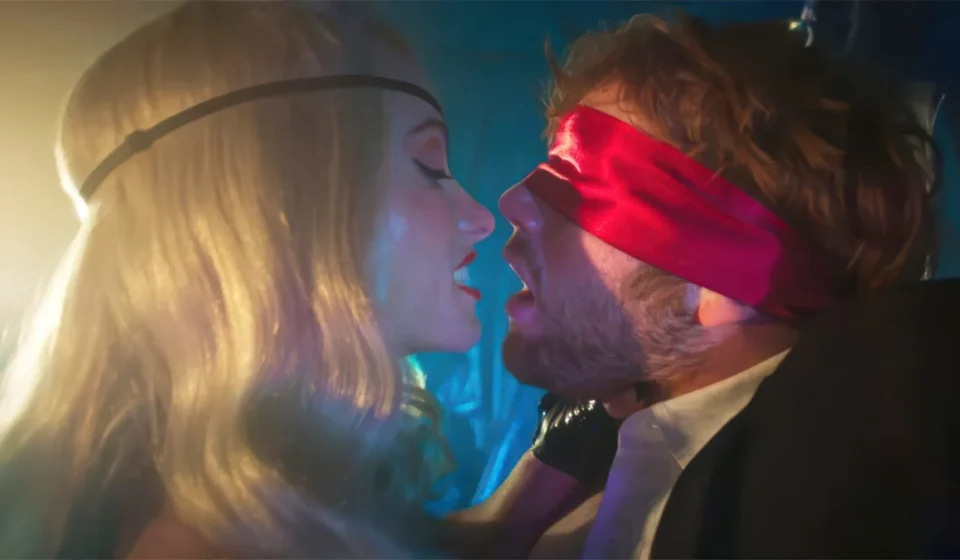
The production of I Want Your Sex presented a unique set of challenges. The film explores an inappropriate, kinky relationship between an artist, played by Olivia Wilde, and her employee, played by Cooper Hoffman. The film features what Araki calls "HBO-style nudity"—a deliberate choice to focus on the human form in a way that is honest but not pornographic.
Integrating an intimacy coordinator into this production was not about stripping the director of his creative autonomy, but rather about facilitating technical specificity. Araki admits that the role proved invaluable during the technical choreography of the scenes. "It’s helpful with all of those things that are specific and help the scene, like, ‘This is when the penis goes in,’" Araki remarked.
While he maintains that his fundamental way of working with actors remains largely unchanged—grounded in trust and open communication—the presence of an expert ensures that the "choreography" is handled with professional safety protocols. It allows the actors to negotiate their boundaries without the potential power imbalance that can arise when a director is the only point of contact.

Official Perspectives: Vulnerability and Trust
For Araki, the most important aspect of any sex scene is the emotional safety of the performers. He is quick to demystify the process, stripping away any lingering Hollywood glamour that might be associated with filming such sequences.
"The actors are so vulnerable," Araki said. "They’re physically naked and emotionally naked in these scenes. And sex scenes are not sexy. They’re not fun. It is like a dance, and it is very choreographed and all figured out beforehand. As a director, it’s my job to make that space as comfortable as it could possibly be."
His protocol involves an "open door" policy that persists even under the pressure of a ticking clock. "I always tell my actors, ‘No matter how busy I am, even if a light fell over or someone just died on the set, I’m always here for you. If you need me, if you want to talk to me about something, you can always pull me aside. I’m always here, and I always have your back.’"
This support system was tested and proved successful with his cast for I Want Your Sex. Araki highlights that his cast members arrived on set with varying levels of experience. Olivia Wilde, a seasoned professional, was entirely comfortable in her body, whereas the younger Cooper Hoffman was entering largely uncharted territory.
Implications: The Future of Intimate Directing
The success of I Want Your Sex suggests that the inclusion of an intimacy coordinator is not a replacement for a director’s vision, but a support mechanism that allows that vision to flourish. By calibrating the varying degrees of comfort among the cast, Araki was able to push his actors toward performances that felt both raw and safe.

The industry at large has moved toward a model where the intimacy coordinator is an essential department head, akin to a stunt coordinator. Araki’s transition to this model—without abandoning his own established methods of building trust—serves as a template for veteran directors. It proves that the auteur-driven style of the 1990s can coexist with the rigorous safety standards of the 2020s.
Cooper Hoffman’s performance, which has already garnered attention for its blend of wide-eyed innocence and mounting terror, serves as a testament to this collaborative environment. Araki reflects on the young actor’s commitment with admiration: "He’d never shot a sex scene before. I think he had just turned 21. But just like Olivia, he got it. He got what we were trying to do and was just fully in. He was scared, but I think that’s what excited him about the part."
Conclusion: A Legacy Refined
Gregg Araki has never been a director to shy away from the provocative. Throughout his career, he has challenged audiences to look at the darker, sexier, and more uncomfortable corners of human relationships. As he continues to evolve as a filmmaker, his embrace of new on-set protocols suggests that he is as interested in the process of filmmaking as he is in the finished product.
By inviting the intimacy coordinator into his creative circle, Araki has not diluted his vision; he has strengthened it. He has ensured that the "dance" of his cinema—the complex, choreographed movements of bodies and souls—can continue to challenge, provoke, and resonate with audiences for years to come.
I Want Your Sex is set to open in theaters on July 31. For further insights into the production and Araki’s evolving methodology, the full conversation will be available on the upcoming episode of the Filmmaker Toolkit podcast, accessible via Apple, Spotify, or your preferred podcast platform.