The Evolution of an Icon: J.Crew’s Tiny Rollneck and the Future of Heritage Fashion

For nearly four decades, the J.Crew rollneck sweater has served as a cornerstone of American sportswear. It is a garment that transcends trends, embodying the "understated luxury" that has defined the brand since its inception in 1988. Today, that legacy receives a modern, high-fashion infusion as J.Crew unveils the "Tiny Rollneck"—a shrunken, 1/4 zip iteration of the classic silhouette—fronted by none other than cultural tastemaker Emma Chamberlain.
The launch represents more than just a seasonal update; it is a masterclass in brand revitalization, blending historical reverence with the contemporary, Gen Z-driven aesthetic that Chamberlain so expertly champions. As fashion enthusiasts scramble to secure the latest drop, we explore how J.Crew has managed to keep a 38-year-old staple at the bleeding edge of the industry.
The Main Event: Introducing the Tiny Rollneck
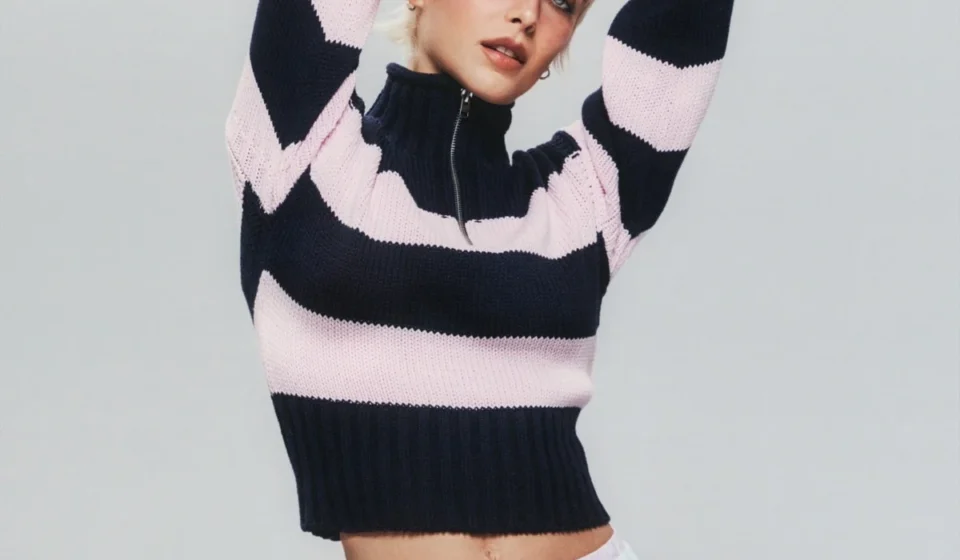
The "Tiny Rollneck" is a departure from the relaxed, oversized silhouettes that dominated the 2025 re-issue. This iteration leans into the "shrunken" trend currently sweeping street style, featuring a fitted construction and a functional 1/4 zip closure.
The campaign, starring Emma Chamberlain, frames the sweater as a versatile canvas. Whether styled with high-waisted trousers for a sleek, monochromatic office look or layered over a collared shirt for a preppy, academic edge, the Tiny Rollneck is designed for the modern wardrobe. The piece is available in two distinct aesthetics: the "Rugby Stripe"—a bold, heritage-inspired pattern offered in navy and lilac or vintage red—and a curated range of solid colors, including "Mazie Blue," "Cubeb Berry," and timeless ivory and black.
A Chronological Journey: From 1988 to 2026
To understand the significance of the Tiny Rollneck, one must look at the trajectory of the garment itself.
The Origin (1988)
When J.Crew first introduced the 100% cotton rollneck in the late eighties, it was marketed as a reliable, heavy-duty essential. While the rollneck—a variation of the mock-neck—dates back to medieval European textiles, J.Crew’s contribution was democratizing the look. By refining the raglan sleeves and perfecting the "roll" of the cuff and neckline, they turned a functional layer into a fashion statement.
The Great Resurgence (2025)
The year 2025 marked a pivotal pivot for the brand. Following a renewed interest in ’90s minimalism and "quiet luxury," J.Crew re-issued the rollneck with a more relaxed, boxy fit. The subsequent celebrity-led campaign ignited a viral craze, proving that the consumer’s appetite for high-quality, long-lasting basics had reached a fever pitch.
The Remix (2026)
Heading into 2026, the strategy shifted toward experimentation. Ahead of New York Fashion Week (NYFW), J.Crew collaborated with various designers to "remix" the rollneck. These limited-edition capsules introduced lace detailing, architectural colorblocking, and asymmetric cuts. The Tiny Rollneck is the logical evolution of this experimental phase—a piece that respects the DNA of the original while embracing the structural preferences of a new generation.
Supporting Data: Why the Rollneck Remains a Staple
Why does this specific garment continue to perform in a market saturated with "fast fashion" alternatives? The answer lies in its structural integrity and market position.
- Materiality: The heavyweight cotton used in J.Crew’s rollnecks provides a specific "heft" that feels premium. It bridges the gap between a t-shirt and a heavy wool sweater, making it an ideal year-round transition piece.
- Versatility: Retail analytics show that the rollneck is one of the few items that appeals to multiple demographics simultaneously. From the "Coastal Grandmother" aesthetic of the 2025 release to the "Shrunken/Edgy" look favored by the 2026 cohort, the styling potential is virtually infinite.
- The "Emma Effect": Bringing in Emma Chamberlain is a calculated move to capture the Gen Z market. By aligning a legacy brand with a digital native, J.Crew validates its relevance to younger shoppers who value authenticity and vintage-inspired styling.
Official Perspective: The Art of Iteration
In discussions regarding the 2026 launch, J.Crew representatives have emphasized the balance between "archival respect" and "innovation."

"The Tiny Rollneck is about stripping back the excess," a spokesperson noted during the press reveal. "We wanted to look at the 1988 original and ask: ‘How does this look in a world of cropped silhouettes and utilitarian zippers?’ The result is a garment that feels both like an heirloom and a brand-new find."
The brand’s commitment to this specific product line suggests that they view the rollneck not just as a seasonal item, but as a "forever" SKU that provides a reliable baseline for the company’s quarterly earnings. By continuously iterating on the design, J.Crew ensures that customers return to the site not just to replace an old favorite, but to discover the "new" way to wear it.
Implications for the Retail Industry
The success of the J.Crew rollneck saga offers several takeaways for the broader fashion industry:
1. The Power of the "Anchor Product"
Brands are increasingly moving away from constant product churn in favor of "anchor products"—items that are constantly refreshed and marketed as essential. By focusing on the rollneck, J.Crew has successfully built a community of collectors who anticipate every new drop.
2. Nostalgia as a Growth Strategy
The ’90s and early 2000s remain the strongest aesthetic drivers in current retail. By leaning into the heritage of their 1988 designs, J.Crew taps into a sense of nostalgia that feels comforting yet sophisticated.
3. Collaboration as Cultural Currency
The 2026 designer collaborations proved that even the most "basic" item can be elevated to high-fashion status through the right partnership. This model of "remixing" allows the brand to stay in the news cycle without abandoning its core identity.
A Guide to the Collection
For those looking to build their own rollneck archive, the current offerings at J.Crew provide a comprehensive starting point:
- The Original (2025 Fit): Perfect for those who prefer a looser, more traditional silhouette. Available in solid colors, stripes, and the fan-favorite lobster print.
- The Reversible Cardigan: A testament to the brand’s versatility, this piece allows for dual-wear, with buttons functioning in the front or the back.
- The Summer Rollneck: A linen-blend iteration that caters to the warmer months, ensuring that the silhouette is not confined to winter wardrobes.
Final Thoughts: The Future of the Rollneck
As we move further into 2026, the Tiny Rollneck stands as a symbol of fashion’s current obsession with "refined simplicity." It is a piece that requires no loud logos or complicated patterns to make an impact. Instead, it relies on cut, fabric, and the seal of approval from cultural icons like Emma Chamberlain.
Whether you are a long-time devotee of the 1988 original or a newcomer drawn in by the latest Gen Z-approved silhouette, one thing is certain: the J.Crew rollneck is not going anywhere. It has successfully navigated the shift from a catalog staple to a viral sensation, proving that with enough imagination, even the most traditional piece of clothing can be made to feel brand new again.
For those ready to invest, the Tiny Rollneck is currently available via the official J.Crew website. Given the trajectory of previous releases, early acquisition is recommended, as high demand for the Chamberlain-fronted campaign is expected to lead to rapid stock depletion.