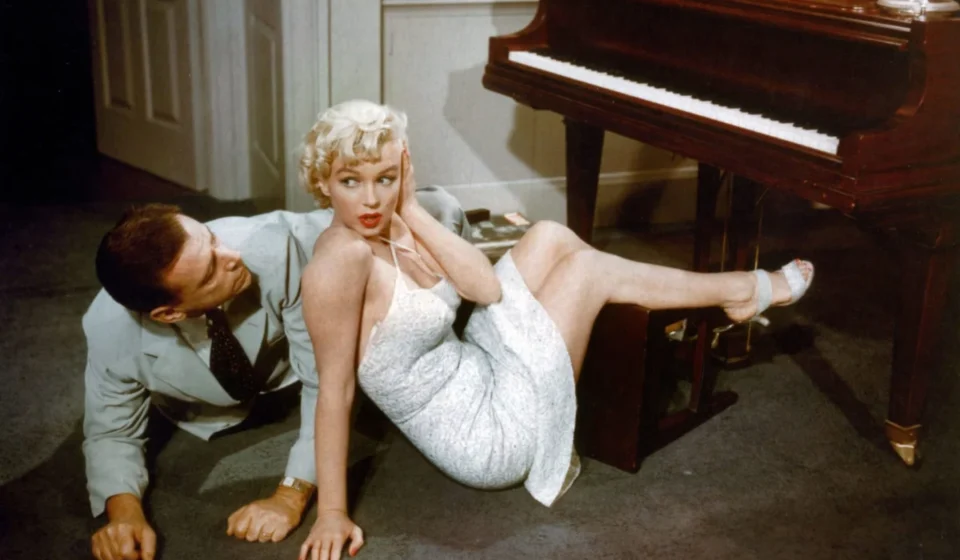
The Eternal Icon: Torino Film Festival Mounts Definitive Marilyn Monroe Retrospective for Centenary

As the curtains fell on the previous edition of the Torino Film Festival, the air in the northern Italian city was already electric with the anticipation of what was to come. For artistic director Giulio Base, the conclusion of one festival was merely the starting gun for his most ambitious project to date. With the year 2026 approaching—a landmark date marking the centenary of the birth of Hollywood’s most enduring icon, Marilyn Monroe—Base knew he had to act with decisive speed.
"I really wanted to be the first to announce a retrospective," Base reflects, his voice carrying the measured confidence of a curator who knows he has secured a coup. "I knew this would be the anniversary year, and I knew others might be thinking the same. I didn’t want to be beaten to it."
That tactical foresight has paid off in spades. By announcing the tribute before the 2025 festival had even concluded, Base effectively claimed the cultural narrative of the Monroe centenary, providing his programming team with a luminous focal point around which to construct an expansive, multifaceted festival experience.
A Comprehensive Look at the Legend: The Programmatic Vision
The Torino Film Festival has unveiled a staggering 24-film lineup that transcends the traditional boundaries of a standard retrospective. To fill a program centered on an icon whose career was tragically cut short, Base and his team have opted for a "thematic constellation" approach rather than a mere chronological list of credits.
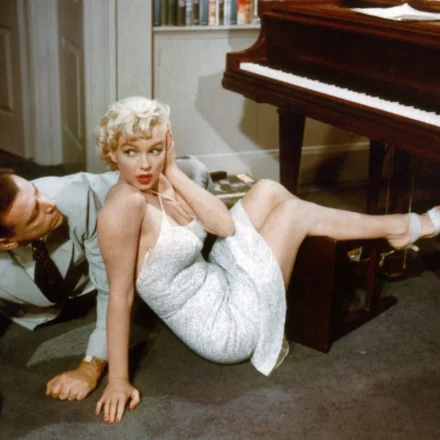
The selection includes the essential pillars of Monroe’s filmography—the comedic brilliance of Some Like It Hot, the sparkling cynicism of How to Marry a Millionaire, and the enduring cultural shorthand of The Seven Year Itch. However, the retrospective refuses to stop there. Recognizing that a star’s legacy is defined not just by their work, but by the dialogue they create with future generations, Base has integrated revisionist interpretations and documentary examinations.
Andrew Dominik’s Blonde sits alongside the experimental documentary La Rabbia, co-directed by Pier Paolo Pasolini and Giovanni Guareschi. This juxtaposition is intentional. "Screening a movie where she has only a scene that isn’t even relevant would be a pity," Base explains. "So we decided to understand her complete legend, including the movies that celebrate her, or research her life, her problems, her traumas, her faults and her dreams."
Chronology of an Icon: From Norma Jeane to Global Totem
The program at Torino serves as a cinematic biography, tracing Monroe’s journey from the girl behind the lens to the global symbol that continues to permeate contemporary visual culture. The festival organizers have meticulously curated a selection that reflects her influence across the six decades that have passed since her death in 1962.
The curation is not merely a look backward; it is a live map of her lingering presence. By inviting guests of honor such as Luc Besson—whose Dogman displays a kinetic, raw energy that parallels the vulnerability often hidden beneath Monroe’s surface—and Mira Sorvino, who famously portrayed the star in Norma Jean & Marilyn, the festival emphasizes the "Marilyn effect."
The opening film of this year’s festival, Roland Joffé’s November 1963, serves as a bridge between historical memory and contemporary storytelling. In one standout scene, a Marilyn impersonator appears in a nightclub, a moment that Base describes as a revelation. "I was almost screaming in the screening room," he recounts. "That’s such a great connection, helping our program look like a complete piece and not just a mosaic."
Democratizing Cinema: The Role of the ‘Totem’
Perhaps the most significant implication of Base’s strategy is the intentional democratization of the festival itself. For years, Torino held a reputation as a prestigious but somewhat insular gathering—a "niche" destination for cinephiles deeply versed in obscure movements. Base views the use of a "totem" like Marilyn Monroe as a gateway for broader audience engagement.
"When I started as director, our festival was known as prestigious but niche," Base admits. "But as a moviegoer, I think stars make everybody feel at home. Big stars like Marlon Brando and Paul Newman make people approach the festival without feeling out of place. They welcome those beyond the inner circle, those who don’t know about Korean cinema of the 1940s or the history of movies. So it’s important to have an icon, a symbol, a totem, that makes us feel we’re all equal."
By anchoring the festival in a figure as universally recognized as Monroe, Base is lowering the barrier to entry. He is inviting the casual moviegoer to sit alongside the academic, creating a shared space where the appreciation of cinema is accessible to all.
Official Perspective: Beyond the Platinum Wig
While the cultural impact of Monroe is often reduced to her "ditz" persona or her platinum-blonde aesthetic, Base is on a mission to re-educate the public about the intellectual depth of the woman behind the screen. He frequently cites the assessment of Lee Strasberg, the legendary acting teacher who mentored Monroe, who famously declared her the "female Marlon Brando."
"She was so profound, and so literate," Base says, his tone shifting to one of reverence. "She was a great reader whose poetry, notes and diaries reveal a deep intellectual, adept at playing the ditz for the heavy fun of those of us who bought in. So I hope the new generations will discover the great actress beyond the big icon."
This duality—the woman who was both the object of global desire and a deeply private, suffering intellectual—is the core tension of the Torino retrospective. Unlike the retrospectives of Brando or Newman, whose careers spanned decades of aging, the Monroe retrospective is defined by the "what-could-have-been." It is a study in truncated brilliance, a way to challenge the audience’s preconceived notions of a woman whose life has been cannibalized by gossip and myth.
Future Outlook: The Challenges of 1927
As the festival moves forward, the pressure to maintain this level of engagement grows. When asked about his plans for 2027, Base adopts a more cautious tone. The birth cohort of 1927, while rich in talent, does not offer the same singular, world-shaking iconicity that Monroe provides.
"I have ideas for 2027 already, but I won’t say anything now," he says with a smile. "It’s too soon, and it’s not so simple, like with Marilyn."
The list of potential candidates for a 2027 tribute is indeed complex. Figures like Sidney Poitier and Peter Falk offer profound thematic opportunities, while others, such as Roger Moore or Carl "Alfalfa" Switzer, represent different facets of cinema history that are perhaps less suited to the specific "totem" strategy that Base has perfected.
For now, the focus remains entirely on 2026. By choosing Marilyn Monroe, the Torino Film Festival has done more than just honor a birthday; it has initiated a conversation about the nature of fame, the weight of public perception, and the enduring power of the moving image. In the streets of Torino, for the duration of the festival, the world will be looking at Marilyn Monroe not as a relic of the past, but as a living, breathing, and deeply complex cinematic force.
As the lights dim and the iconic opening bars of her most famous musical numbers fill the theaters, it is clear that Base has succeeded in his gamble. He has created a space where the myth is dissected, the talent is honored, and the audience—newcomers and veterans alike—are welcomed into the fold of cinematic history. The centenary of Marilyn Monroe is not just a celebration of an actress; it is the ultimate affirmation of the festival’s role as a custodian of the collective human imagination.