

In the cavernous depths of a Grecian set, a sixty-foot giant looms over a band of terrified soldiers. His single, unblinking eye is locked onto Odysseus. It is a scene that defies the digital artifice of modern cinema; it is not a creature born entirely of polygons and render farms, but a complex tapestry of actor, prosthetic, puppetry, and IMAX-captured light. This is the world of Christopher Nolan’s 2026 epic, The Odyssey.
With a staggering $250 million budget, Nolan’s adaptation of Homer’s foundational text serves as a manifesto for his ongoing commitment to tactile realism. By filming entirely with IMAX 70mm cameras—a feat never before accomplished for a feature-length production—Nolan has endeavored to bring the divine and the monstrous into the realm of the tangible.
The Architecture of the Impossible: Main Facts
At the heart of the production is the question of scale. How does a filmmaker render the supernatural when his primary tool is the physical lens? The answer, as executed by visual effects supervisor Andrew Jackson and the team at DNEG, lies in "invisible" integration.
The film follows Matt Damon’s portrayal of the legendary king of Ithaca as he navigates the perilous, god-haunted seas back to his home after the Trojan War. Rather than relying on green screens, the production prioritized on-location filming and massive practical rigs. This hybrid approach ensured that the actors were not performing against tennis balls on sticks, but reacting to genuine light, shadow, and physical presence.
A Chronological Odyssey of Production
The development of The Odyssey was as arduous as the journey itself.

- Early 2024: Pre-production begins with a focus on "grounded myth." Nolan mandates that all supernatural elements must be tethered to natural phenomena—storms, volcanic activity, or psychological hallucinations—that ancient civilizations might have interpreted as divine intervention.
- Late 2024: The casting of Bill Irwin as the Cyclops, Polyphemus, is finalized. Irwin, known for his work in Interstellar, is chosen for his background in physical theater and theatrical clowning.
- Spring 2025: Principal photography commences at Nestor’s Cave in Greece. The production utilizes massive, life-sized puppets of the Cyclops, voiced in real-time by Irwin to ensure the cast’s reactions are organic.
- Summer 2025: High-intensity shoots for the Laestrygonian giant sequences occur, utilizing forced perspective and stunt teams standing over seven feet tall.
- Early 2026: DNEG completes the "invisible VFX" phase, where digital enhancements are layered atop the IMAX plates to refine the lighting and scale, ensuring the practical effects feel seamless.
- July 2026: The Odyssey premieres globally, sparking immediate discourse on the boundaries of practical vs. digital filmmaking.
Supporting Data: The Physics of the Myth
To achieve the scale of the Cyclops, the production team rejected the industry-standard motion capture approach. Instead, they employed a "layered performance" technique. Bill Irwin, fitted with high-fidelity prosthetics, was filmed separately, often from low angles, to distort the perspective. This footage was then projected or composited into the live-action plates filmed in Greece.
For the Laestrygonian giants, the production team utilized a mix of forced perspective—a classic cinematic technique used to make objects appear larger or smaller relative to their distance from the camera—and the recruitment of exceptionally tall stunt performers. By blending these physical actors with "undersized" doubles in the background, the film creates a disorienting, mythic sense of scale that feels unsettlingly real.
Visual effects supervisor Andrew Jackson noted that the objective was never to "show off" the VFX, but to make the audience question where the camera stopped and the computer began. The majority of the work by DNEG involved "paint-outs" of wires and support rigs, ensuring the monsters possessed a physical weight that CGI-only characters often lack.
The Critics’ Consensus: An Official Debate
The release of The Odyssey has reignited a long-standing tradition among film critics and tech enthusiasts: the "Nolan Debate." In the latest episode of the VFXShow podcast, hosts Matt Wallin, Jason Diamond, and Mike Seymour engaged in a spirited, and at times contentious, breakdown of the film’s visual successes and failures.
The disagreement centers on the philosophy of "tactile filmmaking." Some argue that Nolan’s insistence on physical sets and in-camera effects is a masterful evolution of the medium, creating a texture that cannot be replicated. Others contend that the limitations imposed by this methodology sometimes lead to a "stiff" feeling in the monsters, suggesting that a bit more digital flexibility might have allowed for a more terrifying, fluid creature.
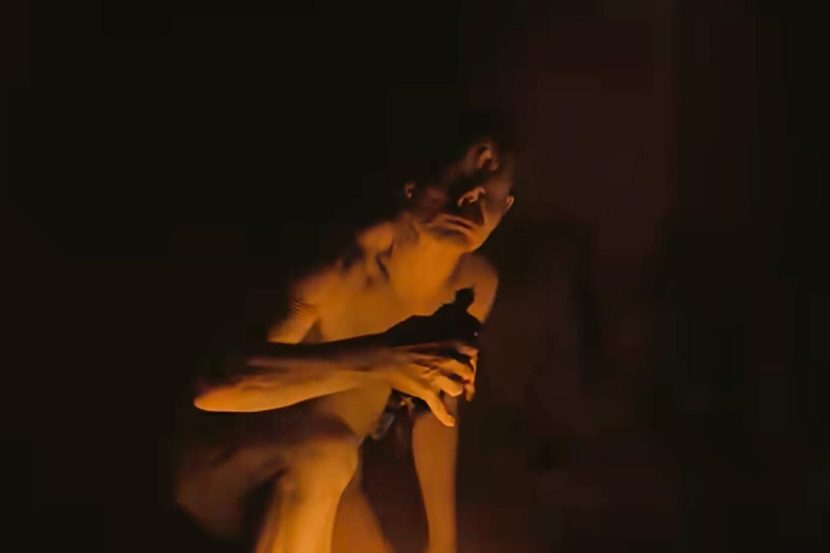
"It’s an approach that runs throughout The Odyssey," notes Mike Seymour. "Build the impossible in front of the camera, then use visual effects to complete the illusion. Does it work? It depends entirely on whether you value the grit of reality over the polish of pure animation."
Implications: The Future of Epic Filmmaking
The success of The Odyssey carries profound implications for the future of blockbuster cinema. By proving that a $250 million budget can be directed toward practical craftsmanship rather than solely digital post-production, Nolan has challenged the current industry trajectory.
- The Renaissance of Practical Effects: The film is likely to inspire a new generation of directors to return to physical sets, puppetry, and prosthetics, potentially reducing the "CGI fatigue" currently plaguing global audiences.
- IMAX 70mm Standardization: As the first feature to be shot entirely in IMAX 70mm, the film has set a new technical benchmark. The clarity and depth of the image have changed the expectation for theater-going experiences, pushing competitors to invest in higher-resolution acquisition formats.
- The "Grounding" Trend: By rooting the supernatural in nature, Nolan has provided a template for fantasy films that aim to be taken seriously by adult audiences. The rejection of "magic" in favor of "naturalism" allows the viewer to suspend disbelief more effectively.
Conclusion: A Mythic Disagreement
Ultimately, The Odyssey is more than a retelling of an ancient story; it is a document of a filmmaker pushing the boundaries of what is possible in the physical world. Whether or not one agrees with every choice Nolan made—whether the Cyclops felt truly menacing or merely like a man in a mask—the film demands to be seen.
As the VFXShow panel concludes, the debate over Nolan’s work is perhaps the only constant in an ever-shifting industry. Whether the film is a flawed masterpiece or a triumphant spectacle, it has undeniably succeeded in one regard: it has forced us to look at the screen and ask, "How did they do that?" And in an age of disposable digital content, that question is worth the price of admission alone.
The debate continues, the film plays on, and Odysseus, like Nolan himself, continues his long, winding journey toward an destination that remains, for now, just out of reach.
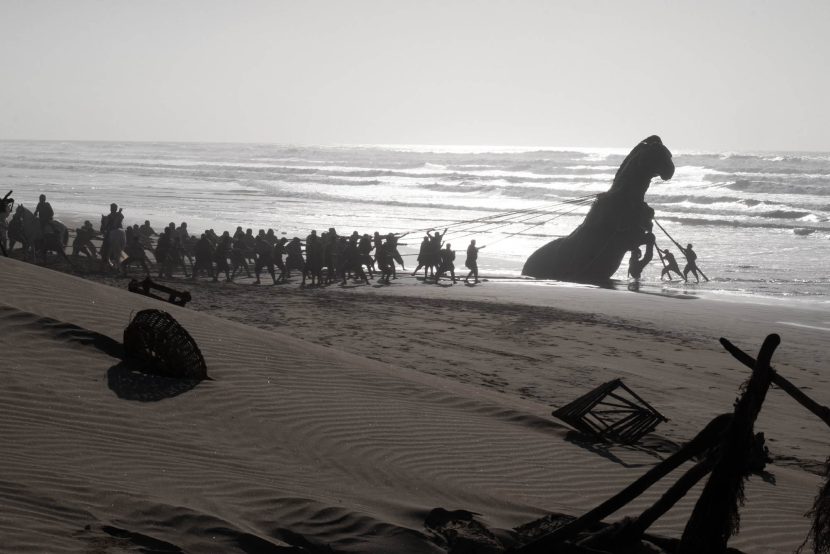
The Suitors of the Discussion:
- Matt Wallin (God of Mischief): A voice for the complexities of modern production and performance.
- Jason Diamond (God of Thunder): Providing the critical, cultural, and aesthetic perspective on the film’s visual impact.
- Mike Seymour (Oarsman #3): Deep-diving into the technical logistics and the "behind-the-scenes" truth of the VFX work.
The latest episode of the fxpodcast is available now, offering a deeper look into the technical and narrative triumphs of the film. Listeners are encouraged to subscribe via Apple, Spotify, or RSS to hear the full, heated, and undoubtedly mythic breakdown.