The Digital Bridge: How Cooke Optics’ /i Technology is Transforming the VFX Pipeline

In the modern cinematic landscape, the line between "in-camera" photography and digital post-production has blurred into a seamless, albeit complex, ecosystem. Central to this convergence is a quiet revolution in data management: lens metadata. In a recent episode of the fxpodcast, Jordan Thistlewood, Chief Digital Officer at Cooke Optics, explored the evolution of Cooke’s proprietary /i Technology and argued why frame-accurate lens metadata is no longer a luxury, but a necessity for the modern production pipeline.
For decades, the “hand-off” between the cinematographer on set and the VFX artist in the suite has been a point of friction. While the cinematographer captures the soul of a film through lens choice, focus choreography, and aperture, much of that nuanced optical information was traditionally lost in translation—left to be reverse-engineered or approximated by post-production teams. Cooke’s /i Technology aims to close this gap by ensuring the camera and the lens communicate a "love letter" of data that carries the aesthetic intent of the photography all the way to the final frame.
The Core of the Communication: What is /i Technology?
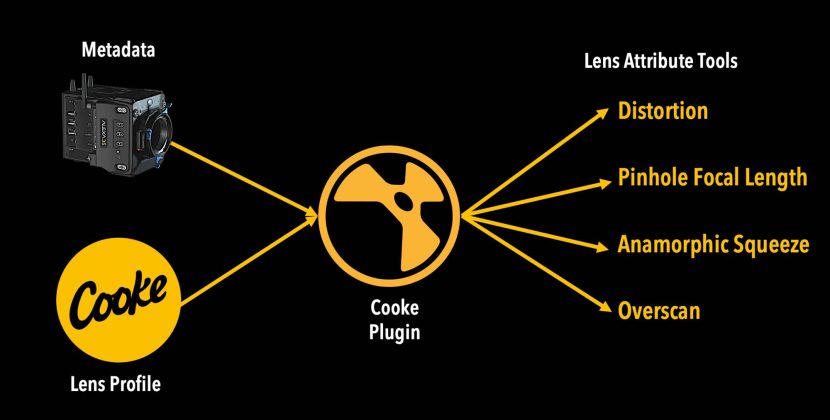
At its most fundamental level, Cooke’s /i Technology is a protocol that allows a lens to communicate directly with a camera system. It records a rich array of data for every individual frame, including:
- Focus Distance: The exact position of the focus barrel.
- Iris/T-Stop: Real-time aperture settings.
- Zoom Position: Focal length data for variable lenses.
- Depth of Field & Hyperfocal Distance: Essential calculations for matching CG elements.
- Shading and Distortion Maps: Technical data regarding the lens’s unique optical footprint.
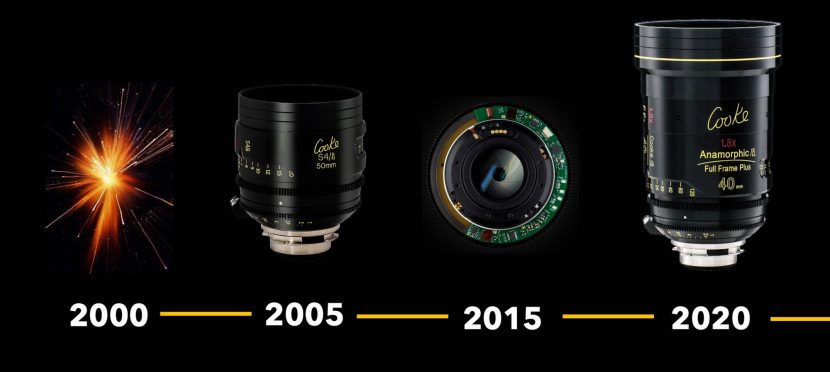
For over twenty years, Cooke has refined this technology, moving from a niche tool to a standard feature in high-end cinematography. By embedding this data directly into the camera raw files via the lens mount, /i Technology eliminates the "sidecar" file problem—a historic headache where external metadata files would inevitably drift, become mislabeled, or simply disappear during the high-velocity churn of a production turnover.
A Chronology of Connectivity
The journey of lens metadata has been a gradual climb toward universal adoption.
The Early Days (The Sidecar Era): Initially, metadata was a supplementary file. If a focus puller recorded data, it lived on a separate log or a primitive digital file. The disconnect was significant; if the metadata wasn’t perfectly synced with the timecode, it became useless, leading to the "lost in transit" syndrome where data rarely reached the VFX artist.
The Integration Phase: As camera manufacturers like ARRI, RED, Sony, and Blackmagic began standardizing electronic lens mounts, the industry saw a profound shift. By baking /i data directly into the metadata stream of the camera file, the industry moved from "approximate logs" to "trusted data." This was the turning point where the lens stopped being a "dumb" piece of glass and became an active participant in the digital capture process.
The Modern Maturity: Today, we are in an era of ecosystem awareness. Major facilities like Company 3 and top-tier VFX houses are now building workflows that recognize metadata as a mandatory deliverable. The industry has moved beyond the "if we should use it" phase into the "how we can best leverage it" phase.
Technical Implications: Why Metadata is More Than Just "Numbers"
The value of /i Technology extends far beyond simple technical logging; it is about respecting the "choreography" of the image.
1. The Art of Focus
On a film set, focus is a performance. When a focus puller shifts attention from a character in the foreground to an object in the background, they are guiding the audience’s gaze. Without accurate metadata, a VFX artist trying to composite a digital element into that shot must guess where the focus plane was. They might rely on witness cameras or tedious manual tracking, which is often an exercise in frustration. With /i data, the VFX team can mathematically match the defocus of a CG asset to the live-action plate, ensuring the composite feels "shot" rather than "pasted."
2. The Living Lens
Jordan Thistlewood emphasizes that lenses are "living, breathing objects." Optical behavior—specifically distortion and shading—is not a static value. It shifts as the lens focuses and changes as the aperture moves. Cooke’s intensive investment in lens characterization provides VFX artists with the tools to map these shifts. Because the focal length engraved on a barrel is often an "infinity" value, the actual behavior at a three-foot close-up can be vastly different. Metadata provides the dynamic curve that allows for true, frame-accurate matching.
3. Efficiency and Economics
The financial argument for metadata is compelling. Productions that utilize this data report significant savings in post-production. By automating the "boring" parts of the pipeline—matchmoving, lens solving, and focus reconstruction—artists can dedicate more time to the aesthetic aspects of the final image. As Thistlewood notes, "The cost of preserving this data is minimal, but the downstream value can be enormous."
Official Perspectives: The "Love Letter" to Post-Production
Cooke’s approach is fundamentally collaborative. By positioning metadata as a "love letter from cinematography to VFX," the company is shifting the narrative from a dry technical requirement to a creative bridge.
When discussing the adoption of this technology at global forums like FMX, the message from the Cooke team is consistent: the technical infrastructure is already here. The cameras are capable, the lenses are ready, and the software tools are increasingly capable of interpreting the data. The final hurdle is cultural.
"We are at a tipping point," Thistlewood suggests. The industry is moving toward a standard where metadata is no longer an optional "extra" that can be discarded during transcoding or editorial turnover. It is becoming part of the standard language of filmmaking. When VFX supervisors demand this data as part of their turnover requirements, it forces the entire pipeline to adopt better quality control (QC) standards.
Implications for the Future of Filmmaking
As we look toward the future of virtual production and real-time rendering, the necessity for accurate lens data becomes even more acute. In an LED volume, for instance, the virtual camera needs to know exactly what the physical lens is doing to maintain the illusion of depth and perspective. Cooke’s /i Technology provides the "ground truth" that allows virtual and physical worlds to align.
Furthermore, the integration of external systems—such as Preston focus motors—into the /i ecosystem ensures that even older or rehoused lenses can participate in the digital dialogue. By pushing this encoder data back into the camera file, production crews ensure that the intent of the shot is preserved, even if the footage is being reviewed months later in a post-production facility halfway across the world.
Conclusion: A Call to Action for the Industry
The message for the industry is clear: stop throwing away the data.
For the cinematographer, /i Technology ensures that their artistic choices—the specific way a lens breathes or the way it renders a highlight—are not flattened by generic digital processing. For the VFX supervisor, it is a tool that removes the guesswork from complex shots. For the producer, it is a risk-mitigation strategy that saves time and money.
As Jordan Thistlewood concludes, the technology has been around for two decades, but we are only now seeing the ecosystem fully embrace it. The era of the "siloed" production, where set and post operate in different worlds, is coming to an end. By treating metadata as an essential component of the cinematic workflow, the industry is not just optimizing its technical processes—it is elevating the craft of filmmaking itself. The bridge is built; it is time for the industry to walk across it.