The Death of a Reputation: Paul Schrader’s ‘The Basics of Philosophy’ Faces Backlash at Venice 2026

By [Your Name/Editorial Staff]
September 5, 2026
The 83rd Venice International Film Festival is intended to be a celebration of cinematic artistry, a place where the world’s most respected auteurs present their latest visions. However, the atmosphere at this year’s festival turned decidedly toxic on Friday morning following the world premiere of Paul Schrader’s The Basics of Philosophy. What was expected to be a contemplative study on ethics and human nature has instead become the focal point of a heated cultural firestorm, with critics labeling the film as a "heinous" and "morally bankrupt" attempt by the director to rewrite his own public narrative.
The Premiere: A Masterclass in Miscalculation
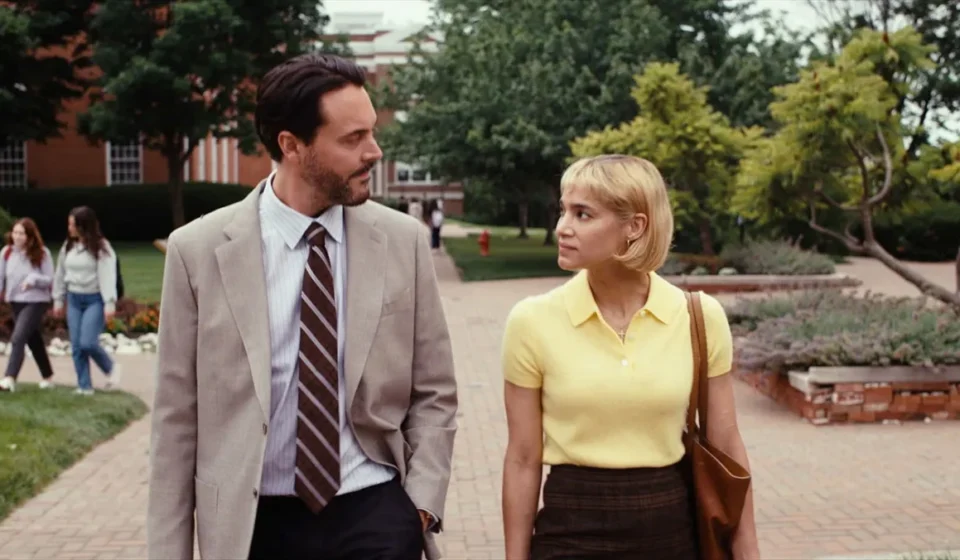
The screening, which took place in the Sala Grande, was marked by a palpable tension. As the final credits rolled—to a chorus of audible groans and scattered boos—the film’s reputation had already effectively collapsed. The Basics of Philosophy stars Jack Huston as John Jorrisen, a tenured philosophy professor whose life begins to unravel when allegations of past sexual misconduct involving a minor resurface.
The narrative, penned by Schrader, follows Jorrisen as he navigates the fallout of this exposure, eventually revealing that his wealthy father, played by a detached and unconvincing ensemble, had previously silenced the victim with a large financial settlement. In a development that has drawn immediate and visceral condemnation, the script frames the protagonist not as a man grappling with his past crimes, but as a victim of "cancel culture" who feels bitter that his accuser, now financially successful due to the hush money, has "no right" to bring up the past.
A Chronology of Artistic Decline
To understand the severity of the backlash against The Basics of Philosophy, one must look at the recent trajectory of Paul Schrader’s career. Once a pillar of American New Hollywood—known for writing Taxi Driver and directing First Reformed—Schrader has seen his standing significantly diminish over the last eighteen months.
- April 2025: Reports surfaced regarding serious allegations of sexual assault against the director, leading to a period of intense public scrutiny.
- Late 2025: Production on The Basics of Philosophy was fast-tracked, with industry insiders suggesting the project was intended to be a "personal statement" or a "philosophical defense" of the director’s worldview.
- August 2026: The film was announced as a surprise inclusion for the Venice Competition, sparking immediate debate regarding the festival’s responsibility in platforming controversial figures.
- September 5, 2026: The film officially debuts at Venice, triggering a wave of negative reviews that describe the work as "the death of a legend."
Critics are noting that the film feels less like a narrative feature and more like an unedited, incoherent manifesto. The pacing is described as sluggish, the cinematography as amateurish, and the dialogue as a series of thinly veiled grievances projected through the mouth of a fictional avatar.
Analysis: The Philosophy of Avoidance
The central failure of the film, according to primary reviews, is its total inability to engage with the concepts it claims to explore. While the title suggests a deep dive into the intellectual foundations of morality, the actual content is a superficial curation of "Philosophy 101" quotes that are dropped into scenes with no thematic integration.
"Schrader is not asking questions; he is seeking absolution," wrote one critic. The film posits that humanity is incapable of change, a deterministic stance that serves as a convenient shield for the protagonist’s refusal to apologize or self-reflect. By externalizing his problems—blaming the media, his family, and the shifting social mores of the modern age—the film becomes a circular, ego-driven exercise that fails to offer any insight into the human condition.
Technically, the film is being cited as a significant regression for the director. Observers have pointed to the wooden performances of Sofia Boutella and Jack Huston, both of whom seem stranded by a script that forces them to recite unnatural, didactic lines. The editing is erratic, and the production design lacks the gritty, lived-in realism that defined Schrader’s earlier, more successful works.

Official Responses and Industry Fallout
As of this afternoon, the production team behind The Basics of Philosophy has remained largely silent. Neither Schrader nor his representatives have issued a formal statement addressing the controversy surrounding the film’s narrative parallels to his own life.
The festival organizers are also under immense pressure. By including the film in the main competition, Venice has opened itself to accusations of enabling a "triumph of the ego" over artistic merit. Several prominent film critics’ circles have already begun discussing the potential for a boycott of the film’s distribution press junkets, while independent distributors are reportedly distancing themselves from the project, wary of the toxic brand association.
Implications for the Future of Auteur Cinema
The failure of The Basics of Philosophy raises profound questions about the "Auteur Myth"—the long-standing tradition of valuing a director’s individual voice above all else. For decades, the industry has given carte blanche to legendary directors, assuming that their past genius guarantees future quality. This film stands as a stark, cautionary evidence to the contrary.
Furthermore, the film serves as a litmus test for how the industry handles figures accused of misconduct who attempt to use their work as a megaphone for their own defense. The audience at Venice has sent a clear, thunderous message: the screen is no longer a safe haven for the evasion of accountability.
"There is nothing provocative about a man blaming the world for his own failings," notes the industry analyst panel currently convening on the Lido. "What we are witnessing is not a cinematic breakthrough, but a total breakdown of the filmmaker’s ability to connect with the audience’s moral reality."
As the festival continues, the conversation is likely to shift from the film’s "philosophy" to its future—or lack thereof. There is a growing consensus that The Basics of Philosophy will not only fail to find a significant audience but will serve as the final, disastrous chapter in a once-celebrated career.
For Paul Schrader, a man who once defined the intellectual edge of American cinema, the silence following the film’s final scene in Venice is perhaps the most damning review of all. The industry, it seems, has decided that if this is the "basics of philosophy," it is a lesson they no longer wish to learn.
This article is based on reporting from the 2026 Venice Film Festival. Updates will follow as the festival progresses.