
The Architecture of "What If": Five Forgotten Alternate History Films That Still Demand Our Attention

History is rarely a fixed destination; it is, rather, a fragile tapestry woven from the threads of chance, ego, and the occasional pivot point. As students of the past, we are often comforted by the illusion of inevitability—the belief that events transpired exactly as they were destined to. However, the genre of alternate history serves as a necessary, often unsettling reminder that the present is merely one of infinite possibilities.
Whether through the lens of political satire, dark comedy, or speculative horror, filmmakers have long utilized the "what-if" scenario to hold a mirror up to our contemporary society. While massive blockbuster franchises like Watchmen or Inglourious Basterds dominate the conversation, there exists a subset of cinema that has quietly slipped into the shadows. These films, often bold in their aesthetic and subversive in their intent, deserve a re-examination.
The Philosophical Weight of Counterfactuals
At the heart of every alternate history narrative is the concept of causality. If a single historical figure—be it a political leader, a cultural icon, or a revolutionary—had never existed, would humanity have inevitably stumbled upon their contributions, or were we reliant on the specific, chaotic chemistry of their minds?

Filmmakers who explore these corridors of time are not merely interested in changing the outcome of a battle or an election. They are interested in the implications of those shifts. By manipulating the past, these movies expose the structural vulnerabilities of our current reality. They ask us to consider the fragility of our civil rights, the thin veneer of our social norms, and the recurring patterns of human folly that refuse to be erased, regardless of the timeline.
1. Born in Flames (1983): The Persistence of Resistance
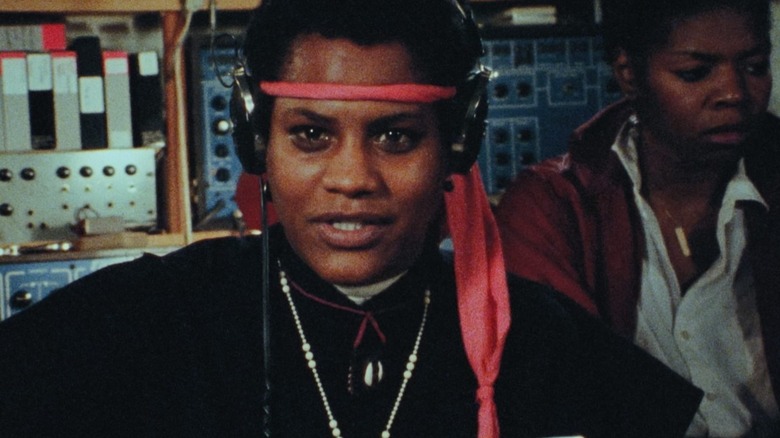
Lizzie Borden’s Born in Flames remains a seminal work of independent cinema, yet it is frequently absent from mainstream discussions regarding 20th-century political filmmaking. Set in a version of the United States ten years after a peaceful socialist-democratic revolution, the film presents a society where women have supposedly achieved total equality.
Chronology and Setting
The premise is deceptively optimistic: a government led by women is intended to protect against the violence of the past. However, the film quickly pivots to the realities of a right-wing backlash. The narrative focuses on two rival pirate radio hosts, Honey and Isabel, who find themselves caught in a pincer movement between the state’s failures and the rise of a new, patriarchal authoritarianism.

Sociopolitical Implications
Borden’s work is not a polite historical exercise; it is a visceral critique of the extreme Left’s tendency toward self-sabotage. The film posits that even in a post-revolutionary paradise, the struggle for autonomy is never truly "won." By the film’s conclusion, the re-emergence of a president who advocates for women to retreat to the domestic sphere serves as a chilling, timeless warning. In the context of 2026, Born in Flames feels less like a historical curiosity and more like a prophetic warning about the cyclical nature of political regression.
2. Dick (1999): The Absurdist Puppet Masters
When we discuss the Watergate scandal, we typically think of Woodward, Bernstein, and the heavy-handed resignation of Richard Nixon. Andrew Fleming’s Dick offers a radical, hilarious departure from that narrative, reimagining the downfall of a president through the eyes of two teenage girls, Arlene and Betsy (played by Michelle Williams and Kirsten Dunst).
The "Deep Throat" Revision
The film’s brilliance lies in its juxtaposition of high-stakes political corruption with the vapid, optimistic energy of 1970s adolescence. By having the girls inadvertently trigger the break-in, influence the Nixon-Brezhnev accords with weed-laced cookies, and serve as the anonymous informants known as "Deep Throat," Dick suggests that history is often steered not by grand strategic genius, but by utter, oblivious coincidence.
Historical Context
Though the film ends with the historically accurate resignation of Nixon, it forces the viewer to reconcile the gravity of the scandal with the absurdity of its protagonists. It serves as a masterclass in tone, proving that satire can effectively humanize—and simultaneously mock—the most entrenched figures of the American political pantheon.
3. C.S.A.: The Confederate States of America (2004)
Perhaps the most harrowing entry on this list is Kevin Willmott’s 2004 mockumentary. Eschewing traditional narrative structures, the film adopts the veneer of a Ken Burns-style historical documentary to chronicle the rise of a nation that, in our reality, never existed: a North American continent dominated by the Confederate States of America.
The Mechanism of Change
The film hinges on a single moment: the intervention of Great Britain and France on behalf of the Confederacy during the Civil War. By securing foreign support, the South wins, Lincoln is forced into exile, and slavery is preserved and expanded across the continent.

Data and Implications
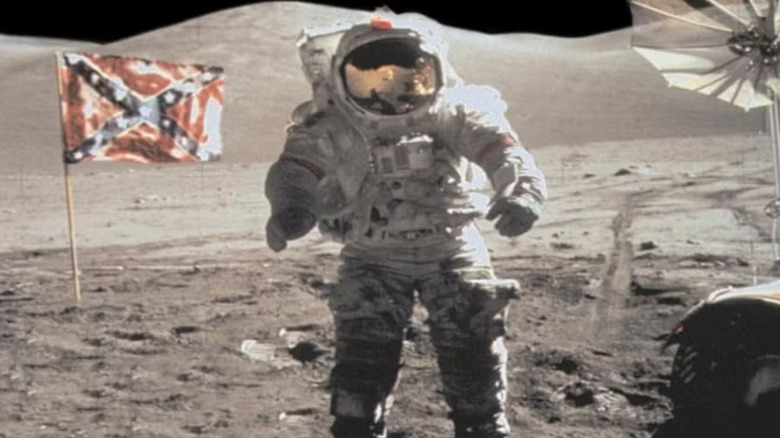
C.S.A. is a sophisticated exercise in discomfort. It traces how this alternate America develops, keeping its racist ideologies, its isolationist tendencies, and its antagonism toward the abolitionist North (Canada). By maintaining the presence of figures like Hitler, Kennedy, and Reagan in this timeline, the film suggests that certain political figures and tensions are inevitable, even if their specific roles shift. It serves as a blistering indictment of the "states’ rights" rhetoric and a reminder of the fragility of the democratic project.
4. Fido (2006): The Subversion of Suburbia
Andrew Currie’s Fido is a masterwork of dark, comedic satire. It posits a 1950s where a mysterious space radiation caused the dead to rise, leading to the "Zombie Wars." Having won the war, humanity has domesticated the undead, using shock collars to curb their hunger and repurposing them as household servants and pets.
Cultural Commentary
The film operates as a direct critique of the 1950s American dream. By inserting a literal "monster" into every suburban household, the film makes the implicit horrors of that era—the stifling gender roles, the casual bigotry, and the obsession with conformity—explicit. When the protagonist, young Timmy, treats his zombie "Fido" as a companion, he challenges the dehumanization practiced by the adults around him.
The Satirical Mirror
Fido is a reminder that suburban stability is often bought at the cost of profound moral compromise. It is a film that balances its campy, horror-comedy aesthetic with a surprisingly deep investigation into what it means to be "civilized."
5. Abraham Lincoln: Vampire Hunter (2012): The Wacky Reimagining
Though it is only a little over a decade old, Abraham Lincoln: Vampire Hunter has already been largely discarded by the zeitgeist. Based on Seth Grahame-Smith’s novel, the film is a high-octane blend of historical biography and supernatural action.
The Narrative Pivot
The film takes the life of the 16th president and injects it with a hidden layer of conflict: the war between the Union and the Confederacy was not just a battle over slavery, but a desperate struggle against a vampire lord seeking to turn America into a feeding ground. By weaving in real figures like Harriet Tubman and Jefferson Davis, the film attempts to ground its absurdity in the recognizable beats of history.

Why It Still Matters
While it lacks the intellectual depth of Born in Flames or the satirical bite of C.S.A., this film represents a specific moment in pop culture: the rise of the "mash-up" era, where classical literature and history were subjected to the rigors of modern blockbuster tropes. It serves as a testament to the audience’s enduring fascination with the "great man" theory of history, even when that "great man" is wielding an axe against the undead.
Conclusion: The Utility of Alternate History
These five films, while diverse in genre and intent, share a common goal: they strip away the facade of our historical narrative to expose the nerves underneath. They remind us that history is not a static object in a museum, but a fluid, volatile sequence of events that could have easily taken a different turn.
In an era where the lines between political fact and fiction feel increasingly blurred, these stories are more relevant than ever. They invite us to look at our own time with a critical eye, to question the "inevitability" of our present, and to recognize that the future is currently being written—not by ghosts or vampires, but by the choices we make today. Whether through the lens of a 1980s feminist radio station or a 1950s zombie-infested suburb, these forgotten films provide the necessary perspective to navigate a world that is, and always has been, fragile.