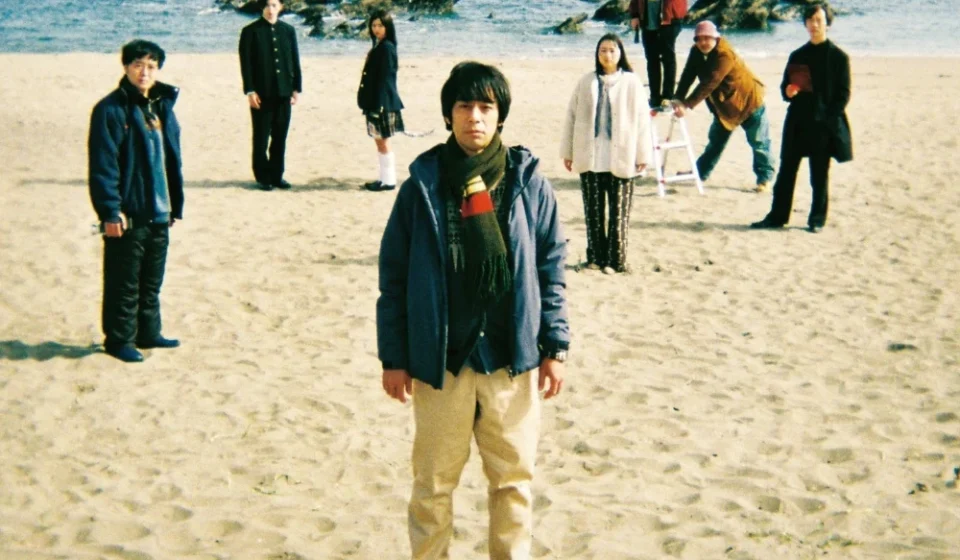
The Vertical Lens: Shinichiro Ueda Reimagines the Cinematic Experience in "Earthlings in Love"

Director Shinichiro Ueda has built his career on the art of meta-commentary. With his breakout cult phenomenon One Cut of the Dead, he didn’t just film a horror-comedy; he crafted a recursive love letter to the chaotic, unglamorous, and deeply collaborative nature of film production. Now, with his latest feature, Earthlings in Love, showing in the "Nippon Cinema Now" section of the 39th Tokyo International Film Festival, Ueda is pivoting from the meta-fictional to the meta-technological, exploring how the constraints of vertical, social-media-friendly microdramas can redefine the language of cinema.
Main Facts: A Story of Memory and Format
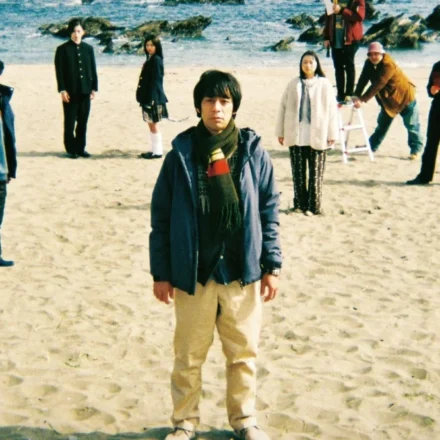
Earthlings in Love serves as a poignant, genre-bending exploration of personal history. The film follows Shinpei, a director grappling with a diagnosis of young-onset dementia. In a race against his own fading recollection, Shinpei embarks on a quest to document his memories by completing a film project he originally began as a teenager with his close friends.
The project began as an unconventional experiment: a series of 30 short episodes tailored specifically for vertical mobile viewing. Following an overwhelmingly positive reception online, Ueda re-edited and expanded the material into a 111-minute theatrical feature. This transition from a fleeting, algorithmic-friendly mobile format to the "sacred" space of the cinema screen serves as a central pillar of the film’s narrative—and a reflection of Ueda’s own creative evolution.
Chronology: From Micro-Episodes to Theatrical Premiere
The inception of Earthlings in Love was rooted in organic, rapid-fire creativity. Unlike traditional film productions that require months of pre-production, this project began with a desire to experiment with the vertical aspect ratio.
- The Conceptual Phase: Ueda began by brainstorming the aesthetic constraints of the vertical frame before writing the script. He sought to capture the "human proportion" of a single person, acknowledging the difficulty of staging group shots in a narrow, tall frame.
- The Social Media Run: The initial 30-episode run was released with a total runtime of 76 minutes. The format was designed for the digital age, utilizing cliffhangers to maintain audience retention in an environment where the "swipe" is the viewer’s most powerful tool.
- The Theatrical Expansion: Buoyed by audience engagement, Ueda transitioned the project to a feature format. This involved re-editing, trimming redundant cliffhangers meant for daily social media drops, and adding previously cut footage and entirely new scenes to flesh out the narrative depth.
- The Festival Debut: The final 111-minute cut made its way to the 39th Tokyo International Film Festival, marking a full circle for a story about the permanence of records versus the fragility of human memory.
Supporting Data: The Anatomy of a Vertical Frame
The choice of verticality was not merely a stylistic gimmick; it was a narrative device designed to mirror the protagonist’s condition.
"The vertical frame often, deliberately, leaves out information that we then discover later from a different angle," Ueda explains. By restricting the horizontal field of view, the director forces the audience to confront the limitations of perception. In the context of a protagonist suffering from young-onset dementia, this visual restriction becomes a metaphor for the narrowing scope of the character’s own reality.
From an editorial standpoint, the transition from the internet to the theater necessitated a rhythmic shift. On social media, the primary objective is to arrest the user’s attention within seconds to prevent them from scrolling past. In the theater, however, the audience enters a "contract of attention." Ueda utilized this freedom to slow the pacing, allowing for deeper character development and lingering performances that would have been "too slow" for a mobile screen.
Official Responses: Ueda on the "Ritual" of Cinema
In an exclusive discussion with Variety, Ueda addressed the tension between the ephemeral nature of internet content and the enduring legacy of theatrical film.
When asked about the future of the theatrical experience in a world dominated by microdramas, Ueda expressed a grounded optimism. He views the theater as a "sacred space"—a concept he borrows from a senior director colleague.
"It’s like a church or a sacred place," Ueda says. "Because you sit in the darkness, you’re all together, and you’re listening to [someone] preaching. It is like a ritual, one that will stay, because it’s very unique and it’s the only place where it works this way."
Ueda’s personal connection to the story also adds a layer of authenticity to the work. The script was informed by conversations with old schoolmates, where he discovered the inherent subjectivity of memory. "I realized that there were some differences in how we interpreted the same events we had experienced, and some things that were completely forgotten," he reflects. This disparity—between what is recorded in our minds and what is actually documented—is the core thematic engine of Earthlings in Love.
Implications: The Future of Hybrid Storytelling
The success and production model of Earthlings in Love raise significant questions about the future of filmmaking. Ueda’s ability to treat the creative process as "like a comment or a tweet" when working in the microdrama space, versus the 12-month slog of a traditional feature, suggests a new, tiered approach to content creation.
1. The Death of the "One-Size-Fits-All" Workflow
Ueda’s experience proves that directors no longer need to choose between the immediacy of social media and the prestige of cinema. Instead, the two can feed into one another. The social media release served as a living laboratory, allowing Ueda to test story beats, character arcs, and audience reactions in real-time before committing to the final edit for theaters.
2. Acting in the Digital Age
One of the most notable revelations in Ueda’s interview is the distinction between "social media acting" and "feature film acting." He notes that many actors working in short-form digital content tend to "overact" to compensate for the small screen. By casting performers with experience in traditional cinema, Ueda maintained a level of nuance that elevated the material, proving that the medium does not dictate the quality of the craft.
3. The Persistence of the Theatrical Ritual
Despite the rise of vertical, algorithmic content, Ueda believes that the "ritual" of the theater is immune to digital obsolescence. The ability to compel an audience to put away their devices and share a collective emotional experience for two hours remains a unique value proposition that no vertical short can replicate.
4. Memory as a Digital Artifact
Ultimately, Earthlings in Love suggests that in an era where we record everything—from lunch to life milestones—we are paradoxically losing our grip on the truth. By using a format (vertical video) that is inextricably linked to modern digital narcissism and memory-keeping, Ueda forces the audience to consider whether our reliance on recording technology is helping us preserve the past or simply helping us forget it.
As Shinichiro Ueda continues to navigate the space between the viral and the visceral, Earthlings in Love stands as a testament to his versatility. He has not only adapted to the changing habits of modern viewers; he has turned those very habits into the subject matter of his art. Whether the audience is watching on a six-inch phone screen or a fifty-foot projection, Ueda’s work insists that the story—and the human desire to be remembered—is what matters most.