
The Architect of Modern Auteurism: How Greta Gerwig Redefined Success by Embracing the Unknown

Greta Gerwig’s trajectory through the landscape of contemporary Hollywood is nothing short of anomalous. In an industry that thrives on typecasting and predictable career arcs, Gerwig has dismantled the conventional barriers between the "mumblecore" indie darling and the blockbuster architect. From her humble beginnings in Sacramento to the neon-soaked, billion-dollar cultural phenomenon of Barbie, Gerwig has operated on a singular, relentless philosophy: the belief that one’s capacity for greatness is not a fixed trait, but an act of creation that only reveals itself in the doing.
The Philosophy of "Doing": Deconstructing the Quote
At the heart of Gerwig’s creative evolution lies a sentiment she expressed in a 2017 interview with HuffPost—a moment that now serves as a prophetic blueprint for her subsequent career. Reflecting on the pressures of her burgeoning directorial path, she remarked:
"I just try to keep my eye on the thing that is most challenging and most alive to me in that moment. I figure — knock on wood — I’ll have a long career, and at the end of it the assessment will be whatever it is. You don’t do it until you do it, is the thing. Nobody knows what you have in you until you’ve done it, so I just keep pushing those boundaries, and I figure it will all come out in the wash."
This quote, delivered just as she was unveiling her solo directorial debut, Lady Bird, encapsulates a stoic approach to artistic ambition. It strips away the anxiety of legacy and replaces it with the tangible, immediate work of the craft. For Gerwig, "doing" is the only metric of validity. She suggests that the world—and perhaps the artist themselves—cannot accurately measure potential until it has been forged into reality.

A Chronology of Artistic Evolution
To understand the weight of this philosophy, one must look at the timeline of Gerwig’s ascent.
The Mumblecore Foundations (2006–2012)
Gerwig first gained notoriety as the face of the "mumblecore" movement, a micro-budget genre defined by naturalistic dialogue, loose scripts, and a fixation on the malaise of early adulthood. Her work in films like Baghead and Nights and Weekends showcased a raw, unvarnished talent. It was here, in the trenches of indie cinema, that she began her long-term collaborative partnership with Noah Baumbach.
Projects like Greenberg (2010) and Frances Ha (2012) were critical for Gerwig’s development. In Frances Ha, she didn’t just star; she co-wrote the script, infusing the character with a chaotic, lovable vulnerability that became her hallmark. These years were her "apprenticeship," where she learned to articulate the complexities of womanhood in a way that felt both intensely personal and culturally resonant.
The Directorial Breakthrough (2017–2019)
The transition from performer to auteur was not a pivot, but an expansion. With Lady Bird (2017), Gerwig brought her intimate knowledge of Sacramento to the screen, crafting a coming-of-age story that felt like a love letter to the place she couldn’t wait to leave. The film was a critical juggernaut, earning Best Picture and Best Director nominations at the Academy Awards.

She followed this with a bold, modern reinterpretation of Louisa May Alcott’s Little Women (2019). By shifting the narrative structure and emphasizing the economic realities of the March sisters, she proved that she could handle canonical literature with both reverence and radical subversion.
The Blockbuster Transformation (2023–Present)
The pinnacle of her "doing it" philosophy arrived with Barbie. Few directors would dare take a corporate intellectual property—a plastic doll with a controversial history—and turn it into a philosophical exploration of existentialism, patriarchy, and the beauty of human fragility. The film shattered box office records, crossing the billion-dollar mark with unprecedented speed, and secured Gerwig’s status as a commercial powerhouse who refuses to sacrifice her idiosyncratic voice.
Supporting Data: Beyond the Critical Acclaim
The numbers support the narrative of a director who is consistently "pushing boundaries."
- Lady Bird: Produced on a modest $10 million budget, the film grossed nearly $80 million worldwide. Its cultural impact was measured not just in dollars, but in its influence on the "coming-of-age" genre, which saw a surge in similar, female-led, localized dramas in the following years.
- Little Women: This adaptation breathed new life into a 150-year-old novel, grossing over $200 million globally and proving that "feminist" period pieces could remain massive commercial draws.
- Barbie: As the highest-grossing film of 2023, Barbie proved that audiences are starved for original, auteur-driven blockbusters. It demonstrated that a director’s unique vision, when applied to a global brand, can be a massive financial asset rather than a liability.
The Implications of Gerwig’s "Boundary-Pushing"
Gerwig’s career offers a profound lesson for the entertainment industry: the most successful creators are those who ignore the "impossible" nature of a project. When the idea of a live-action Barbie was first floated, it was widely mocked. It took the combined vision of Margot Robbie, as both lead and producer, and Gerwig’s penchant for deep, empathetic character work to transform the concept into a cultural event.
The implications for future filmmakers are clear: the "boundary" is often a mental construct held by studio executives and critics. By focusing on what is "most alive" in the moment, Gerwig bypassed the noise of public perception and focused on the work. She didn’t ask if the world needed a Barbie movie; she asked what she could do with a Barbie movie to make it matter.
Official Responses and Industry Recognition
Throughout her rise, the critical establishment has shifted from viewing Gerwig as an "indie darling" to a "titan of industry." The Academy’s consistent recognition of her work—spanning screenwriting and directing categories—highlights an industry-wide acknowledgement that her voice is essential.
Perhaps more tellingly, her peers have often cited her collaborative nature as a key to her success. Actors like Saoirse Ronan and Timothée Chalamet, who have worked with her multiple times, often speak to the sense of safety and creative agency she provides on set. This, in turn, allows for the "alive" performances that anchor her films. She does not command from the top down; she invites her collaborators to share in the "doing."
Conclusion: The Wash of Legacy
Greta Gerwig’s career trajectory serves as a masterclass in professional patience and bold risk-taking. She did not set out to be a blockbuster director; she set out to tell stories that felt urgent to her, and the scale of those stories grew as her command of the medium increased.
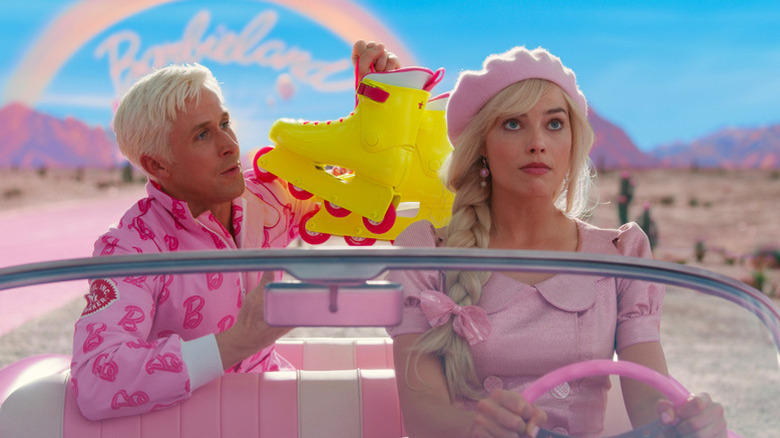
As she moves forward, Gerwig stands as a testament to the idea that talent is dynamic. Her advice—"you don’t do it until you do it"—is a call to action for every creative individual. It removes the paralyzing weight of perfectionism and replaces it with the grit of execution. Whether she is crafting an intimate, quiet scene in a Sacramento bedroom or choreographing a massive, hot-pink dance number in Dreamhouse, Gerwig remains tethered to the same core principle: keep your eye on the challenge, keep pushing, and let the legacy take care of itself in the wash.
In an era of remakes and predictable sequels, Greta Gerwig’s refusal to be categorized remains the most exciting thing about her. She has proven that "doing it" is not just about finishing a project; it is about redefining what is possible in the process.