Beyond the Grind: Foundry’s SmartRoto Redefines the Future of VFX Compositing

The visual effects industry has long faced an uncomfortable truth: despite the digital revolution, one of the most fundamental tasks—rotoscoping—remains a largely manual, time-intensive, and soul-crushing exercise. For decades, the process of isolating subjects from their backgrounds frame-by-frame has been the "entry-level" gauntlet for junior artists and a recurring burden for seasoned compositors. Today, Foundry, the powerhouse behind the industry-standard Nuke, is aiming to change that paradigm with the launch of SmartRoto.
SmartRoto is an AI-powered plugin for the Nuke ecosystem designed not to replace the artist, but to weaponize their intuition. By focusing on the acceleration of the keyframing process rather than attempting to automate the creative decision-making of rotoscoping, Foundry has positioned this tool as a sophisticated assistant that understands the language of splines, sub-pixel accuracy, and temporal coherence.
The Philosophy of "Human-in-the-Loop" AI
The first hurdle Foundry had to overcome in marketing SmartRoto was managing expectations. In an era where "AI" is often synonymous with "magic button," Foundry’s Director of Product for AI Research, Adam Cherbetji, is quick to clarify what the tool is not.
"This isn’t a magic bullet," Cherbetji asserts. "It doesn’t do the full spline creation for you. The really time-consuming part is the keyframing, and that is where we focused."
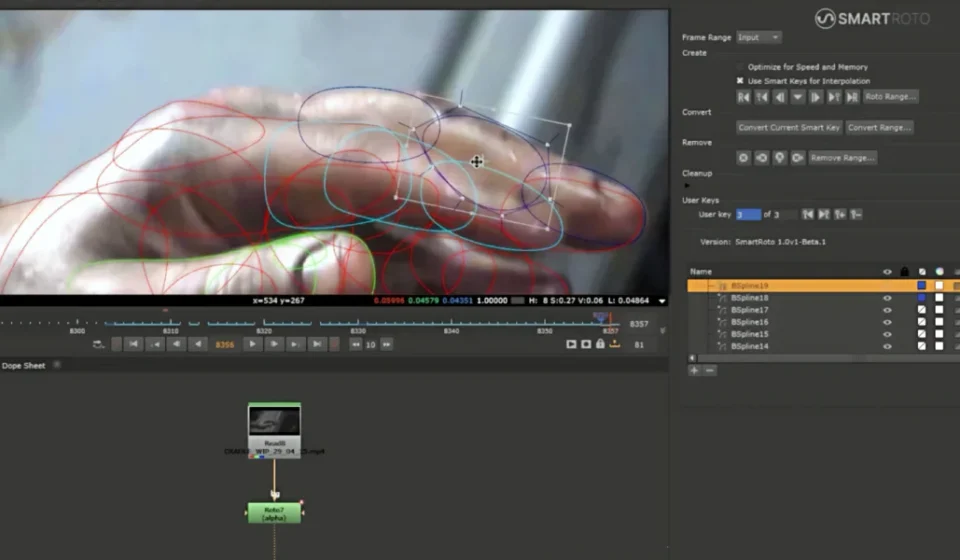
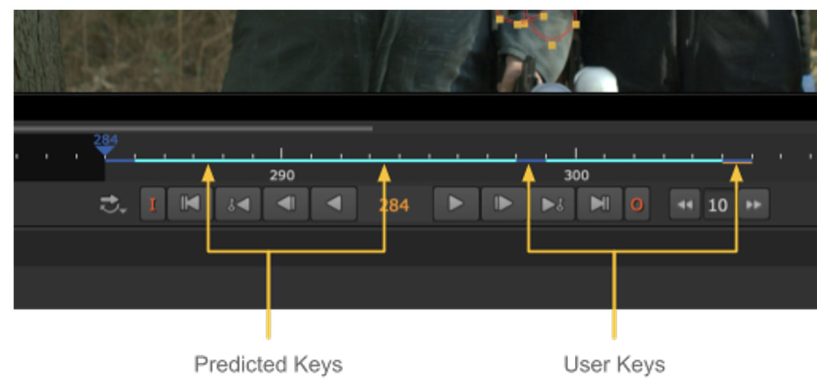
The core philosophy of SmartRoto is the distinction between "Smart Keys" and "User Keys." In this system, the artist remains the architect. The artist breaks down a subject into articulated, logical shapes on a clean frame—a process requiring the specific creative judgment that only a human can provide. Once these initial shapes are defined, the AI takes over the drudgery. It propagates those splines across the image sequence, predicting movement, deformation, and scale.
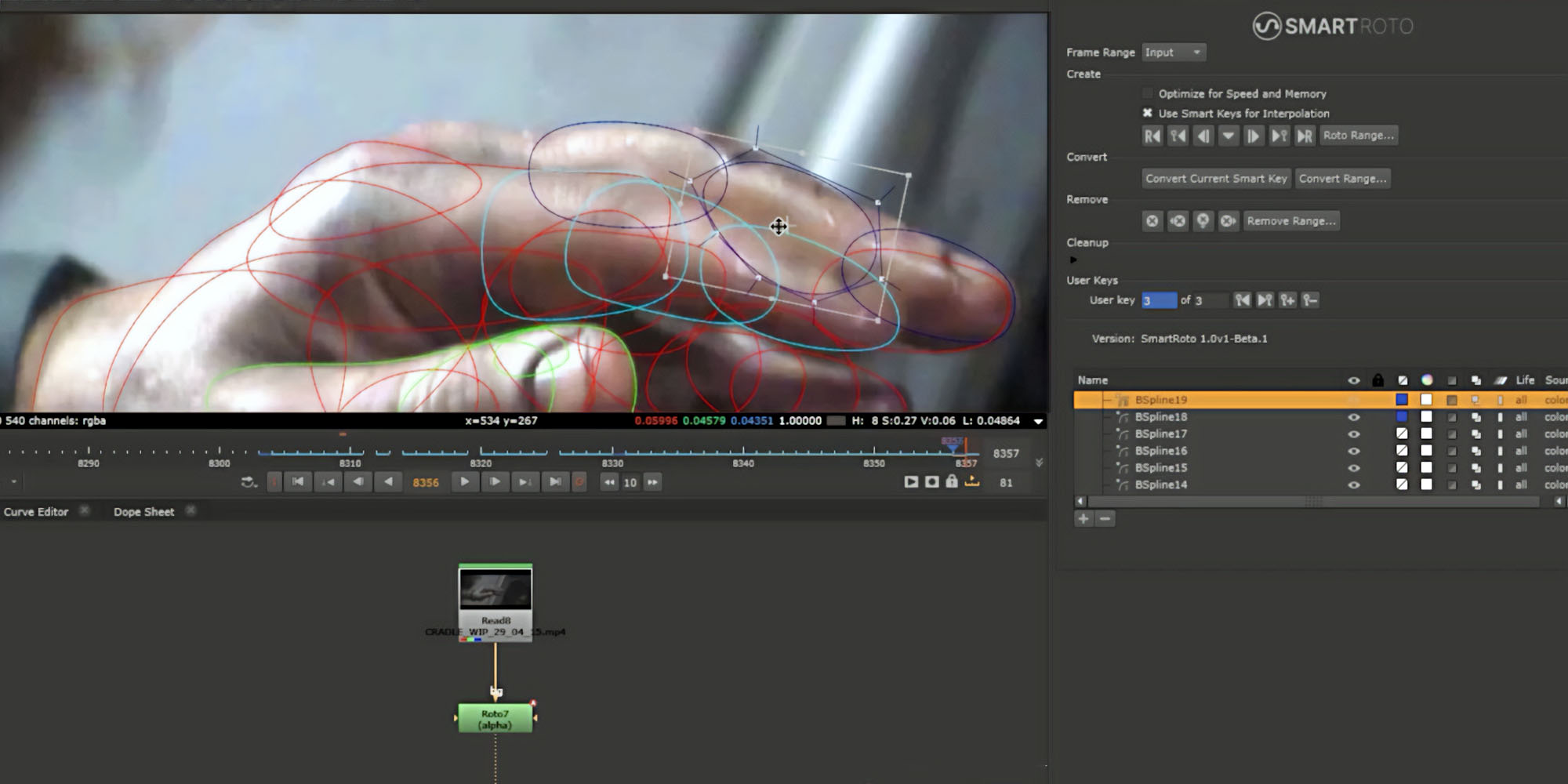
Crucially, the system is designed to defer to the human. When an artist makes a correction, that frame becomes a "User Key." The system treats these user-defined points as absolute gospel, never overwriting them. This creates a collaborative workflow: the AI provides the heavy lifting, and the artist provides the oversight.
A Chronology of Innovation
The road to SmartRoto was neither short nor straightforward. The project represents a culmination of years of rigorous R&D that transcends the typical "fast-to-market" AI trends.
- Early Explorations (2018–2020): Foundry began investigating automated rotoscoping alongside academic partners, including a notable collaboration with DNEG and the University of Bath. These early efforts proved that the problem was significantly more complex than simple image processing.
- Internal Reset (2022): Four years ago, the research team decided to pivot. They opted to build a proprietary model and training datasets from scratch. Unlike many contemporary AI tools that rely on scraped data, Foundry prioritized commercial safety and technical robustness.
- The Data Foundation: The model was trained on high-quality, professionally rotoscoped footage—much of it derived from internal filmmaking projects. This ensured that the model learned from "gold-standard" examples rather than noisy, low-quality web data.
- The Launch (2026): After extensive beta testing and refining the user experience, SmartRoto is now available as a commercial plugin for Nuke, NukeX, Nuke Studio, and Nuke Indie, priced at $499 per year.
Technical Architecture: Why Splines Matter
One of the most frequent criticisms of modern AI matting tools is their reliance on raster segmentation masks. While impressive for social media filters, these masks often lack the sub-pixel precision and temporal stability required for high-end film and television work.
Foundry’s approach intentionally avoids the pitfalls of optical flow and basic segmentation models. "Optical flow breaks down at the edge," explains Cherbetji. "That is exactly where you need the precision."
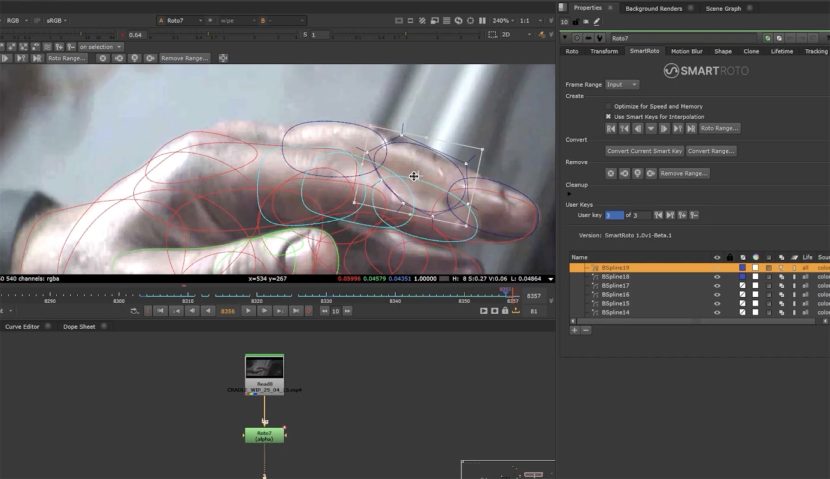
Instead, SmartRoto treats the spline as the "currency" of the roto artist. By operating directly on vector splines, the system remains sub-pixel accurate. Furthermore, the model leverages the spatial relationships between shapes as a constraint. By understanding that a hand is attached to an arm, and an arm to a body, the AI can make informed predictions that a standalone, flat-segmentation model would miss.
This is also a "lightweight" model in the context of modern AI. Running locally, it requires approximately 8GB of VRAM, allowing it to function within existing studio hardware pipelines without the need for massive cloud infrastructure.
Supporting Data and Real-World Performance
To validate the efficiency of the tool, Foundry conducted a blind study with professional rotoscopers. Artists were tasked with completing a series of shots using traditional manual Nuke tools versus SmartRoto. The results were compelling:
- Speed Gains: On average, artists were twice as fast as their manual counterparts. In the higher end of the testing spectrum, some artists reported being up to 4 times faster.
- Qualitative Feedback: Beyond the raw numbers, the most significant metric was the "no-go-back" factor. Once artists integrated the AI into their workflow, they reported a strong reluctance to ever return to traditional manual keyframing.
- The "Thinning" Factor: The model generates a dense set of keyframes. Recognizing that dense keys are typically difficult to manipulate, Foundry has implemented a thinning tool that intelligently analyzes motion to identify ranges suitable for interpolation, effectively cleaning up the timeline for the artist.
Industry veteran Benjamin Bratt, author of Rotoscoping: Techniques and Tools for the Aspiring Artist, praised the tool’s seamless integration into established pipelines: "It uses principles of rotoscoping and incorporates an intuitive, easily adaptable keyframe approach. It’s easy to fix auto-generated keys without needing to start from scratch."
Implications for the VFX Industry
The release of SmartRoto arrives at a pivotal moment. The industry is currently witnessing a "gold rush" of AI-assisted roto tools, with research papers like OTOY’s RotoShop (SIGGRAPH 2026) demonstrating that the broader scientific community is equally obsessed with the vector-vs-raster problem.
The implications for the pipeline are profound:
- Increased Iteration: By reducing the time cost of rotoscoping, studios can afford to iterate more frequently on shots that previously would have been "locked" early due to budget constraints.
- The Evolution of the Roto Artist: The role of the rotoscoper is shifting from a manual laborer to a "curator of motion." As the AI handles the interpolation, the artist can focus on the nuances of edge-quality, motion blur, and the complex, messy reality of human movement.
- Standardization: As more tools adopt spline-based AI, the industry may move toward a universal standard for interchange, where AI-generated paths become as reliable as hand-drawn ones, potentially simplifying the collaboration between different facilities.
Final Thoughts
Foundry’s SmartRoto is a testament to the idea that AI is most effective when it respects the craft it intends to augment. By refusing to replace the artist’s judgment and instead providing a more efficient vehicle for their intent, Foundry has avoided the "uncanny valley" of automated VFX tools.
While the technology is not a total panacea for every production challenge—full occlusions and complex, overlapping subjects still require a human touch—it represents a massive leap forward. For the compositor who has spent thousands of hours nudging control points in the dead of night, SmartRoto is not just another plugin; it is the promise that the most tedious job in the business is finally entering the modern age.