The Chameleon’s Craft: John Turturro on Auditions, Artistry, and the Evolution of a Career

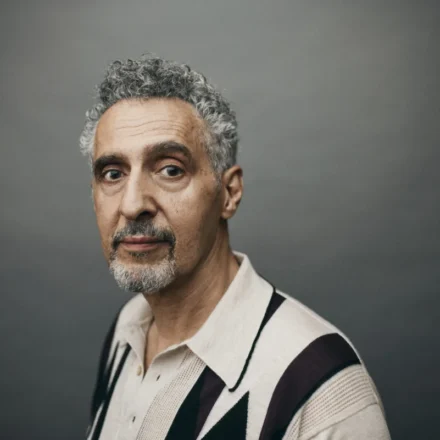
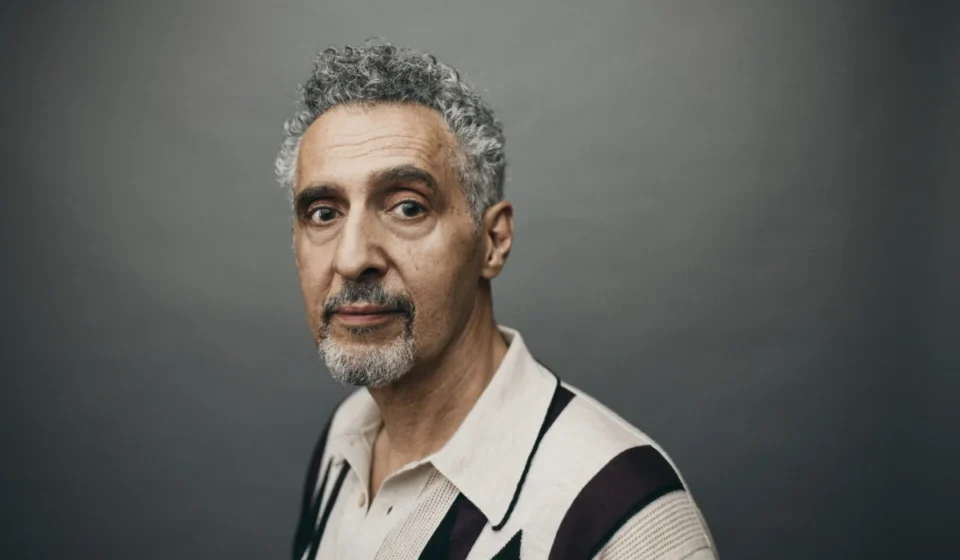
With a filmography spanning over four decades and more than 120 acting credits, John Turturro has become one of the most recognizable and versatile faces in American cinema. From the gritty streets of Brooklyn in Spike Lee’s masterpieces to the polished, unsettling corridors of Apple TV+’s Severance, Turturro has built a reputation as a performer who defies categorization.
In a recent, career-spanning conversation with Variety co-editor-in-chief Ramin Setoodeh, held in partnership with the Miami Film Festival, the veteran actor accepted the Creative Vanguard Award. The dialogue provided a rare, intimate look at the man behind the method—a performer who treats his craft with the pragmatic discipline of a tradesman and the soul of an auteur.
A Legacy of "What-Ifs": The Madonna Audition
Every iconic career is built on a foundation of missed opportunities and peculiar encounters. For Turturro, one such story dates back to 1985, during the casting of the cult classic Desperately Seeking Susan. At the time, Madonna was an ascending pop sensation rather than the global icon she would eventually become.
Turturro recalled auditioning for the role of the pop star’s boyfriend. "I didn’t know who Madonna was," he confessed to the audience. "She wasn’t that famous yet, and we had a kissing scene, and she really kissed me. I mean, deeply." The intensity of the moment was so jarringly authentic that it threw the actor off his professional game. "I dropped all my sides, all my pages on the floor. I was like, ‘I thought this was an audition. I didn’t know it was this kind of movie.’"
While he didn’t secure the role of the boyfriend, he did land the part of Ray, the comical club manager. The connection, however, lingered beyond the production. Turturro claims Madonna’s interest in him persisted, but he ultimately chose to keep their relationship strictly platonic.
"Some people, you feel like maybe they want to absorb you, and I didn’t want to be absorbed," Turturro explained. His commitment to his personal life remains firm; he has been married to the same woman for decades, a rarity in the ephemeral world of Hollywood. "I haven’t seen her in a long time because she was married to all these different guys. I’m married to one woman. One wife is enough. That’s my motto."
The Plumber and the Electrician: A Philosophy of Choice
Turturro’s career is a testament to the balance between commercial viability and artistic integrity. Throughout his journey, he has collaborated with the titans of the industry, including Martin Scorsese, Tom Cruise, Spike Lee, the Coen brothers, Adam Sandler, and Meryl Streep. This wealth of experience has granted him the rare luxury of agency—the ability to curate his own path.
When discussing how he selects roles, Turturro utilizes a unique metaphor: "Franchises are my electrical job, and my other kind of job is my plumbing job. So, I consider myself a plumber, and then I do some electrical work."
For Turturro, the "electrical work" (big-budget, high-profile franchises) provides the financial stability necessary to sustain a life in the arts, while the "plumbing" (indie films and theater) offers the visceral, grounding work that fosters growth. This pragmatic approach allows him to avoid the trap of stagnation. "Time becomes more precious as I get older," he noted. "I don’t want to repeat myself. I want to add to whatever I created. I’m not interested in doing the same, singing the same song. Sometimes some singers have to always sing that hit song, but I don’t want that."
The "Severance" Connection: Finding Humanity in the Artificial
Perhaps no recent role has highlighted Turturro’s delicate touch as much as that of Irving in Apple TV+’s Severance. The series, which explores the dark implications of a "work-life balance" procedure, required a specific kind of chemistry between leads.
Turturro revealed that he was given significant input regarding his character’s romantic interest, and he didn’t hesitate to suggest his longtime friend, Christopher Walken. "He’s actually underestimated," Turturro said of his co-star. "People don’t realize the different things he can do. He has a vulnerability to him and a delicacy that people sometimes think is strange, but he’s actually a delicate person, and that was the reason I did the show."
The shooting conditions for the first season were grueling, exacerbated by the isolation of COVID-19 protocols. "With masks and shields, and in that office, it was easy to have a nervous breakdown in that place," he admitted. Having a friend like Walken on set served as an emotional anchor, allowing them to navigate the sterile, high-pressure environment of the Lumon Industries set.
Radical Gentleness: The Appeal of "The Only Living Pickpocket"
Turturro is currently generating significant awards buzz for his latest starring role as Harry in The Only Living Pickpocket in New York. The actor is particularly drawn to the film’s "radical gentleness," a quality he finds increasingly rare in contemporary media.
"So many things nowadays are just in your face," Turturro lamented. "The news is in your face, sports are in your face, movies are in your face. I felt there was a humanity to the world, and also there’s an element of class in it that people are struggling to live. That’s what makes an interesting character: obstacles."
Despite the growing Oscar talk, Turturro remains largely indifferent to the accolades. His focus remains firmly on the internal reward of the work itself. Having never won an Academy Award, he is not driven by the pursuit of a statue, but rather by the pursuit of a compelling narrative that challenges his established range.
Implications for the Future of Independent Cinema
Turturro’s trajectory provides a blueprint for longevity in an industry that frequently discards actors as they age. By refusing to be pigeonholed—moving fluidly between the manic energy of Do the Right Thing and the quiet desperation of Severance—he has remained relevant across generations.
His philosophy regarding "obstacles" in character development extends to his own career. By choosing scripts that require him to grapple with complex, often contradictory human traits, he ensures that his performances never veer into caricature.
As he looks toward the future, Turturro’s approach remains consistent: avoid the "hit song" syndrome. In an era where streaming platforms and social media demand constant, predictable output, his insistence on "radical gentleness" and artistic growth serves as a vital reminder of the actor’s true purpose. He is not merely a performer; he is a craftsman, carefully selecting his tools and his projects, ensuring that every performance adds a new layer to a mosaic that has defined American acting for nearly half a century.
Whether he is playing a club manager in the 80s or a corporate drone in the 2020s, John Turturro’s work continues to prove that the most interesting characters are not those who are perfectly polished, but those who are willing to navigate the messiness of the human condition. As he continues to prioritize substance over status, his career remains a masterclass in how to stay relevant while staying true to oneself.