The Streaming Pivot: Disney Eyes FAST Channels to Capture Price-Sensitive Audiences

In a significant shift for the global media landscape, The Walt Disney Company has officially signaled its intent to explore the launch of a Free, Ad-Supported Streaming Television (FAST) product. During the company’s latest earnings call, leadership outlined a strategy to pivot toward a more diverse revenue model, aiming to capture consumer segments that have remained elusive to the premium, subscription-based Disney+ platform.
This strategic deliberation marks a potential turning point for the “House of Mouse” as it navigates a maturing streaming market where traditional subscription growth is increasingly difficult to sustain. By contemplating a foray into the FAST sector—a landscape already populated by giants like Tubi, Pluto TV, and The Roku Channel—Disney is effectively acknowledging that the future of television may be as much about ad inventory as it is about monthly subscription fees.
The Strategic Rationale: Why FAST?
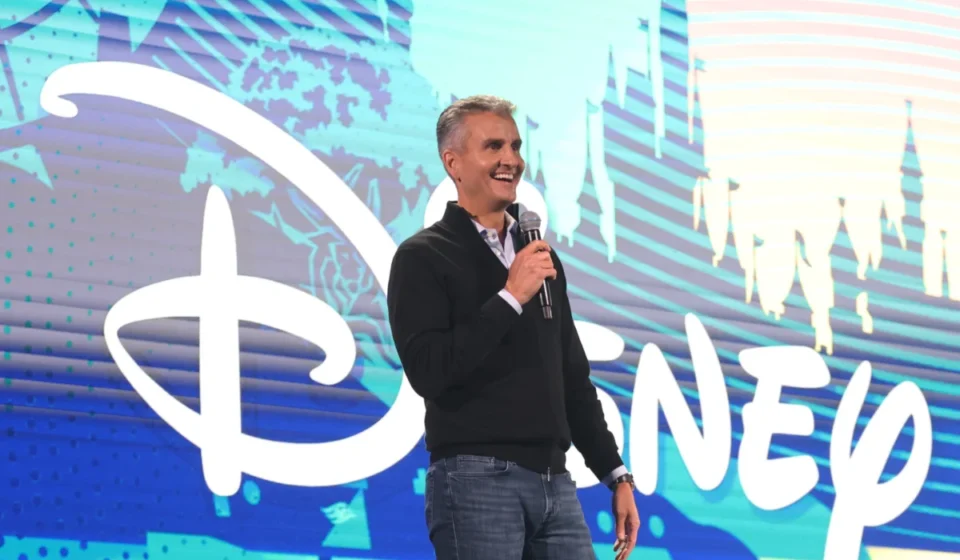
The core motivation behind Disney’s interest in a FAST service is twofold: reach and inventory. During Wednesday’s earnings call, Josh D’Amaro, Chairman of Disney Experiences, provided clarity on why the company believes a free, ad-supported tier is a logical evolution of its existing streaming ecosystem.
“We’re exploring a free product for consumers, one that will allow us to accomplish several goals and hopefully do that efficiently,” D’Amaro stated. “First, we see it as a way to expand our reach to a customer segment that’s more price-sensitive, and expanding our reach is, as we’ve talked about before, one of our strategic priorities.”
The "price-sensitive" consumer segment has become the new battleground for streaming services. As subscription fatigue sets in globally, consumers are increasingly hesitant to add another monthly line item to their household budgets. By offering a FAST channel—which requires no monthly fee but delivers curated, ad-supported programming—Disney hopes to capture viewers who are currently priced out of the Disney+ experience.
Furthermore, D’Amaro highlighted a logistical advantage unique to Disney’s current advertising position. “Unlike a lot of our AVOD (Advertising-Based Video on Demand) competitors, we’re fairly well sold, meaning more inventory would actually help us accelerate our ad revenue growth,” he explained. In essence, Disney’s ad sales teams are currently managing such high demand for their existing inventory that they require more “slots” to fulfill advertiser interest. A new FAST product would effectively create a massive, scalable canvas for these advertisers, driving growth without cannibalizing the core Disney+ subscription base.
Chronology of the Streaming Shift
To understand why Disney is now moving toward a FAST offering, one must look at the broader evolution of the streaming industry over the past 24 months.
- Early 2023: The "streaming wars" shifted from a subscriber-growth-at-all-costs mentality to a focus on profitability. Companies began implementing price hikes and cracking down on password sharing.
- Mid-2024: FAST services saw unprecedented growth. Platforms like Tubi and The Roku Channel began capturing significant shares of total television viewership, often outperforming cable networks in specific demographics.
- Late 2024: Major media conglomerates, including Fox and NBCUniversal, began aggressively integrating their content into FAST channels, viewing them as a "top-of-funnel" strategy to drive audiences toward premium content.
- November 2025 (Present): Disney confirms it is formally exploring a FAST strategy, following a series of robust earnings reports that highlight the success of its combined Disney+/Hulu bundle.
The movement toward free, ad-supported content is not happening in a vacuum. It is a reactionary trend to the saturation of the SVOD (Subscription Video on Demand) market. As Netflix and other major players have flirted with the idea of free tiers, Disney is now positioning itself to capitalize on the audience that is comfortable with the "lean-back" experience of linear-style streaming, which mirrors traditional cable but arrives via an internet connection.
Supporting Data: The Rise of Free-to-View
The data surrounding FAST services justifies Disney’s interest. According to industry metrics from mid-2025, the growth of FAST platforms has been meteoric.
- Tubi: In May 2025, the platform captured roughly 2.3 percent of all television viewing in the United States, a figure that continues to climb as it adds more high-profile library content.
- The Roku Channel: As a pioneer in the space, it captured 3.1 percent of all TV viewing in the same period, signaling that viewers are increasingly turning to free services as their primary or secondary entertainment hubs.
Disney’s own performance data provides context for this decision. While the company has ceased reporting specific subscriber numbers for its individual platforms, the most recent data shows a healthy trajectory. As of late 2025, Disney+ boasted 132 million subscribers, an increase of 3.8 million over the previous quarter. When combined with Hulu, the total streaming base stands at approximately 196 million subscribers.
However, the growth of the "membership ecosystem" is where the real potential lies. By integrating TikTok videos into the Disney+ platform and teasing a broader membership structure, Disney is signaling that it wants to own more of the user’s screen time. A FAST channel serves as a vital bridge in this ecosystem, acting as a gateway for casual viewers to become familiar with Disney’s massive intellectual property library, eventually funneling them toward premium subscription services.
Industry Responses and Market Implications
The industry response to the potential for a Disney-backed FAST service has been one of cautious observation. Competitors are watching to see how Disney differentiates its product.
Netflix, for its part, has been vocal about its skepticism regarding a fully free offering. Co-CEO Greg Peters noted in July that while the company continues to evaluate the market, there are no near-term plans to launch a free tier. "Free is something that we’re going to continue to consider, but we have no near-term plans to launch something," Peters said.
Conversely, companies like Fox have taken a more aggressive stance, evidenced by their strategic acquisitions to bolster their own streaming ambitions through the Roku ecosystem. The market consensus is that the "ad-supported" model is no longer a niche corner of the streaming market; it is becoming the primary driver of growth for media conglomerates.
For Disney, the stakes are high. The company reported that its SVOD entertainment revenue (excluding ESPN) reached $712 million in the most recent quarter, a significant year-over-year increase. This financial stability gives Disney the flexibility to experiment. By transforming Disney+ into a “comprehensive membership ecosystem,” the company is moving away from being a mere content provider and toward being a utility for family and adult entertainment.
Future Outlook: A New Era of Disney Streaming
While D’Amaro was careful to state that “nothing specific” is being announced today, the intent is clear. Disney is looking at a future where its brand is omnipresent—from the theme parks to the living room screen—across both premium and free tiers.
The implications for consumers are largely positive. A free, Disney-branded FAST service would likely include a mix of library content, such as older animated classics, reality television from Hulu, and perhaps even curated news or sports highlights. This would provide the company with a massive amount of data on viewer habits, allowing them to better market their premium content.
For investors, the move is a signal that Disney is committed to maximizing the yield on its content library. By squeezing more ad revenue out of older assets through a FAST channel, the company can effectively offset the production costs of its high-budget, tentpole original series on Disney+.
As the streaming landscape continues to fragment, the companies that win will be those that provide the most flexible access to their content. Whether it is through a high-end subscription or a free, ad-supported channel, Disney is positioning itself to capture the viewer regardless of their willingness to pay. As the company rolls out its new membership structure in early 2026, the potential for a FAST channel appears to be the final piece of the puzzle, ensuring that when it comes to the battle for attention, the House of Mouse remains front and center.