The Architect of the Gaze: Ron Howard’s ‘Avedon’ and the Metaphysics of Modern Photography

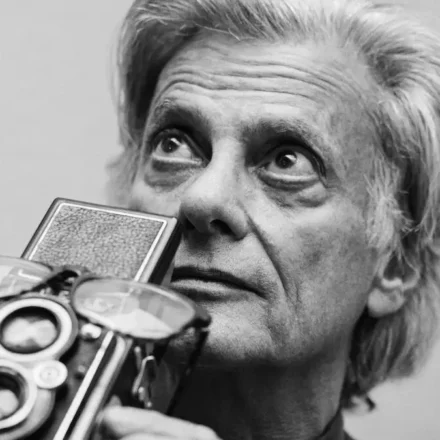
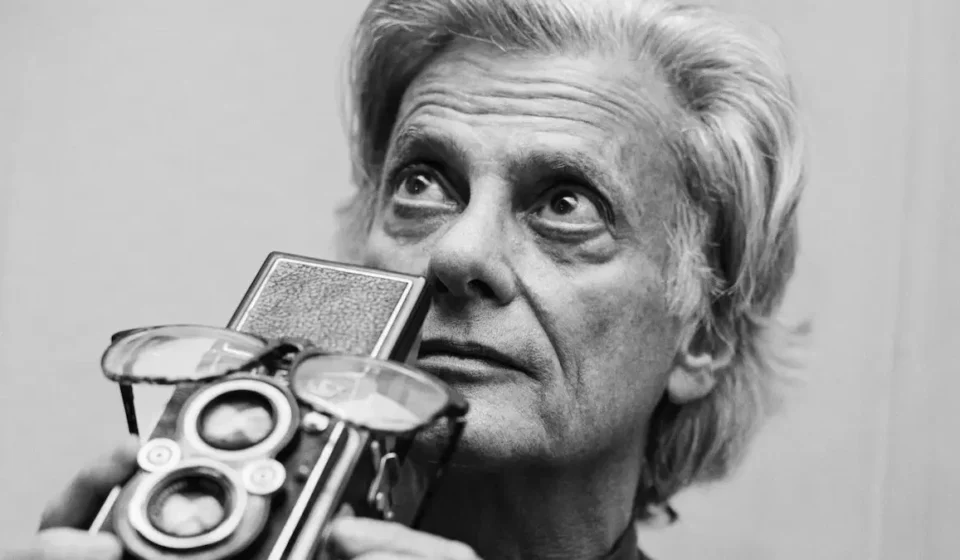
In the landscape of contemporary documentary filmmaking, few directors have successfully transitioned from narrative blockbusters to intimate biographical portraits with the grace of Ron Howard. While his previous ventures into the genre—most notably The Beatles: Eight Days a Week—received critical acclaim, his latest offering, simply titled Avedon, represents a new zenith in his career. The film is not merely a biography of Richard Avedon, the legendary photographer who defined the 20th century’s visual vernacular; it is a sophisticated, "musical" exploration of how one man changed the metaphysics of the image.
Through the expert lens of editor Andrew Morreale, Avedon weaves together a tapestry of thousands of photographs, archival footage, and high-profile interviews to dissect a paradox: how a man synonymous with the artifice of high fashion became the ultimate democratic humanist of the photographic medium.
Main Facts: A Masterclass in Documentary Form
Avedon serves as an exhaustive deep dive into the 60-year career of Richard Avedon, spanning from his early days in the 1940s to his death in 2004. The documentary is anchored by the sheer volume of Avedon’s output—averaging one professional sitting per day, every working day, for six decades. This equates to over 16,000 sittings, a figure that highlights both his obsessive work ethic and his unparalleled access to the icons of the modern era.
The film distinguishes itself through its technical "suppleness." Rather than a standard "talking head" documentary, Howard and Morreale layer Avedon’s images into the viewer’s consciousness with a rhythmic finesse. The use of Spoon’s "I Turn My Camera On" provides a funky, martial beat to a montage of portraits that include John Lennon, Michael Jordan, Elizabeth Taylor, and J. Robert Oppenheimer. The documentary argues that Avedon’s lighting—timeless and direct—makes every subject appear as though they were photographed yesterday, stripped of the period-specific filters that usually date historical photography.
Chronology: From Merchant Marine ID Cards to Global Iconography
To understand Avedon’s revolutionary style, the film traces his journey back to his roots in New York City. Born in 1923, Avedon possessed a preternatural visual sense; as a child, he would blink and hold his eyes closed to "save" the images he saw on the street.
The Formative Years (1942–1946)
Avedon’s professional "boot camp" occurred during World War II when he joined the U.S. Merchant Marines at age 19. Assigned to the photographic department, he was tasked with taking roughly 100,000 portraits of enlisted men for identification cards. This "potato peeling" of photography—shooting thousands of baffled faces against a stark white background—became the foundation of his aesthetic. He realized that by stripping away the background, the face became the sole landscape of the image, revealing an unfiltered, existential truth.
The Rise of the Legend (1950s–1960s)
By the 1950s, Avedon had transitioned into the world of high fashion, yet he brought his "ID card" sensibility with him. He famously broke the rules of fashion photography by introducing movement and narrative. The film highlights his role as a consultant on the 1957 musical Funny Face, where Fred Astaire played a character directly modeled after Avedon. During this era, he captured some of his most iconic images, including the "prank" shot of Charlie Chaplin with devil horns and the hauntingly vulnerable portrait of Marilyn Monroe.
The Radical Shift (1970s–1980s)
In the latter half of his career, Avedon moved toward increasingly raw and provocative subjects. He spent seven weeks in Vietnam capturing the cold gaze of American generals and documented the counter-culture through the Chicago 7 and the denizens of Andy Warhol’s Factory. The film pays special attention to his 1980 series, In the American West, where he photographed Oklahoma oil workers and drifters with the same reverence he afforded to royalty. This series was initially rejected by major New York museums for being "too raw," proving that Avedon remained ahead of the cultural curve well into his later years.
Supporting Data: The Mechanics of the "Avedon Touch"
The documentary provides fascinating data points regarding Avedon’s methodology, which defied traditional technical expectations. Despite his status, Avedon was famously uninterested in the "gear" of photography.
- The 10-Shot Rule: Isabella Rossellini notes in the film that while other photographers would shoot hundreds of frames, Avedon might only take ten. He would spend the majority of the hour talking, drinking coffee, and engaging with the subject, only moving to the white paper background in the final five minutes.
- The Archive: James Martin, executive director of the Richard Avedon Foundation, reveals the staggering scale of the Avedon archives. The 16,000 sittings documented provide a frame-by-frame history of the 20th century’s social and political evolution.
- Invisible Technique: The film posits that Avedon’s "magic" was psychological rather than technical. By creating a space where the subject felt they were in a "dance" with the artist, he captured moments of accidental truth—such as the breast-popping, spontaneous pose of Lauren Hutton or the "Norma Jean" weariness that peeked through Marilyn Monroe’s facade.
Official Responses and Testimonials: A Legacy Re-Examined
Howard’s documentary gathers a "who’s who" of the art and media worlds to testify to Avedon’s impact. The insights provided by these luminaries offer a multifaceted view of a man who was as complex as his subjects.
- John Avedon: The photographer’s son provides a "lovingly insightful" perspective on his father’s personal life, including his troubled marriages and the tragic story of his mentally ill sister, whom Richard revered and often used as a muse for his early explorations of beauty and pain.
- Tina Brown and Adam Gopnik: The former New Yorker editor and the renowned essayist discuss Avedon’s ability to bridge the gap between "high art" and commercial "advertising," arguing that his work for brands like Calvin Klein (the surrealist Obsession spots) carried the same artistic weight as his portraits.
- Larry Gagosian and Hilton Als: Representing the art and critical worlds, they analyze how Avedon’s "head-on existential classicism" echoed the work of Diane Arbus, focusing on the slight imperfections—the things that were "off"—that made a person truly individual.
Critics have already hailed the film as a masterpiece of the genre. Variety noted that the film’s editing should be "studied in filmmaking classes," while art historians have praised Howard for finally explaining the "Avedon Paradox": how he could be a paragon of impossible glamour while simultaneously acting as a democratic humanist who made every face, from a drifter to a president, equal before the lens.
Implications: Changing the Way We See
The implications of Richard Avedon’s work, as framed by Ron Howard, extend far beyond the confines of a gallery wall. Avedon changed the "metaphysics of photography" by shifting the focus from the photographer’s skill to the subject’s essence.
The Democratization of the Image
By using the white background—a technique he perfected in the Merchant Marines—Avedon equalized humanity. In his world, an oil worker in a dirty jumpsuit was given the same compositional dignity as Audrey Hepburn. This approach prefigured the modern era of portraiture, where the "unfiltered" and "authentic" are prized over the staged and perfect.
The Psychological Portrait
Avedon’s work implies that a photograph is never just a record of a face; it is a record of a relationship. The film makes it clear that the iconic looks his subjects gave him—the "piercing bird-eye look"—were reactions to Avedon himself. He proved that the photographer is an active participant in the image, a director of human emotion rather than just a witness with a camera.
Continuity Across Mediums
Finally, the film suggests that the distinction between "commercial" and "fine art" is a false dichotomy. Avedon’s 60-year career shows a breathtaking continuity. Whether he was shooting a perfume ad or a portrait of his aging father to reconcile their relationship, he was striving for the same goal: to open the viewer’s eyes to the raw, unfiltered reality of being alive.
In Avedon, Ron Howard has created more than a tribute; he has created a visual symphony that mirrors the intensity of its subject. As the film concludes, it leaves the audience with the understanding that Richard Avedon didn’t just take pictures—he captured the "ineffable dance" of existence, leaving behind a map of the 20th-century soul.