From Streaming Screen to Silver Screen: The Theatrical Revival of "Heated Rivalry"

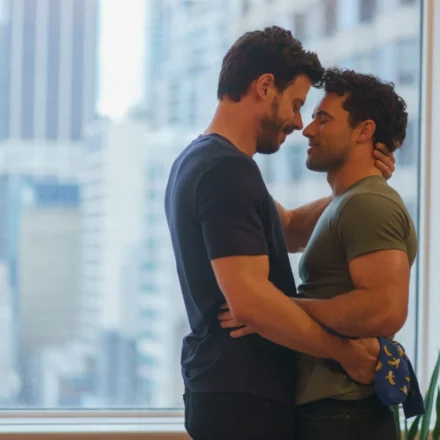
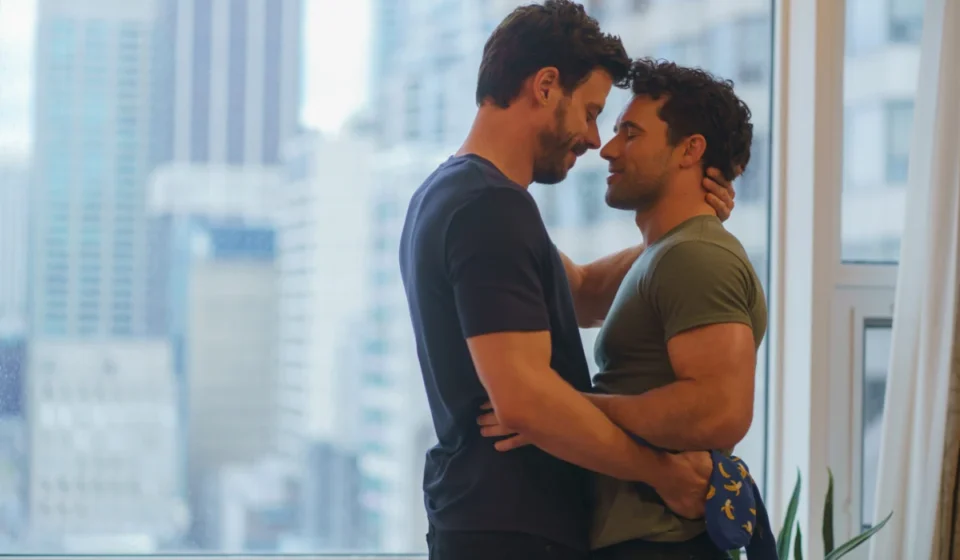
Nearly a year after the digital debut of the hockey-themed romance Heated Rivalry ignited social media and streaming charts, the passionate fan base behind Shane Hollander and Ilya Rozanov is taking the fandom offline. In a unique experiment that blurs the lines between episodic television and blockbuster cinema, the series—starring Hudson Williams and Connor Storrie—has returned to the public eye, not on a laptop or a smart TV, but on the massive canvas of the movie theater.
The limited theatrical run, which spans from November 6 through November 30, has already proven to be a financial and cultural success, raking in an impressive $1.4 million across 945 theaters. Distributed by Regal Entertainment, this re-release marks a fascinating shift in how audiences consume prestige television, signaling a potential new revenue stream and engagement strategy for studios looking to bridge the long gaps between television seasons.
The Strategy: Curating the "Rivalry" Experience
Rather than a standard binge-watch session, Regal Entertainment opted for a curated, event-style approach. Fans were offered three distinct "paired screenings," allowing them to digest the show in thematic chunks. The schedule included:
- Episodes 1 & 2: "Rookies" and "Olympians," establishing the volatile chemistry between the two protagonists.
- Episodes 3 & 4: "Hunter" and "Rose," focusing on the deepening emotional stakes of the narrative.
- Episodes 5 & 6: "I’ll Believe in Anything" and "The Cottage," culminating in the high-tension moments that defined the show’s first season.
At a price point of $9.99 per ticket, the event was positioned as an accessible alternative to standard theatrical fare. According to data from the research firm EntTelligence, the average price for a standard movie screening currently sits at $12.87. By undercutting the market rate, Regal not only incentivized repeat attendance but also positioned the series as a "value-add" for Gen Z viewers—a demographic that has been instrumental in the post-pandemic resurgence of brick-and-mortar cinema.
Chronology: From Cult Hit to Box Office Contender
The trajectory of Heated Rivalry is a masterclass in modern word-of-mouth marketing. Based on Rachel Reid’s beloved Game Changers book series, the adaptation was initially released on HBO Max in November 2025. While it enjoyed a respectable launch, it did not immediately capture the zeitgeist.
It wasn’t until early 2026 that the show truly caught fire. As social media discourse surged, viewership metrics skyrocketed, with episodes reaching an average of more than 10 million viewers. This surge in popularity turned Hudson Williams and Connor Storrie into overnight icons, cementing the show’s status as a cultural phenomenon.
The decision to move the show to theaters serves as both a celebration of that success and a strategic bridge. With Season 2 slated for a 2027 premiere, the theatrical re-release serves to keep the characters of Shane and Ilya at the forefront of the public consciousness. By creating a physical space for fans to gather, cry, and cheer in unison, Regal is successfully transitioning Heated Rivalry from a solitary streaming experience into a communal event.
Supporting Data and Comparative Analysis
Analyzing the box office performance of television content is notoriously difficult, as there are few historical precedents for the re-release of already-available streaming content. While high-profile events like the finale of Netflix’s Stranger Things Season 5 played on the big screen to an estimated $25 million to $28 million haul around New Year’s Eve, the comparison is nuanced.
The Stranger Things event functioned as a "first look"—a must-see conclusion to the streamer’s most successful franchise. In contrast, Heated Rivalry is offering viewers a chance to re-watch content that is currently sitting in their streaming queues. Generating $1.4 million in this context is a significant achievement, suggesting that fans are willing to pay for the "event" aspect of cinema—the sound, the scale, and the shared excitement—even when the content is readily available at home.
This trend is particularly notable given the current state of the industry. Cinema operators, who have navigated a tumultuous period since the onset of the COVID-19 pandemic, are finally seeing a sustained return to pre-pandemic habits. The "Heated Rivalry" screenings prove that theaters are no longer restricted to traditional films; they have become versatile hubs for live sports, gaming tournaments, and, increasingly, serialized television.
Official Perspectives: The Future of "Eventized" TV
Industry experts view this development as a turning point in how we define "appointment viewing." Paul Dergarabedian, head of marketplace trends at Rentrak, suggests that the success of Heated Rivalry could be the blueprint for a new industry standard.
"This could become a really interesting trend, not only as a way to bring fans together but also to keep popular series top of mind during gaps between seasons, when maintaining momentum can be a challenge," Dergarabedian notes. "We initially thought this might be something largely confined to the faith-based space—much like the success of The Chosen—but clearly the potential extends to virtually any series with a passionate fan base."
Dergarabedian adds a note of caution, however, emphasizing that the formula isn’t universally applicable. "Of course, not every television series is going to translate into a successful big-screen event. It requires the right show with the right audience. But for those that hit that mark, movie theaters could become an exciting extension of the television experience rather than simply an alternative to it."
Brooks LeBoeuf, Regal’s senior VP of U.S. content, echoed these sentiments prior to the launch. "When a series connects with audiences the way Heated Rivalry has, we look for ways to bring it to the big screen and give fans a reason to experience it together," LeBoeuf stated. "It’s a chance to celebrate the story, its creators, and its performances before Season 2 arrives in 2027."
Implications for the Entertainment Landscape
The implications for the broader entertainment landscape are profound. First, it suggests that the "streaming vs. theatrical" debate is becoming increasingly obsolete. Instead, we are entering an era of "content fluidity," where a property is exploited across as many mediums as possible to maximize engagement.
Second, the success of this initiative highlights the power of Gen Z as a cultural engine. This generation, which grew up with the instant gratification of streaming, is simultaneously craving the "analog" experience of a shared theater environment. By providing a low-cost, high-engagement event, theaters are proving that they remain essential to the social fabric of entertainment.
Finally, for creators and producers, the Heated Rivalry model provides a roadmap for sustaining interest in long-running series. In an era of "content fatigue," where shows are often forgotten the moment the credits roll on a season finale, the ability to pull audiences back into a physical theater serves as a powerful tool for brand longevity.
As the curtains close on the current run of Heated Rivalry on November 30, the industry will be watching closely. If the numbers continue to climb, it is highly probable that we will see more streaming giants partnering with exhibitors to turn their biggest hits into short-term theatrical sensations. For now, Shane and Ilya have proven that even in the age of the algorithm, there is no substitute for the magic of the big screen.