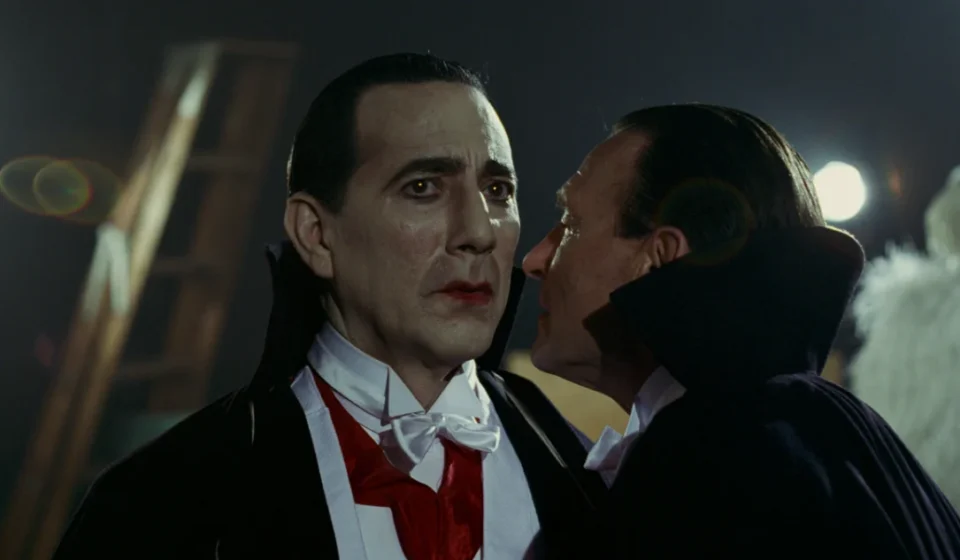
Shadows of the Soundstage: Craig Mitchell’s ‘Los Vampires’ and the Forgotten Legacy of Hollywood’s Dual Draculas

The transition from silent film to "talkies" in the late 1920s and early 1930s was not merely a technological evolution; it was an existential crisis for the global film industry. While the addition of synchronized sound enchanted domestic audiences, it fractured the international market. Studios, once able to export films by simply swapping title cards into different languages, suddenly faced a linguistic barrier that threatened their lucrative foreign revenues. This historical juncture serves as the atmospheric backdrop for Los Vampires, the latest feature from director and scenarist Craig Mitchell.
By weaving a fictionalized narrative around the real-world production of Universal’s 1931 Dracula, Mitchell explores the ego, the art, and the haunting shadows of a Hollywood that was still inventing itself.
Main Facts: A Tale of Two Counts
Los Vampires marks a significant return to the director’s chair for Craig Mitchell, who has spent much of the last few decades focusing on screenwriting. The film is a "meta-cinema" piece, a genre that blends historical fact with speculative fiction, much like E. Elias Merhige’s Shadow of the Vampire (2000).
The core of the film’s narrative is the simultaneous production of the 1931 Dracula. While the legendary Tod Browning directed Bela Lugosi during the day, a second crew, led by director George Melford, took over the sets at night to film a Spanish-language version. In Mitchell’s retelling, the names are slightly altered for dramatic license: Henry Ian Cusick stars as Luis de Ossario (a stand-in for the real-life Spanish actor Carlos Villarias), and Thomas Kretschmann portrays Kurt Orlov (the fictionalized counterpart to Bela Lugosi).
The film follows the psychological and professional friction between these two men. Ossario, a star in his own right dubbed the "Spanish Sheik," finds himself relegated to "the night shift," ordered by studio executives to watch the day’s footage and mimic Lugosi’s performance exactly. As the production progresses, the rivalry between the two actors is complicated by a series of grisly murders on the lot, leading the cast and crew to wonder if a real predator is stalking the Universal soundstages.
Chronology: From Silent Shadows to Midnight Shoots
1929–1930: The Language Dilemma
To understand the stakes of Los Vampires, one must look at the historical timeline Mitchell draws upon. In 1929, Hollywood was reeling from the success of The Jazz Singer. However, the "talkie" revolution initially killed the foreign market. Dubbing technology was primitive and often resulted in "uncanny valley" effects that audiences hated. Universal Pictures, under the leadership of Carl Laemmle Jr., decided that the most cost-effective way to retain the Spanish-speaking market was to film "Multi-Language Versions" (MLVs).
Late 1930: The Dual Production
The production of Dracula became the most famous example of this experiment. The English-language crew worked from 8:00 AM to 6:00 PM. At sunset, the Spanish-language crew arrived. They used the same sets, the same costumes, and the same script (translated into Spanish), but they had a different director and an entirely different cast.
In Mitchell’s film, this chronology is the engine of the plot. We see Luis de Ossario arriving at the studio, exhausted by the nocturnal schedule and insulted by the mandate to be a mere "copycat." The timeline of the film tracks the weeks of the shoot, during which the atmosphere on set sours from professional jealousy into genuine terror.
The Modern Revival
The film also acknowledges the 1990s restoration of the Spanish Dracula. For decades, the Spanish version was considered lost or inferior. When a print was finally discovered and restored in the 1990s, critics were shocked to find that, in many ways, George Melford’s version was technically superior to Tod Browning’s. This historical "vindication" provides the emotional subtext for Mitchell’s protagonist, who craves the recognition he is denied in his own time.
Supporting Data: Technical Merit and Narrative Unevenness
While Los Vampires is a love letter to the Golden Age of Horror, it is also a modern production dealing with its own budgetary and narrative constraints.
Performance Analysis
Henry Ian Cusick and Thomas Kretschmann carry the weight of the film. Cusick portrays Ossario with a delicate balance of "Spanish Sheik" vanity and immigrant insecurity. Kretschmann, playing the veteran stage actor Orlov, brings a menacing, world-weary gravity to the role. Their chemistry—defined by a "slippery slope" of mutual respect and bitter competition—is the film’s strongest asset.
Daniela Couso, playing the ingenue Vianca Sugura, provides the necessary "maiden in distress" archetype, though her character is given more agency as she navigates the predatory underbelly of the studio system.
Production Design
Despite being shot entirely on a modern soundstage, the film benefits from the meticulous work of production designer Ricardo Jattan and costumer Petra Larsen. They successfully recreate the "Studio Gothic" aesthetic—the heavy cobwebs, the sweeping staircases of Carfax Abbey, and the sharp, high-contrast lighting that defined early Universal horror. However, critics have noted that the film occasionally betrays its limited budget, particularly in scenes that require a broader "period flavor" beyond the immediate sets.
Narrative Structure
Mitchell’s script attempts to juggle several genres:
- Historical Homage: The recreation of the MLV filming process.
- Whodunit Mystery: The search for the murderer killing off the crew.
- Supernatural Horror: The lingering question of whether Orlov (Lugosi) has actually become the vampire he portrays.
Data from early screenings suggest that while genre fans appreciate the ambition, the "wobbly tone" can be distracting. The film’s occasional detours into humor and a somewhat rote resolution to the mystery elements contrast with the more sophisticated "meta" commentary on the film industry.
Official Responses and Critical Reception
The reception of Los Vampires has been characterized by a mix of intellectual appreciation and genre-based critique.
The Cinephile Perspective:
Film historians and nostalgists have praised Mitchell for shining a light on a "curious footnote to cinematic history." The portrayal of the Spanish Dracula as the "better" film (a sentiment shared by many modern critics who find Browning’s version too "stagey") is a central theme that resonates with those who value film preservation.
Genre Critics:
Reviewers from outlets like Variety have pointed out that the film is "not always very precisely balanced." The "somewhat convoluted progress" of the script has been cited as a hurdle for casual viewers. However, the film has been lauded for its atmospheric potential and its "imagined back chapter of golden-age Hollywood."
The Director’s Vision:
In promotional interviews, Craig Mitchell has emphasized that Los Vampires is intended to be an exploration of the "immigrant experience" in early Hollywood. Both Villarias and Lugosi were outsiders—one Spanish, one Hungarian—fighting for a foothold in an industry that viewed them as replaceable parts in a machine. Mitchell’s focus on the "ego war" between the two leads is an attempt to humanize the faces behind the iconic greasepaint.
Implications: The Legacy of the "Second-Class" Star
The release of Los Vampires invites a broader discussion about the nature of stardom and the evolution of global cinema.
The End of the MLV Era
The failure of the Spanish Dracula at the box office in 1931 effectively ended the era of Multi-Language Versions. As dubbing technology improved, it became significantly cheaper to simply record new audio over the original footage than to hire a second cast and crew for a night shoot. The implication for actors like Carlos Villarias was devastating; the "Spanish Sheik" never achieved the legendary status of Bela Lugosi. While Lugosi became synonymous with the vampire, Villarias faded into obscurity, outliving his rival by two decades but never escaping his shadow.
The Meta-Cinema Trend
Los Vampires fits into a growing trend of "movies about movies" that seek to deconstruct the myths of the 20th century. By blurring the lines between the actor and the role, Mitchell suggests that the true "vampires" were perhaps the studio executives and the industry itself, which drained the vitality and identities of its stars for the sake of the box office.
Final Assessment
Ultimately, Los Vampires serves as a haunting, if uneven, tribute to the people who worked in the dark to create the monsters we love. It reminds the audience that for every Bela Lugosi who achieved immortality, there was a Carlos Villarias—an actor who gave the same performance, on the same sets, in the same cape, only to be forgotten by the dawn. Through its "graceful epilogue" that leaps forward several decades, the film offers a final, interesting note on the longevity of art versus the fragility of fame.
For genre enthusiasts and students of film history, Mitchell’s feature is a necessary, atmospheric journey into the heart of a soundstage where the line between illusion and reality was—and remains—perilously thin.