From Slumdog to Fleet Street: Danny Boyle on the Art of the "Impossible" Film

In the high-altitude, crisp air of the Telluride Film Festival, director Danny Boyle finds himself in a familiar reflective state. For the Oscar-winning filmmaker, Telluride is more than just a picturesque mountain retreat for cinema enthusiasts; it is a barometer of resilience. Standing in a Netflix-hosted condo, the director of Trainspotting and 28 Days Later finds his mind drifting back to 2008, a year that forever cemented his relationship with the festival—and with the unpredictable nature of film distribution.
The Ghost of 2008: A Lesson in Resilience
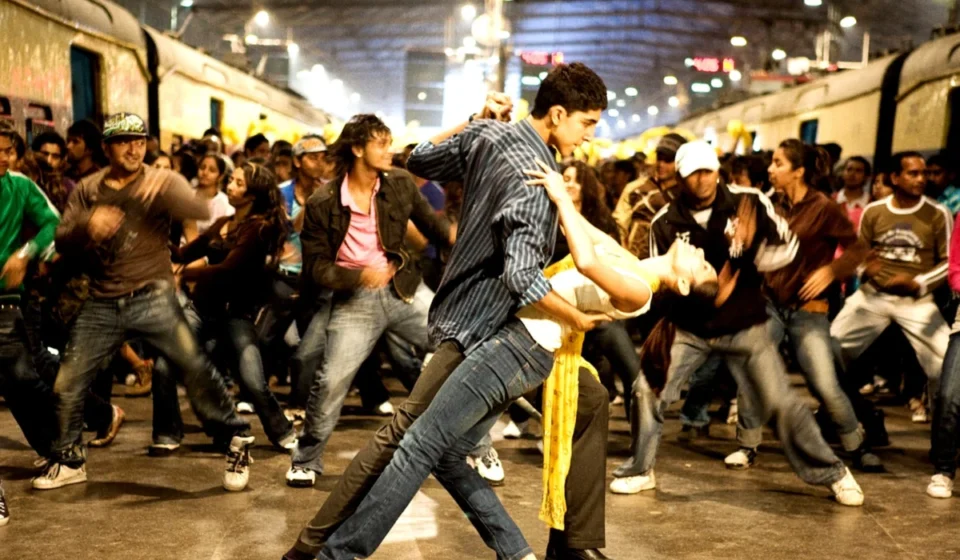
In 2008, Boyle arrived at Telluride with Slumdog Millionaire, a project that had been unceremoniously shelved by Warner Bros. At the time, the film was viewed by the studio as an economic risk—a genre-bending, multi-lingual odyssey set in the heart of Mumbai.
"You think it’s not good enough to be released," Boyle recalled, his voice carrying the weight of that memory. "It was part of an economic decision that had been made, and after all the work that we put in, I was heartbroken. A third of it was in Hindi. There’s nothing to compare it to. There’s no real prospects."
The tide turned when Fox Searchlight picked up the film, and the subsequent reception at Telluride served as the spark that ignited a global wildfire. The audience didn’t just appreciate the film; they were hungry for it. That word-of-mouth momentum propelled Slumdog Millionaire to an astounding eight Academy Awards, including Best Picture and Best Director. It was a baptism by fire that taught Boyle a fundamental lesson: sometimes, the films that struggle the most to find a home are the ones that resonate the loudest with the public.
The Genesis of "Ink": A New Passion Project
Fast forward to the present, and Boyle finds himself echoing those same sentiments regarding his latest directorial endeavor, Ink. The film, which debuted to strong acclaim in Venice before its Telluride showcase, is a gritty, stylized adaptation of James Graham’s hit West End and Broadway play.

Set in the 1960s, Ink chronicles the aggressive rise of Fleet Street’s tabloid culture, specifically focusing on the moment Rupert Murdoch acquired The Sun and recruited editor Larry Lamb to transform it into a national powerhouse. For Boyle, the film was a "passion project" in every sense of the word—a difficult birth that required immense effort to finance.
"I didn’t think anybody would see this film," Boyle admitted. "StudioCanal, God bless them, did give us money. Nobody else would."
The challenge was not just financial but cultural. "What does an international audience know about Fleet Street?" he asked rhetorically. "Who is ever going to see this?" The film found its lifeline when producer Tessa Ross shared it with Julie Huntsinger. Once selected for the festival, the path forward became clear. "It was that boost again, because I knew what it meant to actually be here. It meant you had a profile, that intelligent, interesting people from world cinema were going to see it. You have the platform."
Netflix has since secured the rights to bring the film to audiences, with a scheduled theatrical release on December 11 for a 30-day window.
Chronology of an Auteur’s Instincts
Boyle’s career has been defined by a refusal to settle into a predictable rhythm. Following his work on the 28 Days Later sequel, 28 Years Later, and his production role on The Bone Temple—both featuring the visceral, high-intensity performances of Jack O’Connell—Boyle has doubled down on his preference for difficult, high-stakes material.

"I’m stronger when I work on material that I feel is a battle to get made," he noted. "I like to sell something to people. You want people to see it like you see it. It’s mad, really."
His process for Ink began in 2019, while sitting in the audience of the West End production. He watched Bertie Carvell command the stage as Rupert Murdoch, winning an Olivier Award for the role. Yet, it was the "other guy"—the ambitious, morally ambiguous Larry Lamb—that captured Boyle’s imagination. When James Graham finally delivered the screenplay years later, Boyle knew exactly who he wanted for the role: Jack O’Connell.
Casting the Moral Ambiguity
The production faced significant hurdles in assembling the cast. Boyle spoke candidly about his campaign to secure Guy Pearce for the role of Murdoch. "I begged Guy to hang on," Boyle said. "I apologized to Guy because it wasn’t like I’d offered it to him, but I’d said, ‘I want you,’ and bless him, he hung in there for us."
Joining the ensemble is Claire Foy, whose performance as a journalist navigating the rampant misogyny of 1960s media serves as the film’s emotional anchor. Boyle describes the casting as one of the most surprising and rewarding elements of the project, as Foy’s character provides a necessary counterpoint to the "boys’ club" atmosphere of the printing room.
Cinematic Form as Content
The visual language of Ink is, in typical Boyle fashion, kinetic and aggressive. To capture the frantic, high-pressure environment of a 1960s tabloid office, Boyle employed a clever, low-budget technical trick.

"We have a little rig," he explained. "It’s poor man’s Matrix bullet time. You use 20 iPhones in a little ring round the table, and they’re all filming at the same time."
Boyle’s objective was to ensure the camera’s form reflected the subject matter. Just as the tabloid press sought to make readers "feel alive," Boyle wanted the film to be "seductive and pleasing and easy."
"You’re trying to make your subject matter, your form, equal your content," he said. "As Murdoch says, ‘Don’t you want people to feel alive when they read their newspaper in the morning?’ So you’re trying to use some of the techniques of the tabloid to literally sell the film in cinematic terms."
The Ethics of AI in Modern Filmmaking
One of the most discussed aspects of Ink is its strategic use of Artificial Intelligence. With a limited budget, Boyle could not afford to recreate the historical landscape of Fleet Street. Instead, he turned to AI to animate archival photographs, including a sequence bringing Margaret Thatcher to life.
"I didn’t want an imitation Thatcher," Boyle clarified. "I wanted Thatcher herself because she did use to go to Murdoch’s office, and she did drink whiskey with her shoes off, curled up on his couch, and she did give him a knighthood."

Boyle is acutely aware of the controversy surrounding AI in the industry. He maintains that while the technology is a tool, it must be handled with integrity. "Sadly, it’s not going to matter what you or I think," he said. "What matters is what 20-year-olds think about it… The elders should [express an opinion], and it’s important to fight to make sure it doesn’t replace jobs."
In the case of Ink, the production paid a human actor to perform the scene before using AI to replace the head, ensuring that the labor of the performer remained central. "It’s hard, isn’t it?" he mused. "Because for every Chris Nolan, there are thousands of filmmakers who can’t raise money. What are they going to do? How are they going to tell their stories? Maybe they won’t."
Looking Ahead: Antarctica and Beyond
The conversation shifts to the future, where Boyle’s slate remains as eclectic as ever. He is currently developing Antarctica, a film based on the harrowing true stories of men crossing the continent on solo expeditions, penned by his long-time collaborator John Hodge.
Additionally, Boyle is preparing to pivot into the world of theater with a musical adaptation of his 2019 film Yesterday, featuring a script by Richard Curtis and Emma Freud. It is a daunting prospect for a filmmaker who has spent decades mastering the frame, not the stage.
"A musical is a huge technical exercise," Boyle said with a humble shrug. "You have to be humble."

As he leaves the condo, the message remains clear: Danny Boyle is a director who thrives in the friction between the commercial and the personal. Whether it’s the back alleys of Mumbai or the smoke-filled offices of 1960s London, he continues to seek out the stories that challenge, repel, and ultimately, captivate. In the landscape of modern cinema, where studios are increasingly risk-averse, Boyle’s commitment to the "battle" of filmmaking is a reminder that the most compelling art often comes from the most difficult places.