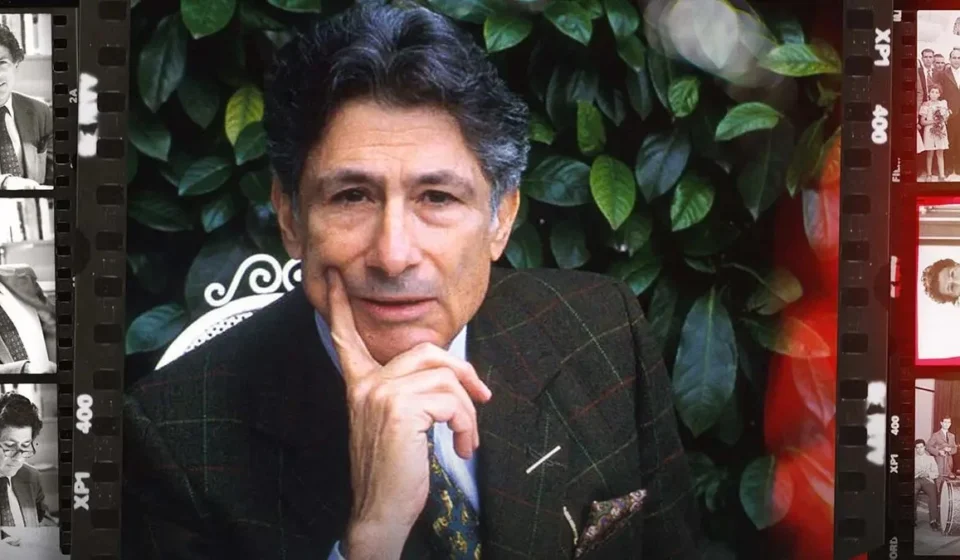
The Intellectual Odyssey of Edward Said: A Review of "Between Worlds" and the Unyielding Voice of Palestinian Identity

The legacy of Edward Said, the preeminent Palestinian-American scholar, literary critic, and political activist, remains a cornerstone of post-colonial studies and a haunting reminder of the complexities of displaced identity. In the documentary Edward Said: Between Worlds, director Maiken Baird offers a profound cinematic meditation on Said’s life, eschewing the traditional tropes of the biographical documentary in favor of a more intimate, self-narrated approach. By utilizing a vast repository of archival footage, Baird allows the late intellectual to reclaim his own narrative, providing an oral history that is as much about the evolution of a man as it is about the tragic trajectory of a nation.
As global discourse surrounding the Palestinian-Israeli conflict reaches a fever pitch, Between Worlds emerges as an essential document. It does not merely recount history; it interrogates the psychological and cultural frameworks that define how the West perceives the East. Through Said’s own words, the film bridges the gap between the ivory towers of the Ivy League and the volatile landscapes of the Middle East, offering a masterclass in the "secular criticism" that Said championed throughout his career.
Main Facts: A Narrative of Self-Representation
The core strength of Edward Said: Between Worlds lies in its structural discipline. Director Maiken Baird makes the bold decision to eliminate the "talking head" format common in documentaries. There are no contemporary experts, grieving relatives, or rival academics providing commentary. Instead, the film is constructed entirely from archival interviews, lectures, and personal reflections recorded during Said’s lifetime.
This "self-told" methodology is particularly poignant given Said’s lifelong battle against the misrepresentation of Palestinians and Arab culture. By letting Said speak for himself, the documentary honors his intellectual commitment to "contrapuntal" reading—viewing history through multiple, overlapping perspectives. The film reveals Said as a man of immense charisma and intellectual rigor, capable of dissecting the nuances of Jane Austen’s novels in one breath and the geopolitical failures of the Oslo Accords in the next.
The documentary focuses on several key pillars of Said’s life:
- His early years in Jerusalem and subsequent exile.
- His academic ascension at Harvard, Princeton, and Columbia.
- The transformative impact of the 1967 Six-Day War on his political consciousness.
- The writing and global impact of his 1978 masterpiece, Orientalism.
- His role as a primary spokesperson for the Palestinian cause in the Western media.
Chronology: The Making of a "Between Worlds" Intellectual
1. The Formative Years and the Trauma of Exile
Born in 1935 in Jerusalem during the British Mandate of Palestine, Edward Said’s early life was defined by a sense of fluid borders. His father was a wealthy businessman who held U.S. citizenship, a factor that would later facilitate Said’s move to America. However, the foundational event of his childhood was the 1948 Arab-Israeli War, or the Nakba (Catastrophe).
The film captures Said’s recollection of his family’s flight to Cairo, Egypt. This initial displacement mirrored the experiences of hundreds of thousands of Palestinians. In Cairo, Said attended elite English-language schools, which began the process of cultural hybridity that would define his life. He was a Palestinian boy living in Egypt, receiving a British education—a "mismatch" of identities that left him feeling perpetually out of place.
2. The American Academic Ascent
The narrative follows Said to the United States, where he sought higher education at Princeton and later Harvard. The documentary highlights the irony of his success: while he excelled in the most prestigious Western institutions, he remained an "Other." His name—Edward, a quintessentially British name, paired with Said, a common Arabic surname—served as a metaphor for his bifurcated existence.
Despite the subtle "othering" he experienced in the 1950s and early 60s, Said initially focused on Western literature, specifically the works of Joseph Conrad. At this stage, he was an academic focused on aesthetics and philology, largely detached from the burgeoning political movements in the Middle East.
3. 1967: The Catalyst of "Al-Naksa"
The documentary identifies the 1967 Six-Day War (the Naksa, or "Setback") as the pivotal turning point in Said’s life. The swift and decisive defeat of the Arab coalition by Israel caused a psychological rupture in the Arab world. For Said, living in New York, the war brought a sudden and painful realization: the West viewed his people not just as defeated, but as inherently inferior or non-existent.
The film uses footage from this era to show Said’s transition into a political figure. He describes the shame he felt and the subsequent need to re-engage with his heritage. He returned to Lebanon, re-learned Arabic with newfound vigor, and began to apply his literary training to the world of politics.
4. The Publication of "Orientalism" (1978)
By the late 1970s, Said’s intellectual evolution culminated in the publication of Orientalism. The documentary brilliantly captures the atmosphere of this period. Rather than getting bogged down in academic jargon, Baird focuses on Said’s state of mind—the urgency he felt to expose how Western scholars, artists, and politicians had "invented" an image of the Orient that justified colonial rule.
Orientalism did not just change Middle Eastern studies; it revolutionized the humanities, giving birth to the field of post-colonial theory. The film illustrates how Said became a target for intense criticism and even death threats following the book’s success, further cementing his status as a "warrior intellectual."
Supporting Data: The Technical Mastery of the Archive
The production of Edward Said: Between Worlds is a testament to the power of the edit. Sifting through fifty years of television appearances, university lectures, and private recordings required a "herculean" effort from the film’s editorial team: Jay Arthur Sterrenberg, Plummy Tucker, and R.A. Fedde.
Key Production Statistics and Details:
- Editorial Team: The use of three lead editors suggests the massive volume of data—estimated at hundreds of hours of footage—that had to be distilled into a coherent 100-minute narrative.
- Visual Texture: The film utilizes a mix of 16mm newsreel footage, grainy 1970s talk show segments (such as appearances on The Dick Cavett Show), and high-definition digital transfers of his later lectures.
- The "No-Interruption" Rule: By maintaining a strict adherence to Said’s voice, the film functions as a primary source. This choice is supported by the fact that Said was an incredibly articulate subject, making the lack of a narrator a narrative strength rather than a deficit.
The film also documents Said’s involvement with the Palestinian National Council (PNC) and his eventual fallout with Yasser Arafat over the Oslo Accords, which Said famously called a "Palestinian Versailles." These historical milestones are supported by archival clips of Said in the halls of power, illustrating his unique position as a bridge between the American intelligentsia and the Palestinian leadership.
Official Responses and Critical Reception
While Edward Said: Between Worlds is a contemporary release, it builds upon a long history of critical engagement with Said’s work. Initial responses from film critics have praised Baird’s restraint. Variety and other trade publications have noted that the film’s power lies in its "tangible links between the personal and the political."
Scholarly and Cultural Impact:
- Academic Circles: Professors of post-colonial studies have hailed the film as an "essential educational piece," particularly for a younger generation that may know Said’s theories but not the man himself.
- The "Jaundiced Eye": Critics have highlighted how the film arrives at a time of "reckoning" in Western media. As newsrooms and universities struggle with biases in reporting on the Middle East, Said’s critique of the "Western gaze" feels more relevant than ever.
- Controversy: Historically, Said was a polarizing figure. The film does not shy away from the friction he caused, though it presents these conflicts through Said’s own defensive and analytical lens. Some critics have argued that the lack of opposing voices makes the film a hagiography, but supporters argue that after decades of Said being silenced or misrepresented, a film that gives him the floor is a necessary corrective.
Implications: Why Said Matters Today
The release of Edward Said: Between Worlds carries significant weight in the current global climate. As the conflict in Gaza and the West Bank continues to dominate headlines, the film provides the necessary historical and philosophical context that is often missing from "soundbite" journalism.
1. The Humanization of the "Other"
Said’s central project was the humanization of the Palestinian people. He argued that the West had stripped Arabs of their humanity, reducing them to caricatures of terrorists or oil-rich sheiks. The documentary reinforces this by showing Said as a lover of classical music (he was an accomplished pianist), a devoted teacher, and a man of immense wit. It challenges the viewer to see the "other" as a complex individual.
2. Decolonizing the Mind
The film serves as a call to action for viewers to examine their own biases. By highlighting the thesis of Orientalism, Baird encourages the audience to question the "jaundiced eyes" through which Eastern cultures are viewed. This has direct implications for modern media literacy, urging a more critical consumption of news and entertainment.
3. The Role of the Public Intellectual
In an era of "alternative facts" and polarized social media, Said represents a vanishing breed: the public intellectual who speaks "truth to power" regardless of the personal cost. The documentary underscores the importance of the academic who leaves the safety of the university to engage with the world’s most pressing moral crises.
4. A Legacy of Displacement
Ultimately, Between Worlds is a story of exile. It resonates with the millions of refugees and migrants currently navigating the "in-between" spaces of the modern world. Said’s struggle to find a home—not just a physical house, but a cultural and spiritual resting place—is a universal narrative that transcends the specificities of the Palestinian cause.
Conclusion
Edward Said: Between Worlds is more than a documentary; it is a vital archival intervention. Maiken Baird has succeeded in creating a film that is as intellectually rigorous as its subject. By allowing Edward Said to speak across the chasm of time, the film ensures that his voice—articulate, defiant, and deeply humane—continues to challenge the world to look closer, think harder, and bridge the worlds that divide us. For those seeking to understand the roots of the Palestinian struggle and the enduring power of the human spirit to resist erasure, this film is an indispensable guide. If it achieves nothing else but to lead a new generation of readers to pick up a copy of Orientalism, it will have fulfilled its noble purpose.