The Hybrid Frontier: How Impossible Objects Is Redefining VFX with Localized AI

In the high-stakes world of premium advertising and feature film visual effects, the margin for error is non-existent. When brands like Porsche, Cadillac, and Nike commission a spot, they demand absolute photorealism, stringent IP protection, and a visual fidelity that leaves no room for the "hallucinations" often associated with off-the-shelf generative AI.
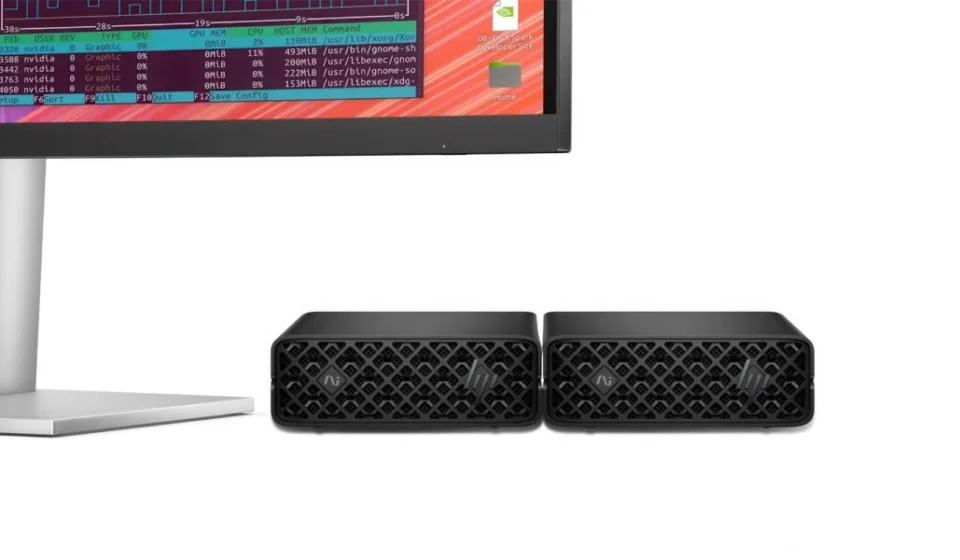
Enter Impossible Objects (IO), a Los Angeles-based boutique VFX studio that is rewriting the rulebook on production pipelines. By eschewing the industry-standard reliance on cloud-based generative tools, the studio has built a bespoke, high-compute infrastructure centered on localized, fine-tuned AI workflows. At the heart of this "superpowered" operation lies the HP ZGX AI station, a powerhouse of localized compute that allows IO to deliver studio-level volume without compromising the integrity of their creative craft.
The Convergence of Traditional VFX and Generative AI
For years, the VFX industry has viewed generative AI with a mixture of excitement and existential dread. Many studios have experimented with prompt-based video generation, only to hit a wall when faced with the granular, frame-by-frame scrutiny of a high-end commercial.
"The spots we do for car brands are highly scrutinized, and generally, AI video models can’t deliver the level of photorealism demanded of this kind of work," explains Nhan Le, AI Lead at Impossible Objects.
Le and his team have successfully navigated this impasse by refusing to treat AI as a replacement for artistry. Instead, they utilize a hybrid methodology. By combining traditional 2D compositing—using industry staples like Foundry Nuke, Adobe After Effects, and SideFX Houdini—with custom-trained models in ComfyUI, IO creates a workflow that is both faster and more precise than traditional methods alone. The AI acts as an invisible assistant, automating the tedious, repetitive tasks that once tethered artists to their workstations for days, while the human artists retain final authority over the aesthetic output.
A Chronology of Innovation: From R&D to Production Powerhouse
The journey to this hybrid model was not an overnight transition. Impossible Objects has spent the last two years in a dedicated Research and Development (R&D) phase, rigorously testing how AI could be safely integrated into a production-hardened environment.
- Year 1 (The Foundational Phase): IO began by deconstructing their internal pipelines. The goal was to determine which aspects of the VFX process were "AI-compatible" without sacrificing quality. They focused on developing custom modules capable of reacting to temporal lighting shifts—a task that previously required manual keyframing frame-by-frame.
- Year 2 (The Security and Provenance Phase): Recognizing that client IP was their most valuable asset, the studio pivoted toward localizing their compute. They moved away from cloud-based LLMs, ensuring that every frame of proprietary footage remained on-premise.
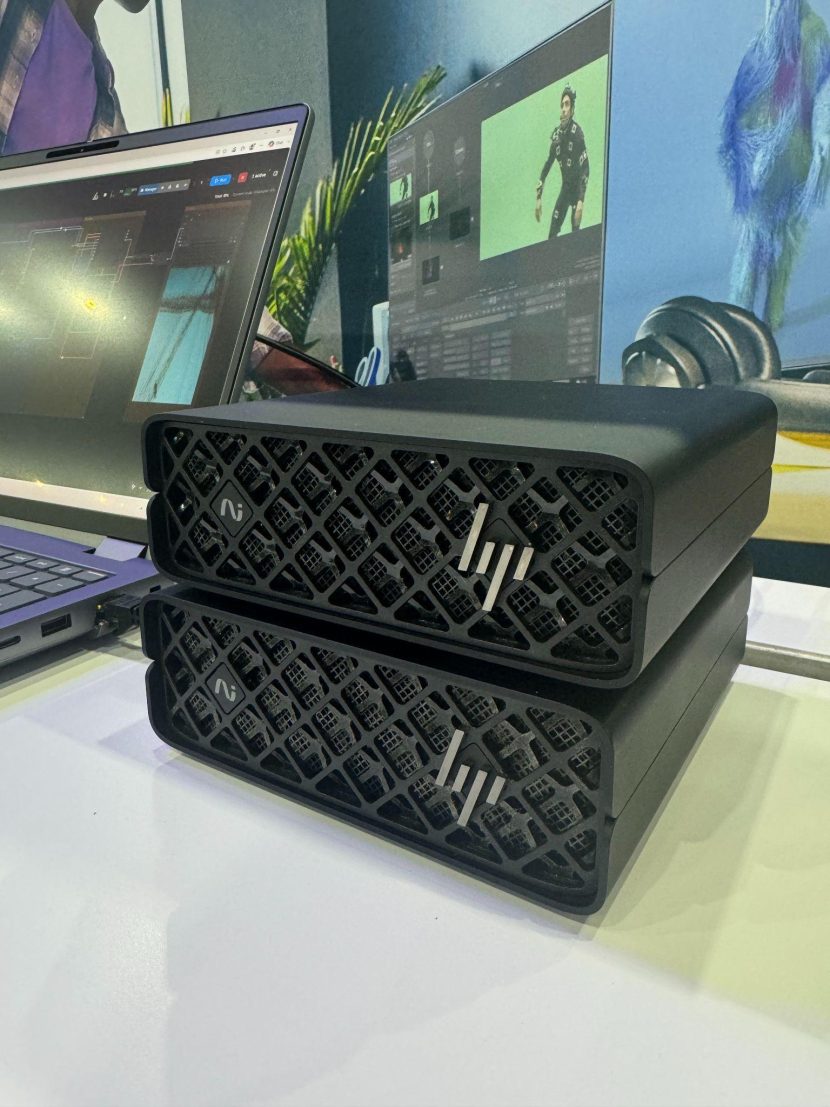
- The Deployment Phase (Present Day): With the acquisition of HP ZGX Nano AI stations, powered by the NVIDIA GB10 Grace Blackwell Superchip, IO successfully transitioned from experimental R&D to a fully realized production environment. This transition marked the moment the studio could handle 4K, high-bit-depth workflows at a scale previously reserved for massive, multi-national facilities.
Data Security and the Provenance Mandate
One of the primary friction points for major brands entering the AI space is "provenance"—the ability to track the origin of every pixel in a final render. When assets are uploaded to public cloud models, the risk of data leakage or copyright infringement becomes a liability that many Fortune 500 companies refuse to accept.
Impossible Objects has mitigated this risk by building a "closed-loop" ecosystem. "We don’t deliver fully generative shots to clients because currently there are limitations on resolution and color," says Le. "By keeping everything local and on-prem, we address a massive security consideration for our clients who don’t want to take the risk of working with vendors who upload footage and files to LLMs in the cloud."
By training models exclusively on their own captured footage, IO ensures they own the entire chain of custody. This approach provides a unique advantage: as AI models evolve, the studio doesn’t have to "start over." They continue to refine their "latent memory," essentially teaching their models the specific visual language and intricate details required for their clients’ campaigns. This consistency—crucial for car commercials where a headlight or a body contour must remain identical across a 30-second spot—is what sets their hybrid approach apart from "one-click" generative tools.
Infrastructure: The HP ZGX Nano Advantage
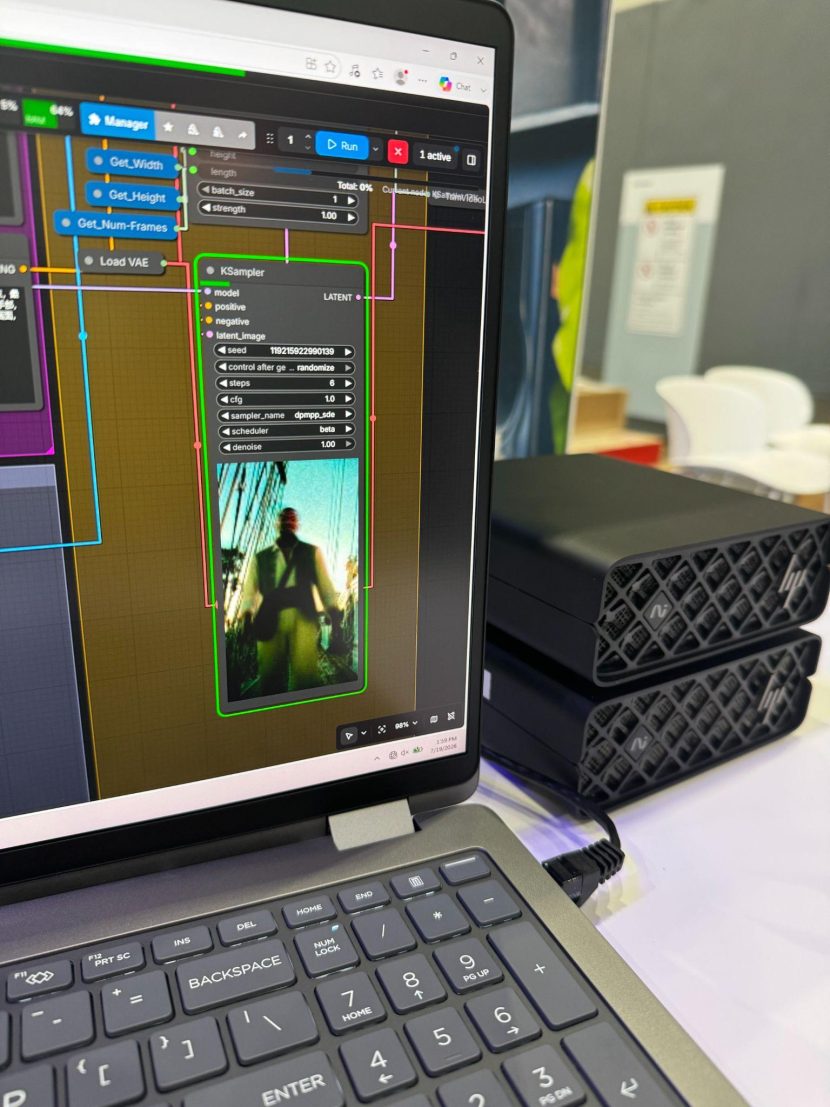
The technical backbone of IO’s operation is the HP ZGX Nano G1n. Designed specifically for the rigors of AI development, the system provides the enterprise-grade local compute necessary to run heavy-duty ComfyUI workflows without the latency of cloud connections.
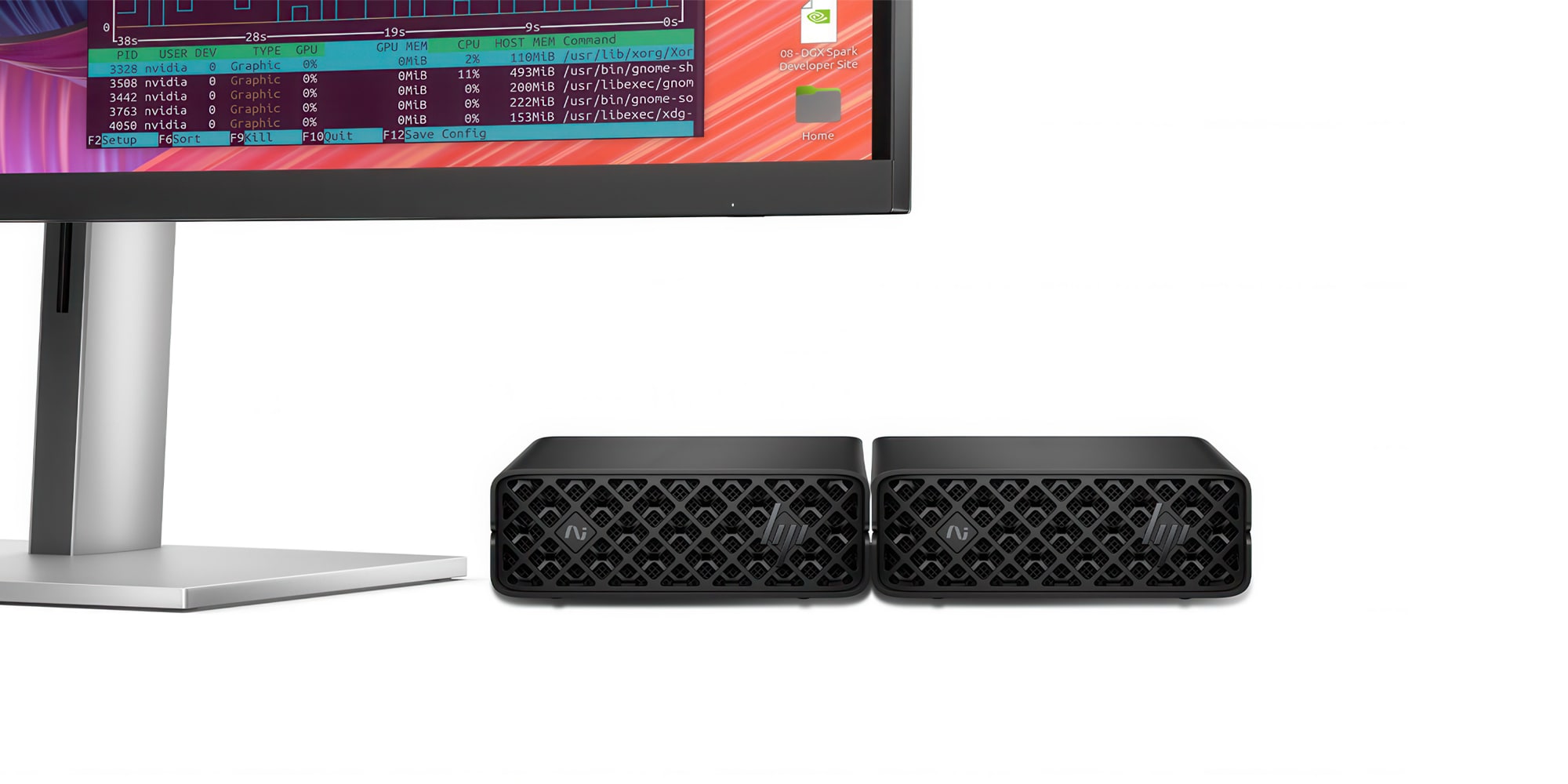
The integration was seamless, according to Le. Using the ZGX Toolkit, the team was able to connect the units to their existing network almost immediately. The real breakthrough, however, came from the systems’ scalability. By utilizing the 200 Gbps ConnectX-7 ports, Le was able to cluster two ZGX Nanos together. This effectively doubled the available memory, allowing the team to ingest and process longer 4K video clips that would have crashed standard consumer-grade hardware.
"With the ZGX Toolkit, configuring and integrating the ZGX Nanos into our server room was really fast, and we were able to connect remotely right away," Le notes. "That instant integration and scalability was the first and foremost notable change, doubling or tripling our throughput almost immediately."
Official Perspectives: Empowering the Creative Engineer
The philosophy at Impossible Objects is driven by the belief that technology should serve the artist, not the other way around. Jerad Anderson, co-founder of IO, views his technical team as "creative engineers" who are building a bridge between the cold efficiency of AI and the warmth of human craftsmanship.
"People like Nhan and his counterpart, Aiden Silver, are really amazing creative engineers," says Anderson. "They have paved a way with this new workflow that marries AI into production in a way that firmly plants a flag in craft and the human element. The company has been doing R&D for two years straight to devise an approach that generates assets from original capture so that once we’ve solved a production problem, the solution is repeatable."
This mindset shift is palpable in the studio’s daily operations. Every time a new project begins, the team no longer asks, "How long will this take?" but rather, "How can we scale this?" By automating the backend, artists are liberated to focus on the nuance of the final frame—color grading, lighting intent, and composition—rather than the mechanics of tracking or roto-work.
Implications: The Future of Virtual Production and Beyond
The implications of IO’s workflow extend well beyond traditional advertising. The studio has begun applying these same principles to virtual production (VP) volumes. Previously, LED volume shoots were plagued by the need for manual tracking data, which could take days to reconcile in post-production.
IO’s AI-driven approach bypasses this bottleneck by inferring tracking data directly from the footage. It can "read" the 3D environment as it appeared on the LED wall and generate perfectly accurate set extensions. For production teams, this means a significantly higher level of creative freedom, knowing that the "final" look can be achieved with greater reliability even if set conditions were imperfect.
Looking ahead, Impossible Objects is eyeing the next evolution of their infrastructure: the "Smart Render Farm."

"We are in the process of setting up our own render farm in-house," Le concludes. "We plan to use the unified clustering of the HP ZGX Nanos for more complex multi-agent operations. Smart render farms, managed with multi-agent AI, will give our boutique studio the capacity to scale up and do studio-level work at the highest quality."
As the industry grapples with the disruptive potential of AI, Impossible Objects serves as a compelling case study. By prioritizing localized security, human-led artistry, and high-performance hardware, they are not just surviving the AI revolution—they are leading it. For other studios looking to punch above their weight class, the message is clear: the future of VFX isn’t in the cloud; it’s on your own network, powered by the right tools, and guided by a relentless commitment to craft.
To learn more about how your studio can integrate high-performance AI compute into your pipeline, visit HP’s workstation support portal or explore the HP ZGX Nano AI station.