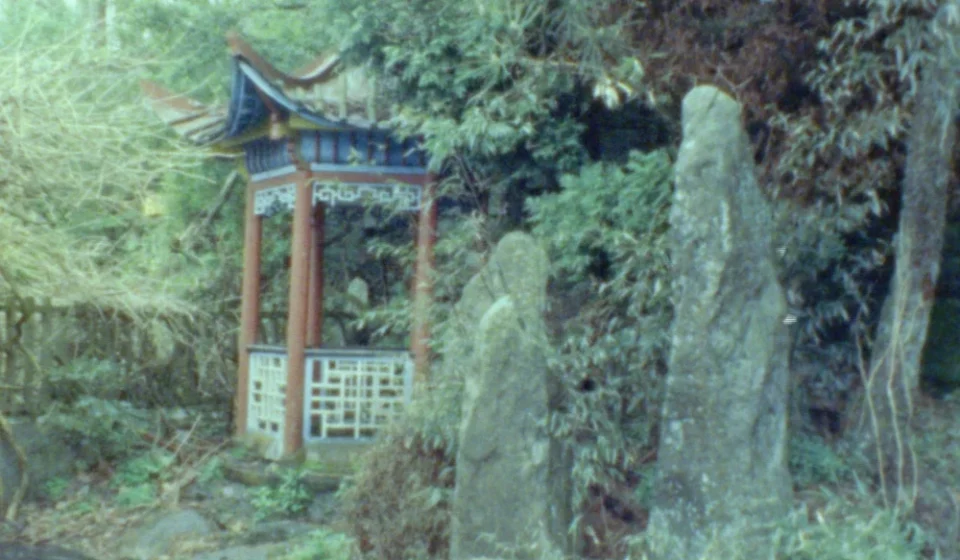
Bridging the Digital and the Botanical: Asian Shadows Acquires Lei Lei’s Experimental Masterpiece “Vertigo Garden”

In a move that underscores the growing appetite for genre-defying, experimental cinema on the global stage, boutique sales outfit Asian Shadows has announced the acquisition of Vertigo Garden, the latest feature film from acclaimed Chinese animator and filmmaker Lei Lei. The deal, finalized just ahead of the film’s highly anticipated world premiere in the Envision Competition at the International Documentary Film Festival Amsterdam (IDFA), signals a significant milestone for both the filmmaker and the sales agency.
Vertigo Garden is not merely a film; it is a profound exploration of memory, botanical history, and the intersection of artificial intelligence with the human condition. As Lei Lei’s second feature-length effort, it has already garnered critical attention, earning a nomination for the prestigious Beeld en Geluid IDFA ReFrame Award, which celebrates works that push the boundaries of archival material utilization.
The Narrative Landscape: A Digital Resurrection
At the heart of Vertigo Garden lies a premise that feels both mythological and hyper-modern. Set within the Lushan Botanical Garden—a location steeped in history and natural majesty—the narrative follows the discovery of a botanist’s body, frozen in the snow and ice of Lushan Mountain. Remarkably, the body and the brain remain intact, preserved by the elements.
Scientists, intrigued by this biological anomaly, subject the brain to rigorous study. Utilizing advanced artificial intelligence, they succeed in reproducing the botanist’s memories, releasing them into a sprawling digital landscape. Through a series of ethereal conversations, the film reconstructs the man’s life, specifically his lifelong, profound bond with the metasequoia tree. The narrative posits the tree as a conduit—a silent witness to planetary history—through which the botanist attempts to communicate with the Earth’s own long-forgotten memories.
Lei Lei weaves these threads together using a kaleidoscopic array of techniques: traditional documentary footage, cutting-edge 3D animation, and experimental video art. The result is a meditation on how human memory, biological life, and the planet itself are inextricably linked.
Chronology: From Hometown Roots to Digital Frontiers
The genesis of Vertigo Garden is deeply rooted in personal history. Lei Lei, a native of Nanchang, began filming at the Lushan Botanical Garden in 2024. Armed with an 8mm camera, he embarked on a series of long-term field recordings, capturing the physical essence of the garden before transforming it into the digital phantom seen on screen.
The production journey involved a meticulous blending of physical and virtual worlds:
- Initial Capture (2024): Lei Lei commenced filming at his hometown site, laying the visual foundation for the project.
- The Development Phase: Drawing inspiration from Chris Marker’s seminal 1983 essay film Sans Soleil, Lei Lei structured the screenplay as an imagined correspondence between himself and the deceased botanist, utilizing the "video letter" format to ground the abstract concepts in human intimacy.
- Technological Integration: The production team, led by Lei and producer Chai Mi under the banner of See-Ray Studio Production, undertook the labor-intensive process of 3D-scanning metasequoia fossils, tree trunks, and the garden’s greenhouse.
- Virtual Cinematography: By moving a virtual camera through these 3D models, Lei achieved a visual aesthetic that mirrors the immersive, navigable nature of a video game.
- AI Synthesis: In a nod to the experimental techniques of artist Rose Lowder, Lei trained AI models to repeatedly generate footage of the garden. The resulting images were cut together to create a flickering, rhythmic visual texture that challenges the viewer’s perception of space and time.
Supporting Data: The Trajectory of a Singular Voice
Lei Lei’s rise to prominence is marked by a consistent commitment to experimental animation and the exploration of Chinese history through non-traditional lenses. His career trajectory provides context for why Vertigo Garden is considered a major event in contemporary Asian cinema.
- Academic Foundation: Born in Nanchang, Lei honed his craft at Tsinghua University, earning a master’s degree in animation before influencing the next generation as a teacher at the CalArts Film & Video School.
- Short Form Success: His 2015 short, Missing One Player, set the tone for his future work, winning the Prix Ars Electronica and a Silver Dove at DOK Leipzig.
- Documentary Recognition: His mid-length documentary, Breathless Animals (2019), debuted in the Berlinale Forum and secured the top prize at Iran’s Cinéma Vérité, proving his ability to bridge the gap between experimental art and historical documentary.
- Feature Debut: His first animated feature, Silver Bird and Rainbow Fish (2022), premiered in the Tiger Competition at the International Film Festival Rotterdam, establishing him as a key figure in the global festival circuit.
The collaboration between Lei and Asian Shadows is well-established. Vertigo Garden marks the third time the company has represented his work internationally, following Breathless Animals and Silver Bird and Rainbow Fish.
Official Responses: A Partnership Beyond Business
The synergy between the filmmaker and the sales agency is characterized by mutual respect and a shared artistic vision. For Lei Lei, the relationship with Asian Shadows is personal.
"I believe that Asian Shadows and its team truly love the film," Lei stated. "They will treat this film like their own child and promote it to meet audiences around the world, which for me goes beyond what is called a business partnership."
Maria A. Ruggieri, head of sales and acquisitions at Asian Shadows, echoed this sentiment, framing Lei as an essential voice in the current cinematic landscape. "His talent as an animator, his search for new representations of China, his love and care for the recreation of lost emotions and history are perfectly assembled one more time in Vertigo Garden," Ruggieri remarked. She further solidified his standing, calling him, without doubt, a "singular voice" among Chinese filmmakers.
Implications: The Future of Asian Independent Cinema
The acquisition of Vertigo Garden by Asian Shadows serves as a bellwether for the shifting priorities of the international film market. Asian Shadows, founded in 2014, has cultivated a reputation for championing high-concept, culturally specific, and technically innovative works.
By integrating Vertigo Garden into a catalog that already includes acclaimed titles like Eddie Cahyono’s Ibuku, the collaborative efforts of Kim Jong-woo, Kim Shin-wan, and Cho Chul-young on The Seoul Guardians, and Soda Kazuhiro’s The Cats of Gokogu Shrine, Asian Shadows is positioning itself as a primary gatekeeper for auteur-driven Asian cinema.
The film’s focus on AI-generated imagery and environmental stewardship also reflects a growing trend in global cinema: the use of speculative technology to explore ecological anxiety. By blurring the line between the physical garden and the digital simulation, Lei Lei is not just documenting a location; he is questioning the permanence of nature in an era of rapid technological advancement.
As Vertigo Garden prepares to meet its audience at IDFA, the film stands as a testament to the power of the "video letter"—a mode of communication that survives beyond death, beyond the screen, and into the memory of the trees themselves. For the industry, the success of this film will likely encourage more experimental, cross-disciplinary projects that defy the rigid classifications of "documentary" or "animation," pointing toward a future where the medium is as fluid as the memories it seeks to preserve.