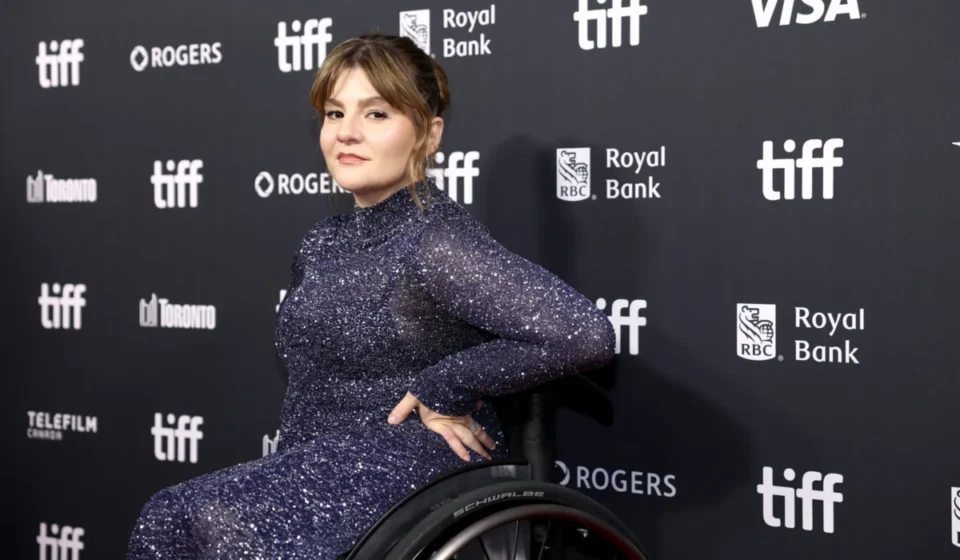
Beyond the Screen: Ruth Madeley on Defying Expectations and Redefining Disability in Cinema

For a long time, the path to Hollywood for Ruth Madeley was not just unpaved—it was invisible. As a young woman growing up with spina bifida and navigating the world as a wheelchair user, Madeley did not look to the silver screen for inspiration, simply because she never saw anyone who looked like her.
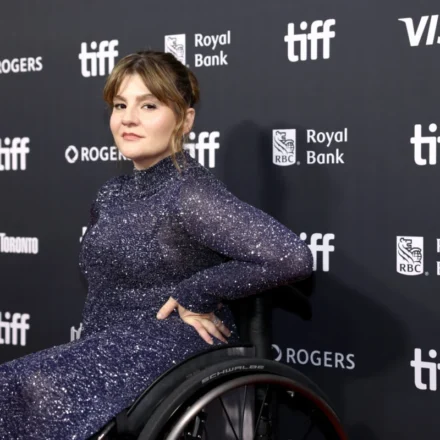
Today, she stands at the center of the most significant performance of her career. In the upcoming biopic Being Heumann, directed by Siân Heder, Madeley portrays the legendary disability rights activist Judy Heumann. It is a role that has not only pushed the boundaries of her technical craft but has positioned her at the forefront of a shifting industry, one that is finally beginning to recognize that disabled actors are not just symbols of diversity, but masters of their craft.
The Reluctant Actor: From Screenwriting to the Spotlight
Ruth Madeley’s journey into the arts began not with an audition, but with a pen. Educated at Thornleigh Salesian College, she initially focused on English and creative writing, with a specific emphasis on screenwriting. "I wanted to be a storyteller," Madeley told IndieWire. "It’s not that I didn’t want to be an actor, or I didn’t pursue it. I didn’t even think it was an option."
Her skepticism was grounded in the reality of the industry. For decades, the portrayal of disability in media was dominated by abled actors using wheelchairs as props—a phenomenon Madeley remembers well from British television soaps. "I’d see a character in a chair and think, ‘Oh, his wheelchair looks like mine,’ only to find out the actor wasn’t a wheelchair user," she recalls.
That narrative of exclusion shifted in 2009 when the children’s crime-comedy Half Moon Investigations required a wheelchair user for an episode. Driven more by curiosity than career ambition, Madeley auditioned. To her surprise, she landed the part. Recalling that first experience, she noted, "I remember being terrified in the audition, thinking: ‘Why do people do this? This is awful.’" Despite the initial fear, the spark was lit, setting off a decade-long trajectory that has now culminated in a potential Oscar-contending turn.

A Legacy of Resistance: The Making of Being Heumann
Being Heumann chronicles the life of Judy Heumann, the firebrand activist who became a symbol of the American disability rights movement, culminating in the historic 504 sit-ins of 1977. The film is a departure from the "inspirational" tropes that often plague biopics about disabled figures. Instead, it offers a raw, unfiltered look at a woman who was, by all accounts, complex, stubborn, and profoundly human.
For Madeley, stepping into Heumann’s shoes was a feat of technical discipline. She wasn’t merely learning lines; she was mastering a specific Brooklyn accent, learning American Sign Language, and navigating the physical choreography of a life lived in the 1970s.
The Science of Movement
Director Siân Heder and Madeley spent countless hours dissecting the physical reality of Heumann’s existence. They were particularly fascinated by the tension between her inner vitality and the physical constraints of her environment. "Siân and I were fascinated by Judy’s speed and freedom when she was in her chair; she was never still," Madeley explains. "Versus when she’s out of her chair, where she is in such a different state of vulnerability."
The production went to extreme lengths to ensure authenticity, including the use of period-accurate wheelchairs from the 1970s. These chairs, notoriously heavy and cumbersome, provided a visceral understanding of the physical labor required for disabled life in that era. "The 1970s chairs helped because nothing is easy in those things for anyone," Madeley said. "There were so many people on hand to help, which was invaluable because even if the place was fully accessible, being in those chairs makes things so much harder."
Authenticity as a Tool of Resistance
The film’s commitment to truth extends beyond the props. It captures the systemic barriers—the lack of ramps, the inaccessible public transit, and the societal indifference—that defined the 1970s. Unlike modern films that often "round off the edges" of the disability experience, Being Heumann highlights the mundane, often grueling reality of navigating a world not built for everyone.

"The worst thing I can watch on screen is if something looks too easy," Madeley says. By highlighting the necessity of human assistance—such as the scene in the trailer where Heumann must wait for an attendant before she can use the restroom—the film grounds itself in a lived experience that is rarely depicted on screen.
Beyond the "Messy Queen"
Perhaps the most refreshing aspect of Madeley’s portrayal is her refusal to make Heumann "likable" in the traditional sense. Judy Heumann was, at times, impatient, prickly, and blunt. Madeley embraced these traits. "I’m all for a messy queen!" she laughs. She recognized that the pressure on disabled women to be "grateful" or "nice" is a form of societal policing. By portraying Heumann with all her edges intact—her joy, her humor, and her sharp-tongued frustration—Madeley is reclaiming the right to be a complex, flawed human being.
The Broader Implications for Hollywood
The potential for an Oscar nomination for Being Heumann is a significant moment for the industry, but Madeley is cautious about the weight of that history. While she acknowledges that the nomination would be "huge for the community," she is adamant that her value as an actor is not tied to her status as a symbol.
"I’m not just a random wheelchair user they pulled off the street," she emphasizes. "This is my job, so talking about the actual craft is really exciting for me."
Breaking the Typecasting Cycle
The industry’s habit of hiring disabled actors only to play disabled characters remains a hurdle. Madeley is actively working to subvert this. She envisions a future where she can disappear into any role, regardless of the character’s physical capabilities. "I don’t only have to play disabled," she asserts. "I can play the messy mom of two who’s got knocked up again, and who is completely inept."

Her goal is to move toward a landscape where disability is a facet of a character, not the entirety of their identity. By focusing on the craft of acting—the science of accents, the nuance of expression, and the weight of performance—Madeley is helping to pave a way for the next generation of disabled artists who, unlike her, will grow up seeing themselves reflected in the stories they watch.
Conclusion: A New Horizon
As Being Heumann prepares for its theatrical release on November 6, followed by its streaming debut on November 13, the buzz surrounding the film is palpable. It is a story about the fight for civil rights, yes, but it is also a story about the power of authentic representation.
For Ruth Madeley, the film is a testament to the fact that disabled people have always been here, they have always had stories to tell, and they are finally being given the tools to tell them on their own terms. As she continues to navigate her career, one thing is certain: the industry is no longer in a position to ignore the depth, talent, and "prickly" brilliance of actors like Ruth Madeley. She has not only found her place on the screen; she has helped build the platform that others will stand on for years to come.