From Compositor to CEO: Alana Newell on the Evolution and Future of Crafty Apes

In the high-stakes world of visual effects, the transition from the artist’s workstation to the executive suite is rarely straightforward. For Alana Newell, CEO of the renowned VFX house Crafty Apes, this career trajectory has been defined by a fundamental shift in how she defines success. Once measured by the pixel-perfect completion of a single shot, her metrics today are measured in organizational health, strategic growth, and the cultivation of a global team of 400 professionals across eight offices.
In a recent fxpodcast conversation, Newell offered a candid look at the challenges of modern leadership in an industry undergoing a period of profound technological and structural transformation.
The Weight of Leadership: Redefining Success
For a compositor, the satisfaction of the job is immediate: you receive a plate, apply your craft, and witness the final result on the silver screen. As Newell transitioned into the role of CEO, she had to reconcile that tactile satisfaction with the more abstract, long-term nature of studio management.
"Every win, in my opinion, is my team’s win," Newell explains. "It’s a collective success."
This philosophy underscores her approach to leadership. While individual artistry relies on personal agency, the CEO’s role is one of stewardship. Newell notes that while victories are shared, the burden of leadership is singularly weighted. When one is responsible for the output of hundreds of artists and the livelihoods of a massive staff, the mistakes—and the weight of those mistakes—carry a personal gravity that is entirely different from the solitary pressures of compositing.
A Production-First Strategy
Newell’s rise to the top of Crafty Apes is rooted in her foundational experience as an artist. She argues that her background in production is not merely a resume bullet point, but an essential tool in her current capacity. Because she has sat in the chair, she understands the nuance of bidding projects, the reality of production risk, and the importance of transparent communication with creative teams.
This "production-first" mentality has allowed Crafty Apes to cultivate a reputation for being exceptionally nimble. In an industry often divided between boutique studios and massive conglomerates, Crafty Apes has carved out a middle ground. They are capable of executing high-profile, tentpole blockbuster sequences while simultaneously retaining the resources to provide tailored, bespoke attention to smaller, more experimental projects.
Diversification as a Risk Mitigation Strategy
Central to the studio’s resilience is a strategy of portfolio diversification. While many competitors lean heavily on a few massive contracts—placing their financial health at the mercy of a single client’s schedule—Newell has pushed for a wider spread of work.
"If you are attached to 50 projects, you can absorb schedule changes far more safely than a studio relying on five major clients," she says. This philosophy creates a buffer against the notorious volatility of the film and television production cycles, allowing the studio to maintain a consistent output and retain its staff through the industry’s inevitable ebbs and flows.
The Tech Frontier: Beyond Generative Hype
The VFX industry is currently grappling with the explosion of generative AI, but Newell remains measured. While the industry is fixated on the latest LLMs and image generators, she believes the true value of machine learning lies in the data that VFX studios have been accumulating for decades.
Studios like Crafty Apes possess vast archives of production information: schedules, historical shot complexity, render times, and actual delivery metrics. Newell views this data as a goldmine. She believes that by applying machine learning to this historical dataset, studios can revolutionize how they approach the business side of the craft.
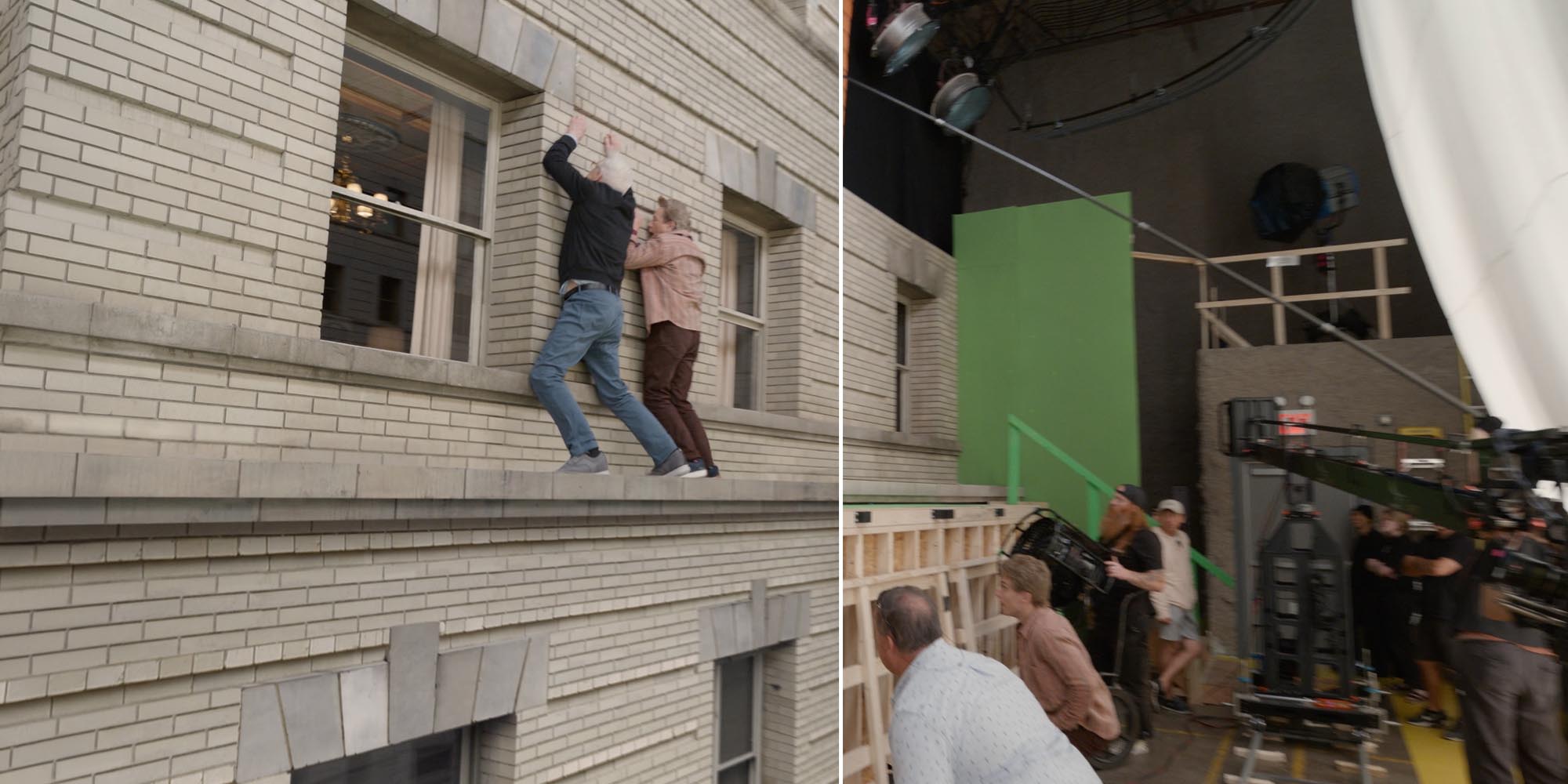
"The visual effects pipeline is not a ‘bug’ to machine learning; it’s a feature," she notes. By leveraging this data, the studio can improve the accuracy of its bidding, optimize crew planning, and make more informed decisions about which projects to pursue. It is a pragmatic view that prioritizes utility over the hype cycle.
Cultivating Adaptable Talent
As the tools of the trade change, so too must the workforce. Newell is actively encouraging a shift in how Crafty Apes approaches talent development. She observes that the industry’s emerging tools reward curiosity and adaptability far more than rigid specialization.
"We look for candidates who are willing to learn," Newell says. While she values deep experience, she is wary of talent that leans too heavily on methodologies that are rapidly becoming obsolete. By fostering internal development and welcoming outside talent with diverse perspectives, she aims to create a culture that is inherently resistant to stagnation. She views the cross-pollination of ideas as an essential stimulus for creativity, ensuring the studio remains at the cutting edge of visual storytelling.
Expanding the Horizon: Beyond Film and TV
The recent work by Crafty Apes on The Wizard of Oz at the Sphere in Las Vegas serves as a potent example of how traditional VFX expertise can be transposed into entirely new formats. For Newell, this project was not a one-off; it was a proof of concept for the future of the company.
The "Content Creation" Paradigm
Newell is steering Crafty Apes toward a broader definition of its identity. She sees the studio as a "content creation company," rather than a pure-play VFX house. This shift opens up a massive horizon of opportunities in:
- Immersive Entertainment: Interactive experiences that break the fourth wall.
- Museum Installations: High-fidelity visuals designed for non-cinematic spaces.
- Theme Park Attractions: Collaborations like the current work with Universal, where the principles of VFX are applied to physical, guest-facing environments.
For Newell, this isn’t just about expanding the market share—it is about redefining the boundaries of what a visual effects studio can provide. If a client needs a visual created, regardless of the screen or the venue, her goal is for Crafty Apes to be the first port of call.
Implications for the Future of VFX
The path forward for an established studio in the current climate is fraught with challenges, from the consolidation of the streaming market to the rapid advancement of artificial intelligence. However, Newell’s strategy—built on the pillars of data-driven bidding, workforce adaptability, and market diversification—provides a blueprint for how a mid-sized studio can thrive.
The fxpodcast interview serves as a reminder that leadership in the creative sector requires a delicate balance of technical knowledge and business acumen. By fostering a culture that prioritizes collective wins and embraces the evolution of the medium, Alana Newell is ensuring that Crafty Apes is not just reacting to the future, but actively building it.
Whether it is through the integration of machine learning into the bidding pipeline or the expansion into immersive, real-world experiences, the message from the top is clear: the future of visual effects is not just about the movies. It is about the ability to deliver high-quality content wherever it is needed, by whatever means necessary, through a team that is constantly learning, adapting, and growing together.
As the industry moves toward an increasingly fragmented media landscape, the studio that can remain both technically ambitious and organizationally agile will likely be the one that defines the next era of visual storytelling. Under Newell’s leadership, Crafty Apes appears well-positioned to take on that mantle.