The Perfectionist’s Perspective: Aamir Khan Reflects on a Storied Career and the Myths of "3 Idiots"

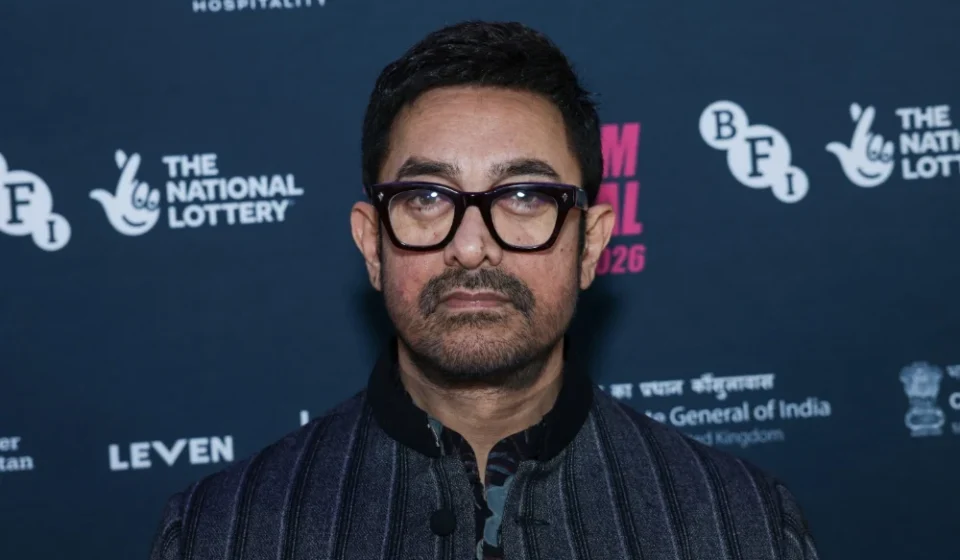
In an intimate and revealing session at the BFI Southbank as part of the London Indian Film Festival, Bollywood icon Aamir Khan offered a rare, unfiltered look into his creative psyche. The event, which also served as a milestone celebration for the 25th anniversary of the Academy Award-nominated epic Lagaan, provided a platform for the actor to address long-standing industry rumors, dissect his rigorous professional methodology, and offer candid reflections on the evolution of Indian cinema.
Dispelling the Myth: Phunsukh Wangdu and Sonam Wangchuk
For years, a pervasive narrative has linked Aamir Khan’s beloved character, the eccentric genius Phunsukh Wangdu in the 2009 blockbuster 3 Idiots, to the real-life educator and climate activist Sonam Wangchuk. The speculation gained renewed traction recently when Omi Vaidya, who portrayed the rival character "Chatur" in the film, shared a video on social media drawing direct parallels between the fictional character and Wangchuk’s current real-world activism—specifically his hunger strikes advocating for institutional change within India’s education and governance systems.
During the BFI "In Conversation" event, Khan was firm in his rejection of this connection. "No, that’s not true, actually. No, no. That is a misconception," Khan stated clearly. He acknowledged having seen Vaidya’s video but was quick to correct his former co-star. "Maybe that’s what Chatur was thinking, but I want to tell you that neither Raju [director Rajkumar Hirani], nor Abhijat [writer Joshi], nor I knew about Mr. Sonam at the time of writing," he clarified.
Khan emphasized that while the inspiration for the character was not based on Wangchuk, the activist’s real-world contributions remain indisputable. "What Mr. Sonam is doing is good work. In any case, he doesn’t have to be based on the character of 3 Idiots for us to respect him and the work that he does." Addressing the concern regarding Wangchuk’s health during his ongoing protest, Khan expressed a humanitarian concern: "I think all of us are very concerned for his health, and we hope that it ends well. All of us are hoping that he ends his fast."
A Career in Chronology: From "Yaadon Ki Baaraat" to Global Recognition
To understand the trajectory of Aamir Khan is to understand the evolution of the Indian film industry itself. Khan’s journey began not in the spotlight, but in the chaotic, high-pressure environment of the 1970s film sets. Reflecting on his first experience as a child actor in Yaadon Ki Baaraat at age seven or eight, he recalled the sensory overload of the era. "It was very scary. It was all very dark, and there was—it was very noisy, and people were shouting and screaming," he recounted, noting that the pancake makeup used at the time "smelled horrible."
Despite coming from a family of filmmakers, the path to acting was fraught with resistance. "My parents and everyone in my family were dead against it," he noted. Before he fully committed to the craft, Khan was a formidable junior tennis player, reaching state-champion status. He humorously recalled a rare moment of sporting absurdity: "I have the distinction of having Federer and Djokovic sitting on either side of the net, trying to lower it… I’m the only person who has that privilege."
His transition to serious cinema was catalyzed by Ketan Mehta’s 1984 film Holi. While he joined the project out of a technical fascination—specifically a desire to see how a Steadicam functioned—the reality of the production proved a lesson in improvisation. The equipment never arrived, and the film was shot entirely handheld, a formative experience for the actor.
The Golden Era and the "Swimming Against the Tide" Philosophy
When prompted to define the "Golden Era" of Hindi cinema, Khan bypassed the high-gloss production values of the 1980s and 90s, pointing instead to the 1950s and 60s. He lauded the era’s screenwriters, composers, and filmmakers as the bedrock of the industry. In contrast, he described the 1980s as the commercial nadir of Indian cinema, a period characterized by a decline in quality before a new wave of directors eventually spearheaded a revival.
Throughout his career, Khan has famously acted as an outlier, often prioritizing artistic integrity over the conventional demands of the box office. He described his career as a constant act of "swimming against the tide." A pivotal moment occurred early in his career when he rejected a project offered by Mahesh Bhatt. "Had I compromised that day, man, I think my entire career would be a series of compromises," he explained. "When I could stick to what I believed in at my worst, it gave me a lot of strength."
This philosophy led to the development of a strict professional triad for selecting projects: the strength of the script, absolute trust in the director’s vision, and the presence of a producer capable of providing the necessary resources for creative excellence.
2001: A Year of Crisis and Triumph
The year 2001 remains the most paradoxical in Khan’s history. It saw the release of two career-defining films: Lagaan, a sweeping sports drama that earned an Oscar nomination, and Dil Chahta Hai, a film that revolutionized the representation of urban Indian youth.
Yet, behind the scenes, Khan was enduring significant personal turmoil. "I was actually going through a personal crisis myself. I was going through my divorce with Reena, and so I wasn’t in a state of mind emotionally to work," he revealed. The pressure of Lagaan was particularly intense; asked if he had anticipated that he would be discussing the film on a London stage 25 years later, he laughed, noting that the production was defined by fear. "We were just frightened. We were terrified trying to get it right," he admitted, ultimately framing the film as a definitive work about the "triumph of the human spirit."
Methodology and the Future of Storytelling
Khan’s approach to acting is rooted in character immersion. "My first step is trying to get into the head of the character," he explained. "Once that is clear to me, then everything else comes from that—the way I look, the way I behave, the way the language [is spoken]—all of that comes from it."
This methodical focus extended to his directorial debut, Taare Zameen Par, where he found that working with children required less instruction than anticipated. "I have to say, directing the kids was the easiest thing. I didn’t have to tell them anything. They were so natural, they just got it."
Looking forward, Khan expressed a nuanced understanding of the modern digital landscape. He identified the smartphone as the primary disruptor in cinema, noting that today’s viewers are no longer the "captive audience" of previous decades. "I’m competing with 1,000 other things," he said, emphasizing that in an era of infinite content, the quality of storytelling remains the sole differentiator.
Upcoming Projects: "Silkyara 41"
The conversation concluded with a forward-looking announcement. Khan’s production house, Aamir Khan Productions, is partnering with Mind Blowing Films and Kabir Khan Films for an ambitious Indo-Australian project titled Silkyara 41.
Inspired by the dramatic 2023 rescue mission at the Silkyara tunnel in Uttarakhand, India, the film focuses on the real-world heroics of tunneling expert Arnold Dix. The screenplay is penned by Andrew Anastasios, known for The Water Diviner, and the project will be directed by Kabir Khan. With preparations beginning in August and principal photography slated for November, Silkyara 41 promises to continue Aamir Khan’s pattern of choosing narratives that lean heavily into human endurance and high-stakes realism—a testament to his enduring commitment to the "triumph of the human spirit."