A Cinematic Collision: Tarantino and Fincher’s ‘The Further Mis-Adventures of Cliff Booth’ Redefines the Hangout Movie

The cinematic landscape has been set ablaze by the release of The Further Mis-Adventures of Cliff Booth, a project that, on paper, sounds like a fever dream of modern cinephilia. Written by Quentin Tarantino and directed by David Fincher, the film serves as a spiritual and narrative sequel to 2019’s Once Upon a Time in Hollywood. It is a film that captures a specific, shaggy, heat-of-the-moment buzz, transporting audiences not just to a different decade, but to a different frequency of filmmaking altogether.
By merging the Dionysian, motormouth energy of Tarantino’s writing with the Apollonian, ice-cold precision of Fincher’s direction, the production has birthed an "enjoyable contradiction"—a meticulous hangout movie. As the industry grapples with the transition from traditional blockbusters to auteur-driven streaming spectacles, Cliff Booth stands as a defiant, albeit "half-a-Quaalude" paced, testament to the power of character-driven myth-making.
Main Facts: The Synthesis of Two Titans
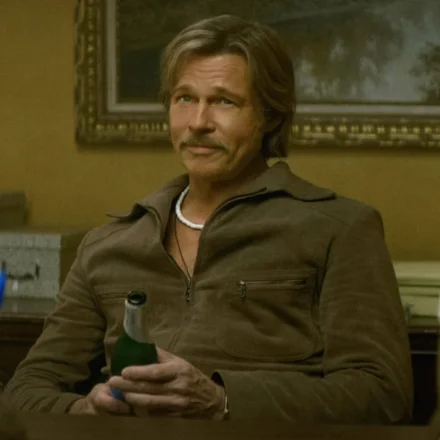
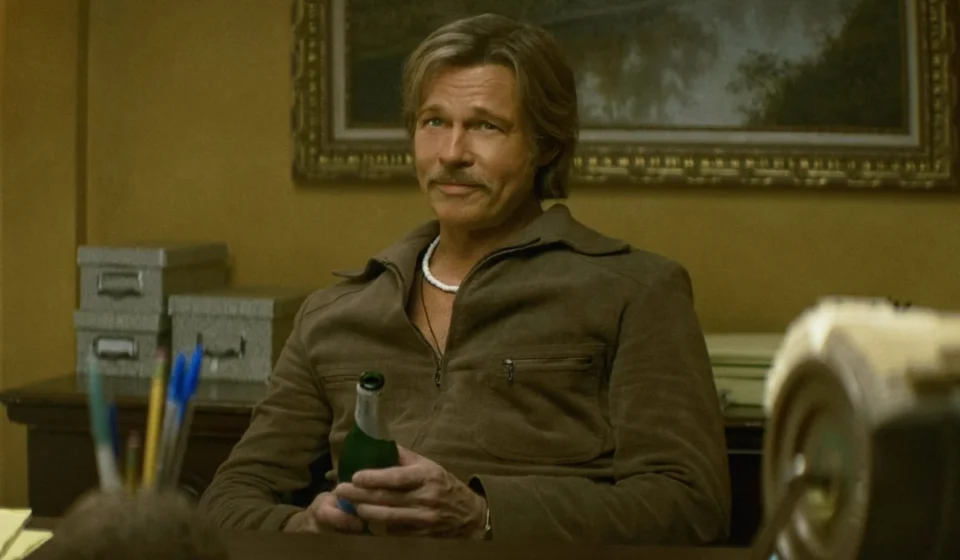
At its core, The Further Mis-Adventures of Cliff Booth is a character study of the industry’s favorite aging stuntman, played once again by Brad Pitt in a performance that critics are calling his "aura jackpot." The film is set in Los Angeles during June 1977, a chronological choice that is far from accidental. This is the month Star Wars fundamentally shifted the "force" of the movie universe, moving the industry away from the gritty New Hollywood era toward the age of the blockbuster.
Key Production Elements:
- Screenplay: Quentin Tarantino (marking a rare instance of him handing a script to another director).
- Director: David Fincher (bringing a "stately sheen" and "polish of precision").
- Lead Cast: Brad Pitt (Cliff Booth), Elizabeth Debicki (Karen Crosby), Scott Caan (Charlie Peters), and Peter Weller (Cliff’s father).
- Setting: A smog-filled, disco-thumping Los Angeles, exactly eight years after the events of the first film.
- The Soundtrack: A curated mix of 1977 staples, including ELO’s "Tightrope" and Boz Scaggs’ "Lowdown," which serves as the film’s closing anthem.
The film marks a departure from the sun-drenched, fairy-tale intensity of the 1969-set predecessor. Instead, it embraces a "lackadaisical limbo," where the counterculture has evaporated into the tacky margarita bars and mud-wrestling pits of the late 70s.
Chronology: A Week in the Life of a Living Relic
The narrative spans exactly one week. The world has moved on, but Cliff Booth remains rooted in an "eternal present."
The New Status Quo
The story opens with the revelation that Rick Dalton, Cliff’s long-time employer and best friend, has moved to Australia to star in a TV series titled Dingo Dan. Cliff, now pushing 50 and sporting a slight limp and aching joints, lives in Marina del Rey with his cranky father, a pawn-shop owner played with gravelly gravitas by Peter Weller. Cliff spends his days driving a muscle-car jalopy and working odd jobs, including a shift as a projectionist at the New Beverly Cinema.
The Catalyst
The plot is set in motion on a Tuesday night. While changing reels for a blaxploitation film titled Soul Brothers Die Hard!, Cliff is tasked with a dangerous rendezvous. He is sent to retrieve stolen items—including a Best Director Oscar—from a criminal (Karren Karagulian) and a young hustler (Corey Fogelmanis) who are attempting to blackmail an old director friend.
In a sequence that sets the tone for the film’s "Zen of violence," Cliff dispatches the criminal with a casualness that borders on the domestic. It is the first of several "appetizers of violence" that punctuate the otherwise breezy narrative.
The Underworld Jam
The middle of the week sees Cliff summoned to a meeting with Charlie Peters (Scott Caan), a "garishly obnoxious" star of TV Westerns who insists on performing his own stunts—a character many industry insiders view as a satirical "tweak" of Tom Cruise. Peters has found himself in an underworld jam involving the Verdusco brothers, a pair of vicious Filipino hitmen. Because Cliff is "the stuntman who beat up Bruce Lee," he is recruited to act as a fixer, leading him into the orbit of Karen Crosby (Elizabeth Debicki), an imperially tall and coldly sexy talent agent.
Supporting Data: Directorial Styles and "QT TV"
The fascination of The Further Mis-Adventures of Cliff Booth lies in the friction between its creator and its orchestrator. Tarantino’s script is "Dionysian"—hot-blooded and discursive. Fincher’s direction is "Apollonian"—rigorously controlled and visually immaculate.
The "Shampoo" Influence
Fincher has described the film as "Shampoo with violence," referencing Hal Ashby’s 1975 classic. Like Shampoo, the film prioritizes the "drift" of Los Angeles over a traditional three-act structure. It is fixated on the geography of Hollywood, using on-screen titles to specify distances (e.g., "Beverly Hills, 4.3 miles west of Hollywood"), treating the city as the literal nucleus of the universe.
Technical and Aesthetic Precision
Fincher provides a "stately sheen" that elevates the pulp material. While Tarantino’s previous films often revel in a certain grindhouse aesthetic, Fincher’s Cliff Booth is "manicured." The precision of the frame-rate, the saturation of the 1970s yellows and browns, and the rhythmic editing during the "Soul Brothers Die Hard!" sequences demonstrate a master at work.
Soundtrack and Easter Eggs
The film is dense with "Tarantino Easter eggs," including:
- A Red Apple cigarettes commercial featuring Margot Robbie’s Sharon Tate.
- References to Cliff’s brief stint in the adult film industry.
- A meta-commentary on film criticism, including a debate over Pauline Kael’s distaste for Butch Cassidy and the Sundance Kid.
- A playful jab at Paul Thomas Anderson, where Cliff switches the radio station when the song "Best of My Love" (the opening track of Boogie Nights) begins to play.
Official Responses: Talent and Industry Perspectives
While the film has been met with critical acclaim for its "sexy-cool" atmosphere, it has also sparked debate regarding its structural choices.
Brad Pitt on the "Zen of Cliff"
In promotional interviews, Pitt has leaned into the paradoxical nature of the character. "Cliff is a himbo with brains," Pitt noted during a recent press junket. "He’s a sexy cowboy handyman who will cut your throat if he has to, but he’d rather just have a margarita." Critics have noted that Pitt uses his "slightly seedy movie-star nobility" to turn the character into an irresistible force of nature.
The "Godfather" Controversy
A pivotal scene involves Elizabeth Debicki’s Karen Crosby claiming that The Godfather is "just a gangster movie with artistic airs." This line has caused a stir among film historians. Some suggest this is Tarantino’s own voice breaking through, signaling a shift in his perspective where he now views all cinema through the lens of "pulp fetishization." Others argue it is a commentary on the "affectlessness" of the late 70s, where even masterpieces were being reduced to mere "content" in the face of the emerging blockbuster era.
Structural Critique: Is it a Movie or a Series?
Industry analysts have pointed out that The Further Mis-Adventures feels like a "glorified television series." Indeed, reports suggest the project was originally conceived as a limited series before being condensed into a feature film. This "QT TV" format—where incidents have less long-term consequence than in a standard film—represents a potential new direction for Tarantino’s storytelling.
Implications: The Future of the Tarantino-verse
The release of The Further Mis-Adventures of Cliff Booth carries significant implications for the future of auteur cinema and the legacy of its creators.
The "Star Wars" Threshold
By setting the film in the immediate aftermath of Star Wars, Tarantino and Fincher are mourning the "death of movies as we knew them." The film suggests that while the industry was moving toward grand orchestral pomp and space operas, characters like Cliff Booth were the "relics of a lost age." The "lackadaisical limbo" of the characters reflects an era caught between the gritty realism of the early 70s and the neon-soaked commercialism of the 80s.
The Resilience of the "Hangout Movie"
Despite its "affectlessness" and "random anecdotal way," the film proves that there is still a massive appetite for the "hangout factor." In an era of high-stakes cinematic universes, a movie about a man driving a muscle car and talking about film critics offers a refreshing alternative.
A Mini-Revisionist Climax
The film’s climax, involving a spectacular bout of "ultraviolence" against the Verdusco brothers, subverts Tarantino’s usual historical revisionism. Instead of changing the world, the violence simply confirms Cliff’s immortality. He sustains injuries that should be fatal, yet he emerges with "just a scratch." This suggests that Cliff Booth is no longer just a man; he is a folk hero of the celluloid age—a character who, like the medium of film itself, refuses to stay dead.
As the credits roll to the smooth sounds of Boz Scaggs, the audience is left with one lingering question, characteristic of the "QT TV" era: When is the next episode?