The Odds Are Ever in Its Favor: ‘Sunrise on the Reaping’ Poised to Revitalize the Fall Box Office

The cinematic landscape is bracing for a seismic shift as Lionsgate prepares to unleash The Hunger Games: Sunrise on the Reaping. As the sixth installment in the juggernaut dystopian franchise, the film is not merely a high-stakes blockbuster; it is a litmus test for the enduring power of young adult adaptations in an era of shifting audience demographics. With industry analysts projecting a massive opening weekend, the film is positioned to cement its place among the elite, high-grossing titles of the year.
The Financial Projections: Aiming for the Century Mark
The box office momentum is undeniably tilting in favor of Sunrise on the Reaping. While Lionsgate has maintained a characteristically conservative public projection of an $85 million domestic debut, the groundswell of exhibitor optimism tells a more aggressive story. Industry insiders are bullish, suggesting that the combination of deep-seated brand loyalty and the visceral appeal of returning to Panem could propel the film to a debut exceeding $100 million across 3,900 North American theaters.
Should the film hit the upper end of these estimates—some analysts whisper of a figure closer to $125 million—it would secure its status as one of only five films this calendar year to breach the $100 million opening weekend threshold. It would join a prestigious and exclusive club that includes the $360 million juggernaut Spider-Man: Brand New Day, the animated powerhouse Toy Story 5 ($159 million), the record-breaking The Super Mario Galaxy Movie ($131 million), and the critically acclaimed epic The Odyssey ($123 million). Achieving this feat is crucial, as the film carries a production budget exceeding $150 million, necessitating a robust global performance to ensure profitability.
A Chronology of Panem: From 2012 to the Quarter Quell
To understand the significance of Sunrise on the Reaping, one must look back at the franchise’s storied history. It has been three years since the release of 2023’s The Ballad of Songbirds and Snakes. While that prequel, which explored the origins of the future dictator Coriolanus Snow, opened to a modest $44 million, it demonstrated the "long tail" potential of the franchise, eventually accumulating $363 million globally.
However, Sunrise on the Reaping is looking to reclaim the massive debut numbers of the original saga. The franchise’s track record remains a gold standard for Hollywood:
- The Hunger Games (2012): $152 million opening.
- Catching Fire (2013): $158 million opening (the series high).
- Mockingjay Part 1 (2014): $121 million opening.
- Mockingjay Part 2 (2015): $102 million opening.
With a collective franchise gross exceeding $3.3 billion, The Hunger Games stands as one of the most successful intellectual properties in cinematic history. The return to the core mechanics of the arena—specifically the Second Quarter Quell—serves as a nostalgic anchor for long-time fans while offering a fresh, high-stakes narrative for newcomers.
Narrative Depth: The Tragedy of Haymitch Abernathy
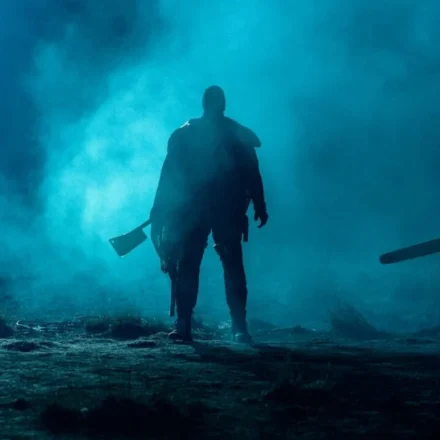
Based on the latest novel by Suzanne Collins, Sunrise on the Reaping serves as a bridge between the prequel era and the rise of Katniss Everdeen. Set 25 years before the original trilogy, the film depicts the morning of the reaping for the 50th Hunger Games.
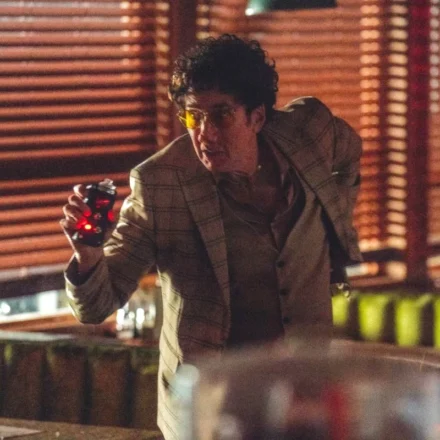
The narrative spotlight falls on a young Haymitch Abernathy, portrayed by Joseph Zada. Audiences familiar with the original series, where Woody Harrelson famously embodied the cynical, traumatized mentor to Katniss and Peeta, will find the origin of that trauma in this installment. The story of how a young, defiant Haymitch survived the most brutal arena in the history of the Games provides the thematic weight necessary to differentiate this film from its predecessors. Behind the camera, director Francis Lawrence—the architect of the franchise’s visual identity—returns to the helm. Having directed every film in the series except the inaugural 2012 installment, Lawrence’s steady hand is expected to provide the consistent, high-octane aesthetic that fans demand.
Implications for the Industry and the Thanksgiving Slate
The release of Sunrise on the Reaping is strategically timed to inject a massive surge of capital into the theatrical ecosystem just before the lucrative Thanksgiving holiday. The film acts as the primary engine of a late-year box office rally.
Following the release, the industry anticipates a highly competitive Thanksgiving period. Theater owners are preparing for a influx of diverse offerings:
- Focker in Law: A highly anticipated Universal comedy featuring the unlikely trio of Ariana Grande, Ben Stiller, and Robert De Niro.
- Hexed: The latest high-profile animated feature from Disney.
- The Mis-Adventures of Cliff Booth: A daring IMAX release from Netflix that underscores the streaming giant’s increasing commitment to theatrical prestige.
Simultaneously, Amazon MGM’s I Play Rocky is expanding nationwide. The biographical drama, which chronicles the uphill battle Sylvester Stallone faced to bring his 1976 masterpiece to the screen, is looking to capture $10 million to $13 million as it moves into wider release. Having generated nearly $1 million in its limited run, the film is expected to benefit from the increased foot traffic driven by the Hunger Games juggernaut.
The Macro View: A Resurgent Box Office
The broader context for this weekend’s performance is one of significant recovery. Domestic ticket sales are currently tracking 20% higher than the same point in 2025. This momentum is not accidental; it is the result of a carefully curated release schedule that has seen a return to consistent blockbuster output.
Industry analysts are now looking toward a year-end total that could eclipse $10 billion for the first time since the onset of the COVID-19 pandemic. This optimism is fueled by a pipeline of heavy-hitting sequels and tentpoles, including the highly anticipated Avengers: Doomsday, the sci-fi spectacle Dune: Part Three, and the family-friendly Jumanji: Open World.
As the industry looks toward these future hits, Sunrise on the Reaping serves as a bellwether. If the film performs at the high end of expectations, it will validate the current strategy of investing in established, high-quality intellectual properties with deep narrative backstories. For now, all eyes are on the reaping—and for the studio, the exhibitors, and the audiences, the odds of a historic weekend seem increasingly favorable. The return to Panem is not just a trip down memory lane; it is a calculated, massive investment in the future of the communal cinema experience.