The Architecture of an Indie Classic: Looking Back at the Making of ‘Half Nelson’

In the landscape of 21st-century American independent cinema, few films possess the raw, enduring intimacy of Ryan Fleck and Anna Boden’s 2006 breakout, Half Nelson. It was a project born of youthful desperation, creative obsession, and a sheer, stubborn refusal to let a vision die. Today, as the film prepares for a 2027 theatrical revival and a prestigious dual-disc re-release, it serves as a poignant reminder of a bygone era—a time when mid-budget, character-driven dramas could secure both critical adoration and a genuine place in the cultural conversation.
The Genesis of an Obsession: Plotting Like Bombers
The path to Half Nelson was anything but linear. Ryan Fleck and Anna Boden, who met during a summer filmmaking intensive at NYU in the early 2000s, spent years laboring over a script that would eventually launch both their careers and the trajectory of a young Ryan Gosling.
"He said it felt like we were the kind of people who talked about the script like we were plotting to build a bomb," Ryan Fleck recalls with a laugh. The intensity of their creative process was, by their own admission, bordering on fanatical. For the young duo, the film wasn’t just a project; it was a crusade. Anna Boden adds, "It was probably a little bit true, though. We hadn’t done much except try to make this movie for a long time, and maybe that came off the page. Maybe he was like, ‘Let’s just throw them a bone!’"
That "bone" would eventually result in a cultural touchstone. Produced on a shoestring budget of just $700,000, Half Nelson was a masterclass in efficiency. It managed to turn a limited theatrical run into a $4.9 million global box office haul, defying the odds and securing Ryan Gosling his first-ever Best Actor Oscar nomination.

A Chronology of Artistic Development
The film’s evolution was slow, deliberate, and deeply rooted in the sociopolitical climate of the early 2000s. As Fleck notes, the lack of professional status provided a rare luxury: time. "The thing about not yet being a professional filmmaker is you’ve got time until someone greenlights your movie, so there was lots of time."
The duo drew inspiration from the gritty, character-focused classics of the 1970s, specifically Midnight Cowboy and Harold and Maude. They wanted to explore the lives of "flawed people" navigating an isolating, fractured world. The story coalesced around Dan Dunne, a twenty-something middle-school teacher whose idealistic exterior masked a debilitating freebasing addiction, and Drey, his student, who discovers his secret.
The narrative was heavily influenced by the zeitgeist of the Iraq War era. "When we first started writing in 2002 or 2003, it felt like a lot of young people had all this energy but didn’t know how to affect change in the world around them," Boden explains. "We were finding this character that was going through that too, in his own way." Fleck provides the philosophical bridge: "Dan understands how history, politics, and change work outside of himself, but he can’t quite get it under control within himself."
The "Gowanus" Pivot: Learning to Shoot
When the feature script stalled, the duo did not sit idle. Instead, they channeled their energy into a short film, Gowanus, Brooklyn. They stripped the script down, reimagining the student character as female and casting non-professionals from a local middle school.

"It was a great way of working through the ideas, emotions, and feelings we were trying to get across," Boden says. "Going back to the script after that deepened it a lot." The short film’s success—culminating in the 2004 Sundance Grand Jury Prize—provided the legitimacy they needed to finally open doors.
Casting the "Old Soul"
When the script finally reached Ryan Gosling, the directors were initially hesitant. At 24, Gosling seemed too young to embody the profound world-weariness they had envisioned for Dan Dunne.
"It had been written for someone a little bit older than him," Boden reveals. However, the physical transformation Gosling underwent, coupled with an inherent "old-soul quality," ultimately won them over. Fleck recalls, "He didn’t have the body of work he has now, but he just had this old-soul quality to him. He didn’t seem 24."
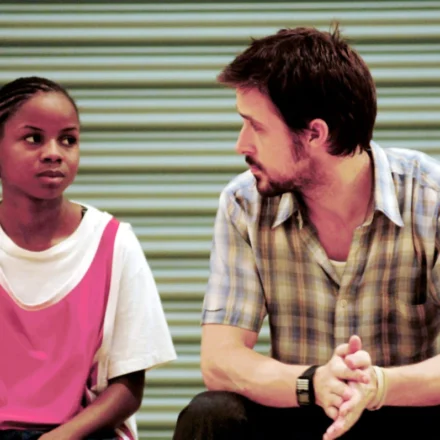
To ground the performance, the filmmakers introduced Gosling to a local public school teacher. The result was a level of immersion that surprised even the directors. "Ryan picked up all these subtle little things from him, like wearing rubber bands around his wrists," Boden says. "The guy ended up looking so much like him that we cast him as Dan’s brother."

Supporting Data and Creative Synergy
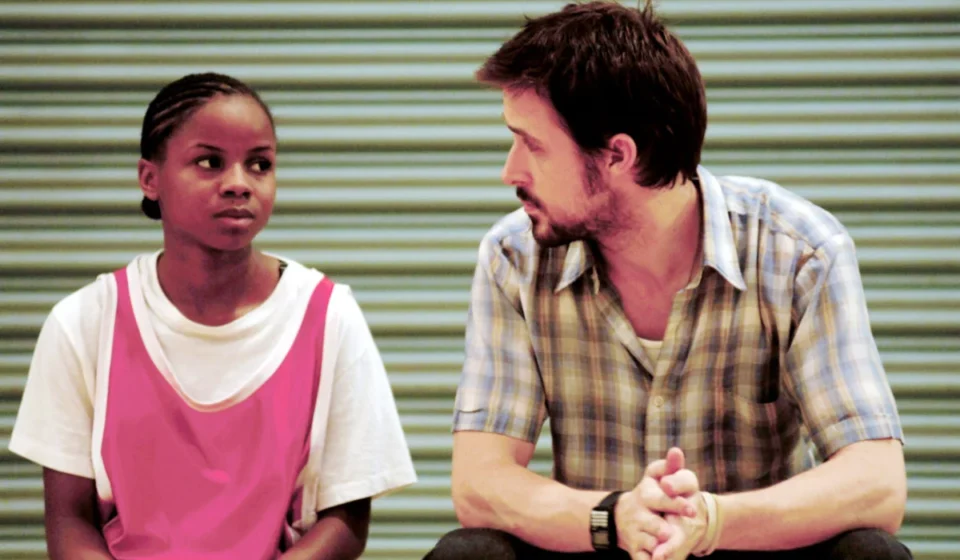
The film’s power relied heavily on the chemistry between Gosling, Shareeka Epps (Drey), and Anthony Mackie (Frank). The classroom scenes, in particular, were designed to be spontaneous, often with students unaware of what Gosling would ask next. This "fly-on-the-wall" style allowed for an unscripted, visceral authenticity.
The scene depicting Dan’s overdose, in which Drey finds him in the bathroom, remains one of the film’s most powerful moments. According to Boden, it was Gosling who insisted on stripping away the dialogue. "The scene where Drey is taking care of him after his overdose felt so much more visceral without any lines. You could hear a pin drop."
The musical landscape of the film was equally critical. Much like Harold and Maude relied on the singular voice of Cat Stevens, Half Nelson utilized the dreamy, melancholic sound of the Canadian indie collective Broken Social Scene. The collaboration was serendipitous: Gosling had been listening to a nameless, burned CD of the band’s music in his car for months, only to discover the tracks he was obsessed with would become the heartbeat of his own film.
Implications: The Death of the "Slow Burn"
Reflecting on the legacy of Half Nelson twenty years later, the directors feel a sense of nostalgia for a film industry that has fundamentally shifted. The mid-budget, intimate drama, which thrived on word-of-mouth and the sustained attention of independent cinema-goers, is a rare commodity in today’s landscape of franchise blockbusters and algorithmic streaming content.

"It wasn’t a huge blockbuster," Boden observes. "It played really well in independent cinemas, and the people who wanted to see it saw it. I’m not sure it works like that anymore."
The upcoming 2027 re-release acts as a time capsule, a reminder of the power of simplicity. For Fleck and Boden, the project remains the foundational experience of their careers. "It was our first and the one that allowed us to continue doing this," Fleck reflects. "I love everything about the process of making that movie and think back on everything really fondly."
Conclusion
Half Nelson stands as a testament to the belief that the most profound stories are often the ones found in the smallest, most quiet corners of human experience. It was a project that relied on the bravery of a young cast, the patience of filmmakers willing to wait for the right moment, and the serendipity of artistic alignment. As it returns to the cultural lexicon, it challenges modern audiences to consider what is lost when we prioritize scale over substance, and speed over the painstaking, bomb-plotting work of true storytelling.