A Quiet Force of Nature: How ‘Mouse’ Became the Year’s Most Resilient Indie Triumph

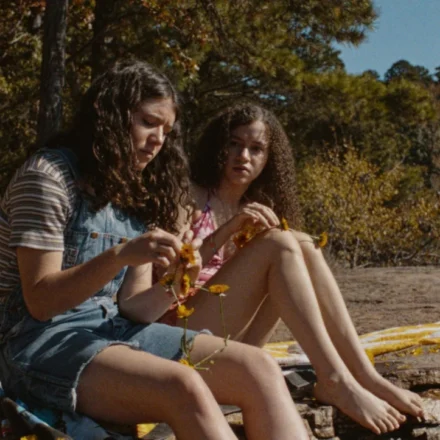
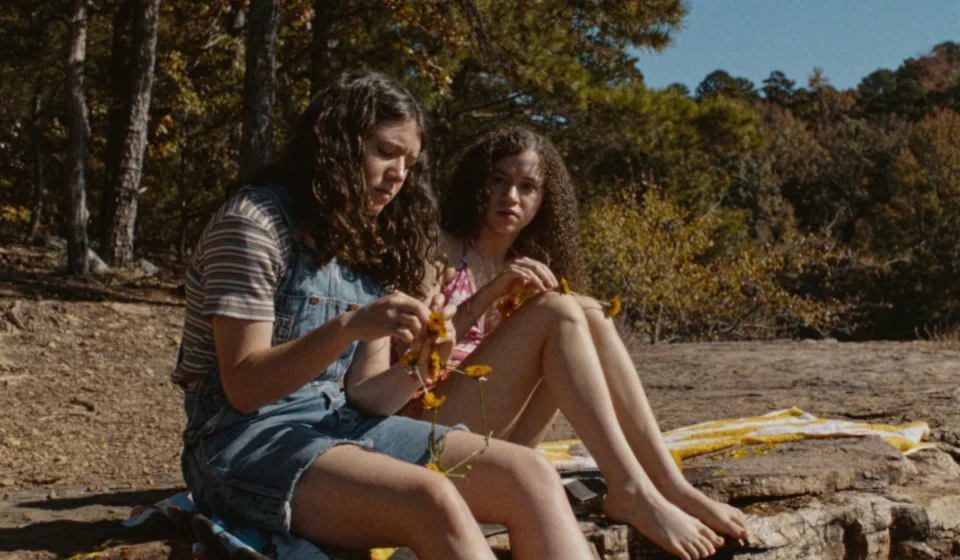
In the crowded landscape of contemporary independent cinema, few films manage to balance the crushing weight of grief with the delicate, observational humor of adolescence. Mouse, the latest feature from the Chicago-based directing duo Alex Thompson and Kelly O’Sullivan, achieves this rare equilibrium. Following a high school girl—played with a haunting, revelatory grace by Katherine Mallen Kupferer—as she navigates the aftermath of a profound loss, the film has emerged as one of the year’s most significant, if quietly distributed, cinematic achievements.
Critics and audiences alike have likened the film’s texture to the visceral, post-9/11 sensibilities of Kenneth Lonergan’s Margaret. Yet, while Margaret became infamous for its protracted journey to the screen, Mouse faced a different, more personal brand of adversity: a path paved with repeated rejection from the very institutions that historically champion the American independent spirit.
A Chronicle of Rejection and Resilience
The road to Mouse was anything but linear. Having previously garnered acclaim for their 2024 breakout Ghostlight—a poignant, meta-theatrical examination of a community production of Romeo and Juliet—Thompson and O’Sullivan arrived at the development of Mouse with a solidified creative partnership and a clear vision.
The script, penned by O’Sullivan in 2019, was initially envisioned as the duo’s immediate follow-up to their SXSW-winning debut, Saint Frances. At the time, the project was backed by a financier and boasted a more comfortable budget. However, the dual industry shocks of the WGA and SAG-AFTRA strikes in 2023 forced a pivot. The original production fell apart, leading the duo to focus on Ghostlight as a smaller-scale interim project.

When they returned to Mouse in the fall of 2024, they were determined to maintain their original artistic integrity. The film, shot on location in O’Sullivan’s home state of Arkansas, was produced on a lean $3 million budget. Thompson, who took on the role of producer, applied an intimate knowledge of the project’s financial architecture to ensure the scale remained ambitious.
Despite their pedigree, the film faced a baffling reception from major U.S. festivals. According to the directors, they submitted Mouse to Sundance not once, but twice. “We submitted it again the next year, when it was tighter,” O’Sullivan shared with IndieWire. “The feedback that we got—and again, this is a game of telephone—is that it had real champions, but that it also had people who didn’t get it.”
The rejection was particularly stinging because of the caliber of the work involved. “I was like, ‘Wait, but people did such great work on this movie. The work is incredible,’” O’Sullivan noted. “I feel like [Sophie Okonedo and Katherine Mallen Kupferer] deserve a really big stage.”
The Berlin Breakthrough
If the American festival circuit remained elusive, Europe provided a sanctuary. The Berlin Film Festival selected Mouse for its prestigious Panorama section, marking the duo’s first major European bow. For Thompson and O’Sullivan, the selection felt like a validation that transcended the standard American indie pipeline.

“It really was hard for a moment, and then we heard back from Berlin, and it kind of felt like a career opportunity that went way beyond Sundance,” Thompson said. “Tapping into the narrative outside of the American indie felt like something we’d always aspired to.”
The experience in Berlin, under the tenure of artistic director Tricia Tuttle, offered a historic platform. For Thompson, who grew up revering the lineups of Venice, Cannes, and Berlin, the opportunity to present a film in a massive European theater was a career-defining moment.
Anatomy of a Grief Dramedy
Set in 2002, Mouse captures the specific, stifling atmosphere of a small town in the wake of the 9/11 attacks, a backdrop that mirrors the personal turbulence of its protagonist, Minnie Dunn. As Minnie prepares for her senior year, she is blindsided by the death of her lifelong best friend.
The film eschews the typical tropes of teen grief. Instead, it explores the “centrifugal force” of loss: the way the world keeps spinning while the grieving individual remains anchored in a state of suspended animation. Minnie forms an unlikely, tender alliance with the mother of her late friend—played with luminescent vulnerability by Sophie Okonedo—who is navigating her own isolated mourning process.

The film is anchored by a stable of theater-based Chicago actors, including real-life mother-daughter duo Tara Mallen and Katherine Mallen Kupferer. This choice lends the film an air of authenticity that feels increasingly rare in high-gloss studio productions.
The Convergence of Personal and Professional
The production of Mouse was inextricably linked to the personal lives of its creators. Toward the end of the shoot in Arkansas, O’Sullivan lost her own mother. The overlap between her lived experience and the script she had written years prior created an uncanny, often overwhelming atmosphere on set.
“She died when we had a week and a half left to shoot,” O’Sullivan recalled. “I just kept hearing these lines that I had written, and they took on a whole new meaning… lines that I had sort of written in a very theoretical way all of a sudden were hitting me in a, ‘God, I can’t believe how true this was, and I didn’t even know.’”
This confluence of life and art extended to the film’s crew as well; the choreographer for the film’s climactic ballet sequence was O’Sullivan’s high school dance teacher. For the filmmakers, the project became a temporal bridge, compressing years of their lives into a single, cohesive narrative.

Implications for the Future of Indie Filmmaking
As Mouse continues its theatrical run via the Independent Film Company, its success poses a question about the current state of independent distribution and the “sandbox” mentality of modern directors.
Thompson and O’Sullivan have made it clear they are not interested in the traditional Hollywood migration. They view their work as a cumulative effort, aiming to build a filmography that rivals the prolific nature of icons like Sidney Lumet or Steven Soderbergh. Their strategy, they suggest, is to remain independent, mobile, and specific.
“If we want to make a movie every 15 months, we probably can’t do that in the studio system,” Thompson explained. “I think we both like the idea of playing in a bigger sandbox and taking the intimacy, taking all the things we’ve learned, and working in a bigger sandbox.”
The duo is already looking ahead, with two projects expected in 2027: a high-concept body-swap comedy starring the Kupferers, and The Steel Harp, which will see O’Sullivan return to acting alongside Lois Smith.

A Lasting Impression
Mouse stands as a testament to the idea that a "small" movie can possess an outsized emotional footprint. By refusing to manipulate its audience, the film earns its tears through earned, honest character work. In a year defined by blockbuster spectacles and high-concept awards contenders, Mouse serves as a quiet reminder of why independent cinema remains the heartbeat of the industry.
It is a film about the moments we cannot get back, the people we carry with us, and the, at times, bewildering process of moving forward. As the film expands its footprint across theaters nationwide, its trajectory proves that even when the doors of the established festivals are closed, a work of genuine emotional depth will always find its audience.
Mouse is currently playing in select theaters in New York and Los Angeles, with a wider expansion scheduled throughout November.