The Performance of Presence: Jordan Firstman’s ‘Club Kid’ Transcends the Persona

Editor’s note: This interview was originally conducted during the 2026 Cannes Film Festival. A24 is set to release "Club Kid" in theaters nationwide on Friday, November 6, 2026.
The official synopsis for Club Kid is a masterclass in narrative evasion: "A washed-up party promoter is forced to turn his life around when an unexpected visitor arrives." It is a logline that feels almost suspiciously vague, stripped of the color and kinetic energy that defines the work of its creator, Jordan Firstman.
For years, Firstman has operated as a singular entity in the digital and cinematic landscape. As a writer, actor, comedian, and now a debut feature filmmaker, he has cultivated a public persona that dances on the razor’s edge between a chaotic queer oracle and a self-aware caricature. He has invited audiences to feel as though they know everything about him, all while carefully guarding the parts of his psyche that remain vulnerable. With Club Kid, however, the performance of the persona is finally stripped away, revealing a filmmaker capable of profound, unvarnished empathy.
A Career Built on Irony
Firstman’s trajectory has been defined by a unique ability to weaponize irony. From his early viral Instagram sketches—which skewered the pretension of the entertainment industry—to his biting performances in Search Party, The Other Two, and I Love LA, he has consistently interrogated the modern condition.

His most notable cinematic turn before Club Kid was his caustic self-portrayal in Sebastián Silva’s 2023 Sundance standout, Rotting in the Sun. In that film, Firstman leaned into the perception of himself as a high-functioning, narcissistic provocateur.
"People have trouble metabolizing me for a lot of different reasons," Firstman told IndieWire during the 2026 Cannes Film Festival. "I think I remind them of someone they know, but also someone they don’t know. Or someone who deserves things, but also someone they went to high school with who’s just an annoying gay guy. Perception is weird."
Rotting in the Sun served as a crucible. It forced him to confront the ways in which his audience—and perhaps the industry at large—viewed him. As he moved into the development of Club Kid, he felt a pull toward something more internal. "I wanted the thing I did after that to be a bit softer and more like a version of me that I knew, but other people didn’t," he explained. "There was a lot on me in that movie in terms of persona and people thinking about me in a certain type of way."
The Chronology of a Creative Pivot
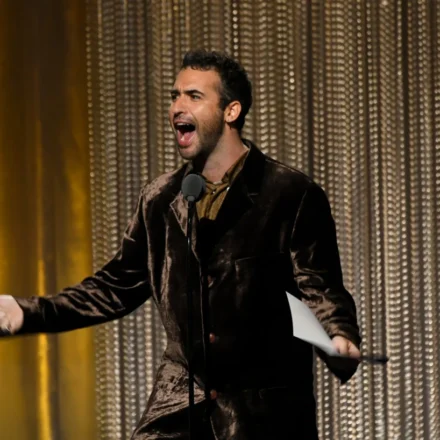
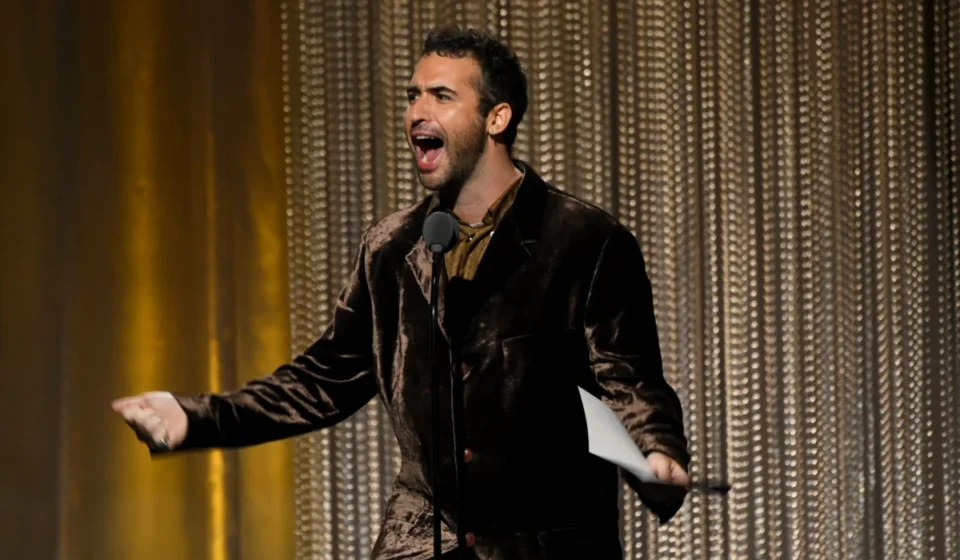
The shift in Firstman’s creative output did not happen overnight. It was punctuated by moments of intense public engagement, such as his viral 2020 Laura Dern tribute performed by the Gay Men’s Chorus of Los Angeles at the Spirit Awards—a moment he describes as "top five in my life."

However, the transition from "chaotic flirt" to a filmmaker exploring the heavy, often hidden costs of that lifestyle required a period of introspection. Club Kid is the result of a multi-year effort to reconcile his public image with his private reality. The film follows Peter, a fixture of the New York City nightlife scene whose life is upended by the sudden arrival of a child he never knew existed.
While the premise sounds like a classic "fish-out-of-water" dramedy, Firstman rejects the tropes of the genre. He isn’t interested in a redemption arc that demands the character apologize for his existence; he is interested in the why of that existence.
The Evolution of Nightlife and Queer Space
One of the most compelling aspects of Club Kid is its anthropological precision regarding the changing face of modern queer nightlife. Firstman views the club not merely as a setting, but as a living, breathing character that has evolved—and arguably degraded—in the shadow of global instability.
"I remember that era was the start of Europe coming to America gay-wise," Firstman said, referencing the mid-2010s. "Dark rooms were not really a thing before that. It was Molly, and maybe some coke, and that was kind of it."

Then came the COVID-19 pandemic, which served as a catalyst for a radical shift in communal behavior. "I said this famously in the pandemic, but it’s like, you take sex away from gay people for a month, and they’ll make up for it for the next five years."
As the years progressed, the chemical landscape of the party scene changed. "In 2020 and 2021, K got really big. Then G started in 2022. Then, the last couple years, the Mephedrone, the 3MMC, and 4MMC," he noted, his tone shifting from lighthearted to grave. "You look around, and you see zombies where it should be a community. And sometimes that still feels like your community? It just changed."
Finding the Human Beneath the Strobe
Firstman’s film avoids the trap of moralizing. Instead, it offers a sympathetic, deeply human look at why individuals return to these environments even when the atmosphere turns toxic.
The heart of the film lies in the chemistry between Peter and his son, played by newcomer Reggie Absolom. Firstman, who auditioned hundreds of actors from London, recounts the moment he found his lead with a sense of wonder. "I remember seeing the thumbnail and being like, ‘Please be able to act, because that’s him.’"

The bond that formed between the two on set was transformative. Firstman became visibly emotional when discussing the ensemble cast of queer and trans performers who surrounded Absolom. "For the rest of his life now he’s going to love trans people because he got to see how funny and creative they are, and listen to music with them and joke around with them," Firstman said. "I think that’s the beauty of this story."
Implications: A New Era for Firstman
The critical reception of Club Kid at Cannes suggests that Firstman has successfully navigated the transition from internet personality to serious auteur. By refusing to flatten his narrative, he has created a work that serves as a mirror for a generation of queer individuals who have often felt forced to choose between the freedom of the nightlife scene and the traditional markers of domestic success.
"I’ve softened a lot in the process of making it," Firstman admitted. "I think I’ve struggled so much with my queerness—not in a traditional way, but more in the actual community and having so many mixed feelings about it. Because it isn’t simple. It’s very rich and full."
The implications of Club Kid are clear: the era of the "ironic" Jordan Firstman is evolving into something far more substantial. His willingness to be "psychologically naked" on screen suggests an artist who is no longer interested in performing for the sake of visibility, but rather for the sake of connection.

As Club Kid prepares for its wide release, it stands as a testament to the idea that true vulnerability is the most radical performance of all. For an artist who has spent his career in the strobe lights, the most profound discovery is that the light he was looking for was never external—it was always, in the quiet, unscripted moments, right in front of him.
Club Kid is not just a film; it is a confession, an examination, and perhaps most importantly, a coming-of-age story for someone who thought they had already finished growing up. It is the most honest Jordan Firstman appearance to date, and a bold indicator of the filmmaker he is becoming.