The Shadow of History: Martin McDonagh’s "Wild Horse Nine" Struggles Between Satire and Conscience

[Editor’s note: This review was originally published on September 3, 2026, during the 2026 Venice Film Festival. Searchlight Pictures will release the film in theaters on Friday, November 6.]
In the landscape of contemporary cinema, few directors possess a voice as distinct—or as insistently melancholic—as Martin McDonagh. Known for his jagged, banter-driven explorations of morality and mortality, McDonagh returns with Wild Horse Nine, a film that attempts to graft the fast-talking, post-Guy Ritchie sensibility of In Bruges onto the vast, dusty canvas of a classic American Western. However, instead of the rolling hills of the American frontier, McDonagh transplants his signature brand of purgatorial soul-searching to the stark, isolated landscape of Easter Island. The setting is not merely aesthetic; it is anchored in the chilling geopolitical reality of the fall of 1973, specifically the CIA-backed destabilization that led to the rise of Augusto Pinochet in Chile.
The Premise: A Purgatory of One’s Own Making
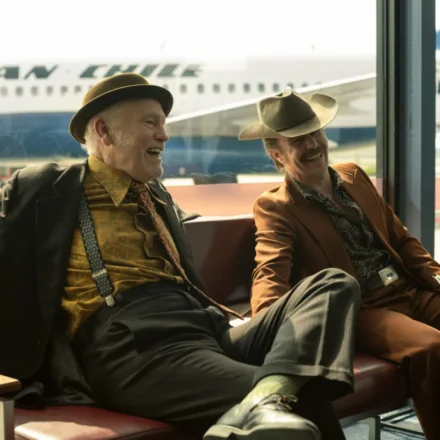
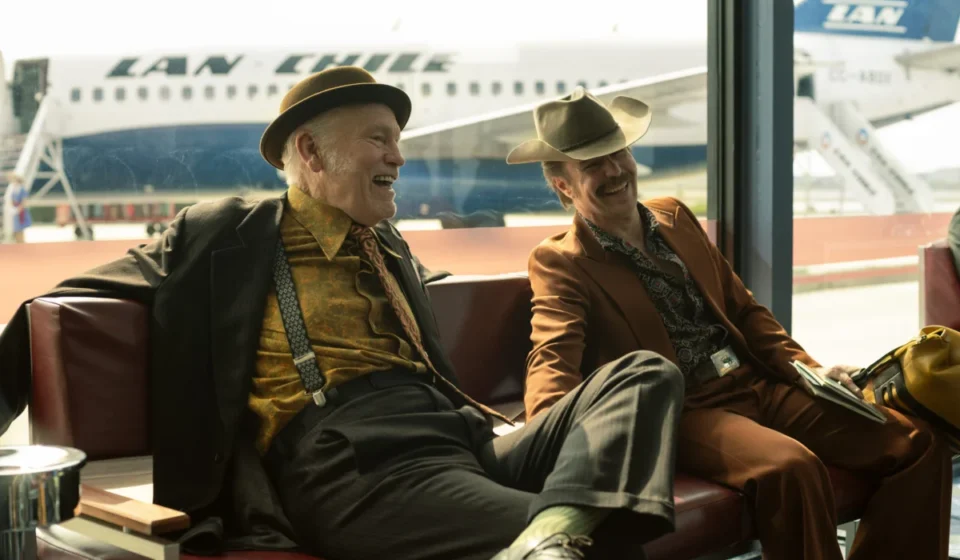
The narrative centers on two "company men" whose relationship feels like a distorted mirror of a domestic partnership. Chris, played with a brittle, enigmatic intensity by John Malkovich, is a career CIA operative who serves as a living, breathing monument to 20th-century American interventionism. Opposite him is Lee, portrayed by Sam Rockwell with his trademark blend of frantic energy and weary loyalty.
The duo has been dispatched to Chile to pull the strings of the September 11, 1973, coup against the democratically elected socialist president Salvador Allende. Knowing full well that their actions will plunge the nation into decades of brutal dictatorship, they find themselves in a temporary state of professional limbo. With the machinations of the coup in motion but not yet realized, they retreat to the remote shores of Rapa Nui—Easter Island—ostensibly to wait out the fallout.
It is here that the film’s central conflict emerges. Chris, a man who has spent his life executing policy with the blithe imperiousness of a flag waving in a storm, finds his cognitive faculties beginning to fray. As his memory falters, he is forced into a confrontation with his own legacy—a list of 68 confirmed kills, a figure he recites with the casual indifference one might use to describe a commute.

Chronology of a Disintegrating Conscience
To understand the weight of Wild Horse Nine, one must look at the historical trajectory McDonagh weaves into the screenplay. Chris is not a newcomer to the "dirty work" of the American intelligence apparatus. The film serves as a travelogue of his atrocities: he was present in the Congo during the execution of Patrice Lumumba; he was a silent orchestrator behind the scenes of the failed 1961 Bay of Pigs invasion; and he was in Dallas on that fateful November afternoon in 1963.
The film utilizes these historical touchstones to build a portrait of a man who is the physical embodiment of the CIA’s mid-century ethos. When Chris and Lee arrive on Rapa Nui, the timeline is compressed, forcing them to occupy a space of reflection that they are fundamentally unequipped to handle. They spend their days admiring the ancient moai statues, engaging in aggressive, screen-written debates over the theological status of Nazis, and flirting with local activists, most notably a character played by Mariana di Girolamo.
The irony is thick: these men are architects of systemic destruction, yet they are physically surrounded by the silent, monolithic witnesses of a civilization that has already seen empires rise and fall. Chris’s inability to grasp the moai—alternating between mocking their scale and being profoundly unsettled by their permanence—becomes the film’s most poignant visual metaphor.
Supporting Data and Stylistic Choices
The film is only the second feature to be filmed on the ultra-remote soil of Rapa Nui, following Kevin Reynolds’ 1994 epic Rapa Nui. Cinematographer Ben Davis treats the island with a sun-bleached, ethereal beauty, creating a veneer of a lost idyll that clashes violently with the profane nature of the protagonists.
The score and sound design, which incorporate the somber, reflective folk of the era, serve to heighten the sense of displacement. Yet, for all its technical prowess, the film remains a "double-edged sword." McDonagh’s dialogue is, as expected, whip-smart and riddled with profanity, yet it often feels at odds with the gravity of the setting. When In Bruges centered on a hitman killing an altar boy, the stakes were personal and contained. When Wild Horse Nine attempts to layer that same "seriocomic absurdity" over the death of thousands of real-world Chileans, the tone becomes undeniably glib.

The performances, however, are unimpeachable. John Malkovich is more "locked in" than he has been since Burn After Reading. He plays Chris with an insidiously relaxed posture, marrying the nonchalance of a cowboy to the profound, creeping paranoia of a man who knows he has become a liability to his own employers. Sam Rockwell, serving as the "office husband" and caretaker, provides the emotional anchor, though even he cannot always bridge the gap between the film’s comedic aspirations and its dark historical subject matter.
Official Responses and the "Glibness" Debate
Early discourse surrounding the film has focused heavily on whether its tone is appropriate. Critics have noted that while the "glibness" is a hallmark of McDonagh’s writing, it occasionally makes the film feel as "transparently manufactured" as the very CIA conspiracies it depicts.
Does the audience care about a "dark night of the soul" for a man who has openly bragged about his role in the Kennedy assassination? McDonagh clearly thinks so, or at least he finds the question of whether we should care to be a compelling one. However, the film stops short of offering true expiation. There is no grand confession, no cinematic moment of divine grace. Instead, the narrative devolves into a third-act scramble of gunplay and hostage-taking, as the reality of American "national security" catches up with their vacation.
Implications: The Punchline of Empire
The true success of Wild Horse Nine lies not in its plot, but in its existential observations. The film posits that American interventionism is less an act of grand, sweeping heroism and more a messy, forgettable footnote in the long, silent history of humanity.
As the film reaches its conclusion, it becomes clear that Chris’s fading memory is his only escape. He wants to forget; the CIA, represented by the presence of his handler MJ (Steve Buscemi), wants to ensure he does forget—permanently. The statues that watch over the island remain the final arbiters of the narrative. They existed before the CIA, and they will persist long after the current world order has been "wiped away like a tear in the rain."

Ultimately, Wild Horse Nine is a film that reaches for profundity but is often tripped up by its own desire to be the loudest voice in the room. It is a work of immense craft and biting wit, but it leaves the viewer wondering if the "seriocomic" mask is simply too thin to cover the scars of the history it invokes.
Grade: B-
Summary of Key Elements
- Director: Martin McDonagh
- Starring: John Malkovich, Sam Rockwell, Mariana di Girolamo, Steve Buscemi
- Setting: Easter Island (Rapa Nui), 1973
- Theme: The intersection of personal memory and geopolitical atrocity
- Release Date: November 6, 2026
- Distribution: Searchlight Pictures
The film stands as a bold, if flawed, experiment in genre-bending. By forcing the viewer to oscillate between the absurd humor of two men in a rental car and the weight of a foreign coup, McDonagh has created a polarizing piece of cinema that will likely fuel debates about the ethics of historical fiction for years to come. Whether one finds the film’s "glibness" to be a feature or a bug depends entirely on how much weight one expects a dark comedy to carry.