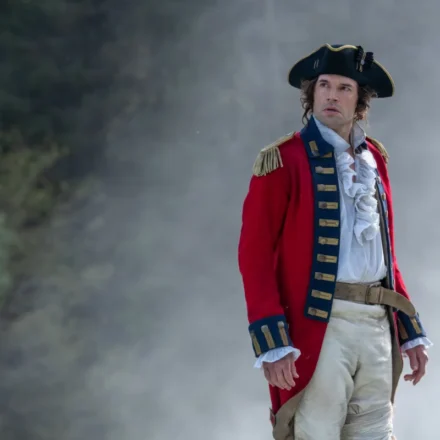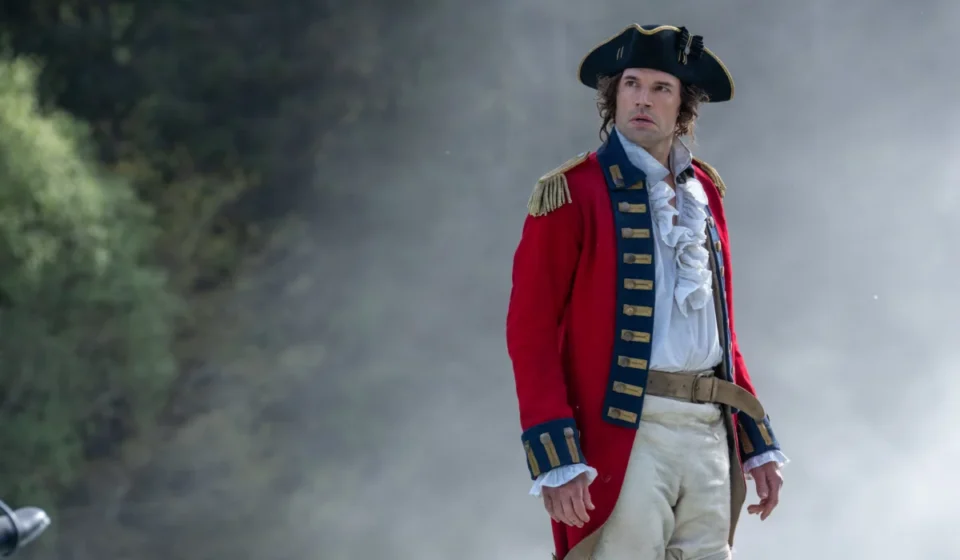

In the rapidly evolving landscape of faith-based cinema, Angel Studios has carved out a unique niche as a powerhouse of "values-driven" entertainment. Following the surprising box-office momentum of Unsung Hero earlier in 2024, the studio has returned to the silver screen with a bold, rhythmic venture into early American history. Drummer Boy, a patriotic musical directed by the Smallbone brothers, seeks to bridge the gap between contemporary pop sensibilities and the foundational narratives of the American Revolution.
While it arrives in the wake of the nation’s semiquincentennial buzz and just ahead of the holiday season, Drummer Boy is less a gritty historical document and more a sentimental, earnest exploration of familial loyalty, racial reconciliation, and the high cost of freedom. Starring Joel David Smallbone of the Grammy-winning duo For King + Country, the film represents a significant step in the professionalization of the Christian film industry, offering high production values and a polished, if somewhat idealized, vision of the 18th century.
Main Facts: A New Chapter for Faith-Based Musicals
Drummer Boy is the latest offering from Angel Studios, the distributor that famously disrupted Hollywood with The Chosen and Sound of Freedom. The film is a family affair, co-directed by Joel David Smallbone and his brother Ben Smallbone, with the musical score and original songs provided by their band, For King + Country.
Set against the backdrop of the Revolutionary War, the film follows the diverging paths of two brothers, Jeremiah and Benjamin Clem, who find themselves on opposite sides of the conflict. Unlike the hip-hop-infused revolution of Lin-Manuel Miranda’s Hamilton, Drummer Boy leans into a "vanilla" contemporary-pop sound—a signature of the Smallbone brothers’ musical career.
The film features a surprisingly robust ensemble cast, including Ioan Gruffudd (Fantastic Four), Charles Esten (Nashville), Melora Hardin (The Office), and Iain Glen (Game of Thrones). This level of talent signals Angel Studios’ increasing ability to attract mainstream actors to projects that prioritize "forgiveness and reconciliation" over traditional secular cynicism.
Chronology: From the High Seas to the Battlefield
The 1762 Prologue: Seeds of Division
The narrative begins in 1762, twelve years before the spark of the Revolution. The prologue introduces two families crossing the Atlantic from England to the American colonies. The Clems, led by the humble Nathaniel (Ioan Gruffudd), are seeking a life free from the rigid class structures of the Old World. In stark contrast, the widowed Lord Balfour (Charles Esten) travels with the expectation of maintaining his aristocratic privilege, accompanied by his young daughter, Lizzie, and an enslaved Black woman, Margaret.
The journey is marred by tragedy when their ship is attacked by the French during the French and Indian War. The Clems bear the brunt of the casualties and hardships, a moment that establishes the foundational resentment and class friction that will drive the plot forward.
1774: A House Divided
The story jumps forward to 1774 in Kingston, New York. The Clems have established a modest grain mill, run by the matriarch Rachel (Melora Hardin) and her sons, Jeremiah (Joel David Smallbone) and the "lamed" Benjamin (Lucas Leach). Meanwhile, the Balfours have ascended to the peak of Kingston’s social hierarchy, living in a sprawling manse and exerting political influence on behalf of the British Crown.
As the colonies move toward rebellion, the Clem brothers find themselves at a crossroads. Benjamin, the younger and more impetuous brother, becomes a vocal supporter of the Patriot cause. His outspokenness labels the family as traitors in the eyes of the Loyalists. To save the family business and prove his loyalty to the Crown, Jeremiah enlists as a British Redcoat under Lord Balfour’s command.
The Conflict of Brothers
The central drama unfolds as the brothers are deployed to the front lines. Benjamin, initially rejected by the Patriot forces due to his physical disability, proves his worth through his skill with the drum. In the 18th century, the drummer was a vital tactical asset, signaling commands like "charge" or "retreat" amidst the smoke of battle.
This sets up the film’s "brother versus brother" climax, as the two find themselves on the same battlefield, representing two different visions of what America should become. Parallel to this, a romantic subplot develops involving Emmaline (India Brown), a servant in the Balfour house who secretly loves Jeremiah, and Lizzie Balfour (Beth Easdown), the fickle debutante Jeremiah mistakenly believes is his true love.
Supporting Data: Production Design and Musical Identity
The Aesthetic of the "Freshly Laundered" Past
One of the most striking aspects of Drummer Boy is its visual presentation. Cinematographer Cathal Watters utilizes handsome widescreen shots that evoke 19th-century landscape paintings. Interestingly, the film was shot entirely in Ireland, which serves as a stand-in for upstate New York. This choice was driven by Ireland’s well-preserved historical architecture and rolling greens, which the production team felt better captured the "idealized" version of the 1700s.
However, critics have noted that the film’s production design, led by Chad Krowchuk, and costumes by Nadine Powell, offer a version of history that is "very freshly laundered." The grit and grime of colonial life are largely absent, replaced by a scrubbed, "teen-friendly" aesthetic that prioritizes visual appeal over historical realism.
The For King + Country Sound
The film’s heart lies in its music. The ten original songs, along with adaptations of traditional hymns, are firmly rooted in the contemporary Christian pop genre. The arrangements by Garrett P. Tyler and Danny Lopez incorporate small-string ensembles to add a touch of period flavor, but the vocal delivery and lyrical content are distinctly modern.
The lyrics often function as "Dear Diary" monologues, focusing on internal aspirations and personal pining rather than the complex political ideologies of the 1770s. This anachronistic approach is a deliberate choice by the Smallbones, aiming to make the emotional stakes of the characters relatable to a 21st-century audience.
Official Responses and Industry Context
Angel Studios’ Growing Influence
The release of Drummer Boy comes at a pivotal time for Angel Studios. Having moved away from the traditional Hollywood distribution model, the studio relies on "The Guild"—a community of thousands of fans who vote on which projects should be produced and distributed.
Industry analysts point to Drummer Boy as a test of whether the studio can sustain its success with original musicals, a genre that is notoriously difficult to get right. While Unsung Hero was a biographical success, Drummer Boy is a fictionalized historical drama, representing a more significant creative risk.
Casting and Performances
The involvement of Iain Glen and Ioan Gruffudd has been viewed as a "stamp of legitimacy" for the project. Glen, in particular, has been praised for his portrayal of Major Ambrose, bringing a gravitas to the Patriot forces that balances the film’s more sentimental moments. Charles Esten’s Lord Balfour provides a nuanced antagonist, representing the "old world" values that the Revolution sought to overthrow.
Implications: Reconciliation in a Polarized Era
A Message of Forgiveness
Perhaps the most significant implication of Drummer Boy is its timing. Released in the wake of a contentious political season, the film’s central theme of "forgiveness and reconciliation" is a clear appeal to a divided nation. By framing the Revolutionary War as a tragedy of broken relationships that can only be healed through grace, the filmmakers are offering a "soft-pedaled" religious message that prioritizes human morality over dogmatic theology.
The Treatment of Race and Slavery
While the film includes Black characters and hints at the injustices of the era, it largely avoids a direct confrontation with the institution of slavery. The relationship between Jeremiah and Emmaline is romanticized, and the word "slavery" is rarely mentioned. For some viewers, this "romanticized discretion" may feel like a missed opportunity to engage with the darker realities of American history. For the film’s target audience, however, this approach allows the story to remain focused on its primary themes of personal integrity and familial love.
The Future of Faith-Based Cinema
Drummer Boy suggests that the future of faith-based cinema lies in high-gloss, genre-blending entertainment. By combining the "original screen musical" format with patriotic history and contemporary pop, Angel Studios is broadening the definition of what a "Christian movie" can be.
While the film may not convert those who are cynical toward the "faith-based" label, it provides a confident, pleasing alternative for audiences seeking entertainment that aligns with their values. As the Smallbone brothers continue to expand their cinematic footprint, Drummer Boy stands as a testament to their ability to harmonize the old and the new, creating a "throwback" experience that feels uniquely suited for the modern age.