From Captive Labor to Cannibal Hordes: Deconstructing the Haitian Roots of the Modern Zombie

In the pantheon of Hollywood’s "Golden Age" of horror—the 1930s and 1940s—the hierarchy of terror was firmly established. Audiences trembled at the aristocratic menace of Dracula, the scientific hubris of Frankenstein’s monster, the primal tragedy of the Werewolf, and the ancient curse of the Mummy. During this era, it would have been nearly impossible to imagine that the "lowly" zombie—then a niche figure of Caribbean folklore—would eventually rise to eclipse its peers in the global cultural zeitgeist.
Today, while the classic quartet is frequently rebooted with varying degrees of success, the zombie has become an omnipresent force in modern media, evolving from a shuffling corpse into a multi-billion-dollar industry. However, as Maya Annik Bedward’s provocative new documentary, Black Zombie, reveals, this evolution has come at a significant cost: the systematic erasure and distortion of the Haitian religious and historical realities that birthed the concept.
Main Facts: The Release and Premise of Black Zombie
Directed by Canadian filmmaker Maya Annik Bedward, Black Zombie is a feature-length documentary that pivots away from traditional genre fandom to adopt the lens of a cultural anthropologist. The film explores the "surprise evolution" of the zombie, tracing its journey from the cane fields of colonial Haiti to the sprawling multimedia empires of the 21st century.
Distributed by Kino Lorber in the United States and Raven Banner in Canada, the film is set for a synchronized release on September 11th. Unlike typical "making-of" horror documentaries that celebrate gore and special effects, Bedward’s work interrogates how Western cinema exploited Haitian Vodou (often pejoratively referred to as "voodoo") to create a monster that serves Western anxieties while silencing the voices of the people who created the myth.
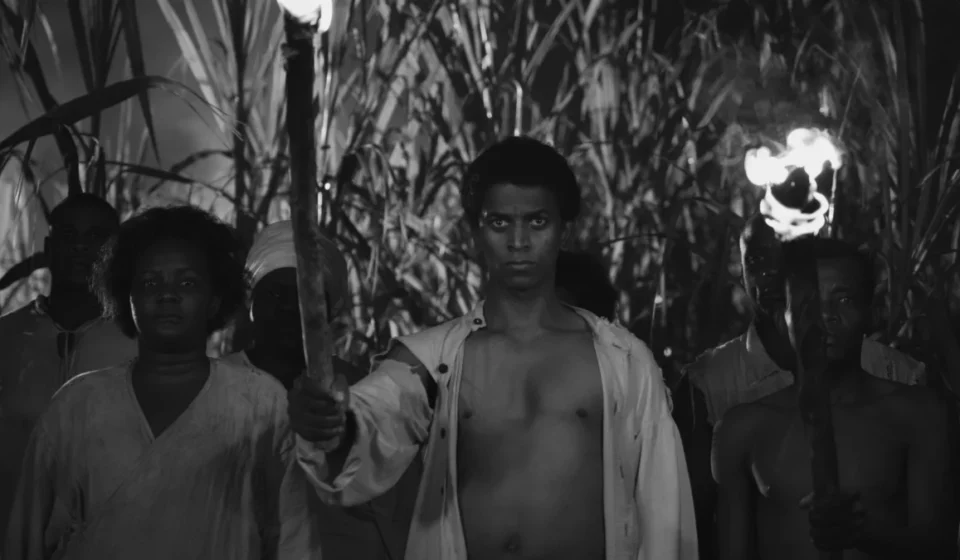
The film utilizes a sophisticated blend of archival newsreel footage, film clips, interviews with scholars and Vodou practitioners, and stylized black-and-white reenactments featuring Anderson Mojica. Through these mediums, Bedward argues that the screen zombie is not merely a creature of fantasy, but a tool of "disempowerment" used to justify the marginalization of the Haitian people.
Chronology: The Three Deaths of the Zombie
The history of the zombie can be divided into three distinct phases: the historical tragedy of slavery, the sensationalism of early Hollywood, and the "ghoul" revolution of the late 20th century.
1. The Colonial Origin (17th – 19th Century)
The concept of the zombi (the original spelling) emerged in the French colony of Saint-Domingue (modern-day Haiti). For the African slaves worked to death on sugar plantations, the ultimate fear was not death itself, but the prospect of being denied an afterlife. According to folklore, a zombi was a person whose soul had been stolen by a bokor (sorcerer), forcing the body to toil in the fields forever, even after death. In this context, the zombie was a tragic figure—a metaphor for the ultimate loss of autonomy under the crushing weight of chattel slavery.
2. The Sensationalist Introduction (1929 – 1943)
The zombie entered the American consciousness via William Seabrook’s 1929 book, The Magic Island. Seabrook, an occultist and adventure seeker, claimed to have witnessed "trance-like" laborers in Haiti. His work, though largely discredited today as sensationalist and racially biased, provided the blueprint for Hollywood.
In 1932, the independent film White Zombie, starring Bela Lugosi, brought this concept to the screen. A decade later, Val Lewton produced I Walked With a Zombie (1943). In these films, the horror was not that a zombie might eat you, but that a "civilized" white person might be "hypnotized" or "drugged" into a state of mindless servitude by a Black master of the occult.
3. The Romero Shift (1968 – Present)
The modern zombie was born in 1968 with George A. Romero’s Night of the Living Dead. Interestingly, Romero and co-writer John Russo did not initially call their creatures zombies; they referred to them as "ghouls." By stripping away the Haitian Vodou elements and introducing cannibalism—a trait not found in original Haitian lore—Romero created a blank slate for social commentary. This "Romero template" of the slow, flesh-eating undead eventually evolved into the "fast-moving" threats seen in 28 Days Later and the blockbuster scale of World War Z.
Supporting Data: The Mechanics of "Soul Loss"
Bedward’s documentary delves into the physiological and psychological theories behind the Haitian zombie. One recurring theory explored in the film is the role of diet and drugs. It is suggested that depriving laborers of salt intake or the administration of specific neurotoxins (such as tetrodotoxin found in pufferfish) could induce a catatonic, suggestible state.
However, the film emphasizes that the myth of the zombie was far more potent than any chemical reality. By branding Haitians as "superstitious" or "savage" practitioners of dark magic, colonial powers and later occupiers (such as the U.S. Marines during the 1915–1934 occupation of Haiti) could justify their presence. The documentary provides data suggesting that the "zombie narrative" was used as a form of soft power to portray Haiti as a nation incapable of self-governance.
In the realm of modern media, the "data" of zombie popularity is staggering. The Walking Dead franchise has generated billions in revenue, yet as the documentary points out, the connection to the source culture has been almost entirely severed. The cannibalism conceit, which is the cornerstone of the modern genre, has "scant connection" to actual Vodou beliefs, representing a total appropriation of the name for a different set of Western fears.
Official Responses and Expert Commentary
Black Zombie features a diverse array of voices, ranging from legendary special effects artist Tom Savini to contemporary Vodou priests.
John Russo, the co-writer of Night of the Living Dead, provides a pragmatic look at the genre’s shift. He reveals that the "hungry ghoul" concept was born out of financial necessity; they couldn’t afford the elaborate sets or costumes required for a traditional science-fiction or gothic horror film, so they opted for "neighbors eating neighbors."
The most poignant commentary comes from the Haitian scholars and religious leaders. Bedward notes that many of her sources were initially reluctant to speak. They had been "burned" by previous Western filmmakers who claimed to be making serious documentaries, only to produce sensationalized "voodoo" horror.
These experts argue that the modern depiction of zombies as a "devouring horde" reflects a new type of paranoia. As one observer in the film notes, zombies now "represent otherness." The fear has shifted from the loss of individual will (the Haitian fear) to the fear of "invading" masses—be they refugees, immigrants, or the victims of climate change.
Implications: The Legacy of the "Other"
The implications of Black Zombie extend far beyond the confines of cinema history. The film posits that by turning the zombie into a faceless, mindless monster that must be decapitated to be stopped, Western culture has created a "safe" way to rehearse the dehumanization of the "Other."
When the zombie was a Haitian figure, it was a victim of systemic cruelty. When it became a Hollywood figure, it became a threat to be eliminated. This shift mirrors the geopolitical treatment of Haiti itself—a nation that has been "continually hobbled" by foreign occupations, imposed debts (such as the independence debt paid to France), and political instability.
Furthermore, the documentary challenges the audience to consider the ethics of "escapist" entertainment. While watching a zombie apocalypse movie may seem like harmless fun, Bedward suggests that these images reinforce a subconscious bias that equates "Blackness" or "Third World origins" with a lack of agency or a latent threat.
In conclusion, Black Zombie serves as a necessary corrective to decades of cultural theft. By reclaiming the history of the zombie, Maya Annik Bedward does more than just document a film genre; she restores a measure of dignity to a narrative that began in the tragedy of the Atlantic slave trade. For viewers, the film ensures that the next time they watch a horde of the undead on screen, they will see not just a monster, but the distorted reflection of a real-world history that continues to be misunderstood. The zombie, it turns out, is not just a creature that refuses to die—it is a story that refuses to be told correctly.