Resilience Amidst Conflict: "I Rarely Wake Up Dreaming" Wins Tokyo’s Ethical Film Award

Introduction: A Cinematic Recognition of Human Dignity
At the 37th edition of the Tokyo International Film Festival (TIFF), a poignant Germany-Ukraine co-production, I Rarely Wake Up Dreaming, has been honored with the prestigious Ethical Film Award. The accolade, established in 2023 through a partnership between the festival and the Sumitomo Corporation, serves as a beacon for global cinema that tackles the most pressing societal challenges of our time, including environmental degradation, systemic poverty, and human rights discrimination.
Directed by the acclaimed German filmmaker Isabelle Stever, the film offers a harrowing yet deeply intimate look at the intersections of gender identity and the existential threat of war. By selecting this film, the jury—led by award-winning actor Isomura Hayato—has underscored the power of storytelling to preserve the humanity of those caught in the crosshairs of geopolitical catastrophe.
The Core Narrative: A Struggle for Identity and Survival
I Rarely Wake Up Dreaming transports viewers to Kyiv in late 2021, capturing the chilling atmosphere of a city unknowingly standing on the precipice of a full-scale invasion. The narrative centers on Oleh, a transgender man who finds himself trapped by the very bureaucracy of the nation he calls home. As the looming threat of the Russian invasion becomes an inescapable reality, Oleh attempts to flee, only to be blocked at the border by legal documentation that does not reflect his true gender.
The film serves as a visceral exploration of "in-betweenness." Oleh and his partner, Olya, are forced to navigate not only the physical dangers of an encroaching war but also the psychological disintegration of their identities. As the sounds of sirens and explosions draw closer, the couple must grapple with a world that seeks to categorize and control them, even as that world threatens to destroy them entirely.
Stever’s direction avoids the tropes of traditional war films. Instead, she opts for a character-driven approach that highlights the erosion of agency. The film asks a fundamental question: How does one maintain a sense of self when the structures that define existence—gender, national borders, and safety—are simultaneously collapsing?
Chronology: From Pre-Invasion Anxiety to Global Recognition
The timeline of the film’s development and subsequent recognition is as layered as its narrative:
- Pre-2021: Isabelle Stever, known for her previous premieres at the Berlinale, Toronto, Locarno, and Busan, begins creative collaboration with her wife, the Ukrainian novelist and screenwriter Anna Melikova.
- Late 2021: The film’s setting captures the palpable, yet often ignored, tension in Kyiv just months before the February 2022 Russian invasion.
- 2023: The Tokyo International Film Festival establishes the Ethical Film Award, supported by Sumitomo Corporation, to formalize the festival’s commitment to social impact cinema.
- October 2024: I Rarely Wake Up Dreaming is selected as one of three finalists for the Ethical Film Award at the Tokyo International Film Festival.
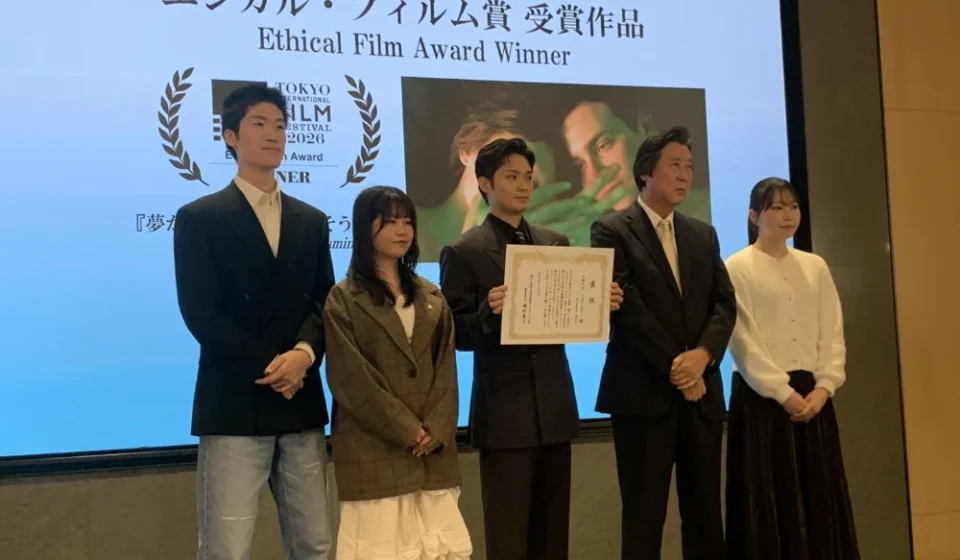
- November 2024: The jury, chaired by Isomura Hayato, announces the film as the winner. Stever accepts the award via video message, emphasizing the importance of non-conformity in the face of autocracy.
Supporting Data: The Selection Process and Competition
The Ethical Film Award is not merely a symbolic gesture; it is the result of a rigorous evaluation process. The jury is tasked with filtering through the festival’s diverse lineup to find films that provoke necessary reflection on ethical dilemmas.
This year’s jury was chaired by Isomura Hayato, a two-time Japan Academy Film Prize winner and a prominent figure in the Japanese film industry, known for his dedication to regional cinema through his work with the Shizuoka Film Festival. His perspective was balanced by the inclusion of three members of the festival’s student PR team, ensuring that the award resonates with younger generations who are increasingly invested in global human rights issues.
The competition was fierce, featuring two other notable nominees that also addressed global crises:
- "Amadeo and the Hypothetical New World" (Brazil): Directed by Brenda Lígia and Edu Felistoque, this film explores the fragility of social structures and the hope for a reconstructed reality.
- "Time and Tide" (Australia): Directed by Vee Shi, this project examines the temporal and emotional dimensions of displacement and environmental flux.
The fact that I Rarely Wake Up Dreaming emerged victorious against such strong international competition speaks to the universal resonance of its themes.
Official Responses and Jury Deliberations
The decision to award the film was unanimous, with the jury emphasizing the film’s bravery in tackling gender politics in the middle of an active war zone.
"The film follows a couple whose identity, sense of purpose, and values are not just challenged, but actively denied by the circumstances surrounding them," Isomura Hayato remarked during the ceremony. "It is a story that asks how a person can possibly continue to live—to breathe—when everything that makes them who they are is under siege. We chose this film with the hope that it will act as a mirror for the audience, encouraging a deep reflection on our own values."
Isabelle Stever, unable to attend the ceremony in person due to her teaching obligations at a film school, offered a powerful acceptance speech that transcended the standard formalities of award-giving. Speaking from her classroom, she redefined the term "queer," stripping it of its narrow labels and expanding it into a philosophy of resistance.
"Queer is not only referring to LGBTQ+," Stever stated. "It is, as well, referring to something that is not normalized. And we all know if everything would be normalized, we would stop breathing."
She drew a sharp, poignant parallel between the act of resisting societal "normalization" and the current plight of Ukrainians. "Autocratic regimes require us to obey set standards and provide us with no options," she said. "The people of Ukraine are fighting so that they can still breathe in their own country. This film is a testament to that struggle for air."
Implications: The Role of Cinema in Ethical Advocacy
The recognition of I Rarely Wake Up Dreaming at an A-list festival like Tokyo signals a shift in how the industry values "social impact" storytelling. In an era of political polarization, festivals are increasingly serving as platforms for films that do not just entertain, but actively advocate for the dignity of marginalized populations.
The Power of the "Non-Normalized"
Stever’s assertion that "normalization" is the enemy of vitality is a radical critique of modern political structures. By framing gender non-conformity as a form of existential resistance, the film elevates the conversation beyond traditional identity politics. It positions the "non-normalized" individual as the one who is truly alive—the one who refuses to be erased by the rigid, often violent, standards imposed by state actors.
Global Solidarity
The collaboration between a German director and a Ukrainian screenwriter (Anna Melikova) represents a vital form of European solidarity. Through this partnership, the film avoids the "tourist gaze" that often plagues films about foreign conflicts. Instead, it offers a deeply authentic perspective on the domestic reality of war—a reality that is often sanitized by international news coverage.
Financial and Symbolic Support
The festival will provide a cash prize of JPY 200,000 ($1,270) to the production, along with an official certificate. While the financial sum is modest by industry standards, the symbolic value of the award is immense. It provides I Rarely Wake Up Dreaming with a critical marketing boost, ensuring that the film will likely find distribution in more territories, thus widening the audience for its message of resilience.
Conclusion: A Call to Reflect
The Tokyo International Film Festival’s decision to honor I Rarely Wake Up Dreaming is a reminder that cinema remains our most potent tool for empathy. In a world where news headlines are often fleeting and statistics regarding war and discrimination become numbing, Isabelle Stever’s film demands that we stop, look, and listen.
As the film concludes its run at the festival and prepares for broader distribution, its impact will be measured not just in awards, but in the conversations it ignites. By highlighting the plight of those who are denied the right to be themselves—and the right to exist in peace—the film challenges audiences to consider their own role in protecting the "non-normalized" voices that keep the world vibrant, diverse, and, ultimately, human.
In the words of the jury, the hope is that this film will be seen by many, and that it will serve as a catalyst for a more nuanced understanding of what it means to be truly free in a world that is constantly trying to define us.