The Vertigo of Grief: Analyzing Jimmy Chin and Elizabeth Chai Vasarhelyi’s Everest: The Other Side

Editor’s Note: This review was originally published during the 2026 Venice Film Festival. National Geographic will open the film in theaters nationwide starting October 30.
The high-profile personal and professional separation of Oscar-winning filmmaking duo Jimmy Chin and Elizabeth Chai Vasarhelyi has been a subject of intense speculation within the documentary film community. Yet, it is against the backdrop of this transition that they have delivered Everest: The Other Side, a film that stands as perhaps their most visceral, technically ambitious, and psychologically complex project to date.
NatGeo’s latest foray into high-altitude nonfiction is more than a chronicle of a summit attempt; it is a vertiginously shot, harrowing meditation on what happens when the human spirit, battered by repeated trauma, seeks solace in the most inhospitable corners of the globe. The subject is Jim Morrison, an elite alpine climber and skier whose quest to scale the North Face of Everest serves as the film’s central narrative spine. While the film presents itself as a feat of mountaineering, it is, in reality, a study of grief as a catalyst for extreme behavior.
The Anatomy of an Impossible Ascent
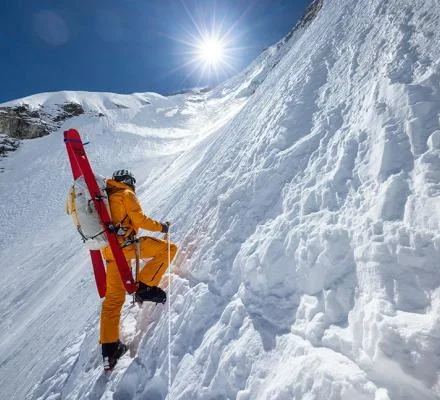
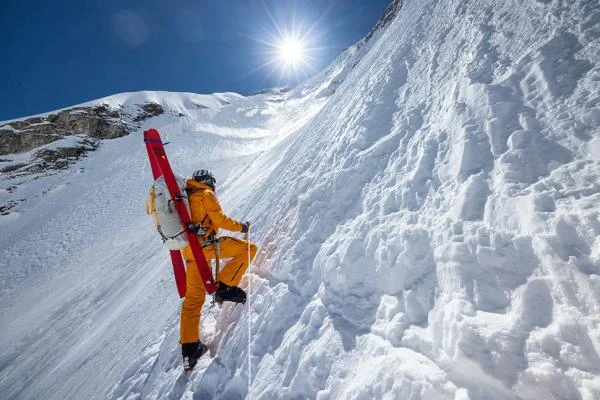
To understand the magnitude of Everest: The Other Side, one must understand the geography of the ambition. The North Face of Everest is not merely a climb; it is a death-defying technical gauntlet. Until Morrison’s recent, record-breaking expedition, only five individuals had successfully summited via this route, and zero had ever attempted to descend it on skis.
The film captures the logistical nightmare of the expedition: the 9,000-vertical-foot corridor of "bulletproof" ice, the unpredictable avalanches that act as the mountain’s silent sentinels, and the constant, crushing pressure of oxygen deprivation. The cinematography—executed by Clair Popkin, Christopher Murphy, and Chin himself—utilizes an exhaustive arsenal of GoPro footage, long-range drones, and telescopic lenses. The result is a sensory experience that induces genuine vertigo, forcing the viewer to confront the precariousness of Morrison’s existence at 29,000 feet.
Chronology of Tragedy: A Life Defined by Loss
The narrative weight of Everest: The Other Side is not carried by the mountain, but by the ghosts Morrison brings with him. To frame this as a sports documentary is to miss the point entirely; the film is a profound exploration of the "death drive" that characterizes the world’s most elite mountaineers.
Morrison’s journey is haunted by two catastrophic chapters of loss. The first occurred in 2011, when his first wife and two children were killed in a tragic airplane accident. This foundational trauma fundamentally altered his relationship with mortality. The second, more recent tragedy involves his partner, the legendary ski mountaineer Hilaree Nelson.

In 2022, while the couple was preparing for the North Face attempt during the global pandemic, Nelson was killed on Nepal’s Manaslu summit. The film captures this moment with a haunting, archival immediacy—a nightmare jump-scare where a massive sheet of ice shifts, claiming Nelson and sending her 5,900 feet down the mountainside. The inclusion of this footage is, at once, a testament to the filmmakers’ commitment to raw reality and a painful reminder of the cost of their profession.
Supporting Data: The Cost of the "Death Drive"
What separates Everest: The Other Side from standard genre entries is its refusal to provide easy answers. Why do these individuals—tenacious, brilliant, and arguably masochistic—keep returning to the void?
In previous films like Free Solo or Meru, the tension was driven by the question of whether the subject would survive. Here, the filmmakers shift the focus toward the "why." There is no glory in this specific pursuit, as Morrison himself acknowledges in a muttered aside while navigating a crevasse: "The things we do for fun." The film posits that for people like Morrison, the mountain is not an escape from their problems, but the only place where the problems feel proportional to the environment.
The relationship dynamics explored in the film mirror the "hairpin cracks in the ice" that eventually split apart the partnerships of those who live on the edge. The filmmakers, while keeping their own recent separation largely off-screen, imbue the narrative with an intimate understanding of how high-stakes adventure acts as both a glue and a solvent for human relationships.
The Institutional Lens: The NatGeo Perspective
The involvement of National Geographic suggests a certain polish, yet the film successfully avoids the "soothing nature-doc" tropes that often plague the genre. Instead, the collaboration between Chin and Vasarhelyi yields a clear-eyed stare into the face of mortality.
Official promotional materials and press briefings have emphasized the technical triumph of the 2025 expedition, which followed a failed attempt in 2023. By showing the failure, the filmmakers provide necessary context: this was not a linear success story, but a two-year struggle against monsoons, shifting weather patterns, and the mental toll of returning to the site of one’s trauma. The film’s inclusion of Yukta, a charming and grounded Nepalese Sherpa, serves as the necessary human counterbalance to the icy, isolating ambition of the Western climbers.
Implications: The Ethics of the Spectacle
Does the film exploit Morrison’s grief for the sake of cinematic spectacle? It is a question that gnaws at the edges of the experience. By positioning the camera as both a witness to death and an observer of the healing process, Chin and Vasarhelyi raise uncomfortable questions about the ethics of "grief-documentaries."

However, the strength of the film lies in its honesty. By the time Morrison reaches the summit, the audience is not just watching an athlete achieve a goal; they are witnessing a man trying to outrun a past that is effectively chasing him up the slope. The descent—the most dangerous part of any mountaineering feat—becomes a metaphor for the return to reality. When he finally skis down, the sequence is "intimately suffocating," forcing the viewer to share in the relief and the lingering, unresolved sorrow.
A Legacy of Resilience
Everest: The Other Side is a masterclass in tension management. Even though the audience knows that Morrison survives—he is, after all, the one narrating his own story—the filmmakers successfully generate a suspense that feels existential rather than merely physical.
The film suggests that the "resilience of the human spirit" is not a clean, tidy concept. It is messy, often destructive, and frequently irrational. It is the ability to stand at the top of the world, look down, and decide that the only way to process your life is to traverse the most dangerous path available.
In the final assessment, Chin and Vasarhelyi have created a work that is profoundly personal. They have managed to tell another man’s story in a way that feels inextricably linked to their own artistic evolution. It is a haunting, beautiful, and deeply unsettling piece of filmmaking that demands to be seen on the largest screen possible—not for the mountain, but for the man standing upon it.
Grade: B+
Summary Table: Key Expedition Milestones
| Phase | Year | Status | Outcome |
|---|---|---|---|
| Initial Training | 2021 | Pre-production | Partnership with Hilaree Nelson |
| The Manaslu Incident | 2022 | Tragedy | Death of Hilaree Nelson |
| First Attempt | 2023 | Failed | Expedition abandoned due to conditions |
| Successful Ascent | 2025 | Completed | First successful ski descent of North Face |
Everest: The Other Side serves as a sobering reminder that for the elite mountaineer, the mountain is the only place where the silence is loud enough to hear oneself think—and the only place where the descent is just as difficult as the climb.