Shadows of the Past: Shingo Matsumura’s ‘Between Us’ Explores the Fractured Landscape of Grief

The Tokyo International Film Festival (TIFF) has long served as a vital barometer for the health and direction of contemporary Japanese cinema. In its recently revamped and newly competitive "Nippon Cinema Now" section, the festival highlights filmmakers who are pushing the boundaries of traditional narrative structures while grappling with the complexities of modern Japanese life. It is within this prestigious showcase that Shingo Matsumura premiered his fourth feature film, Between Us (Japanese Watashitachi no Manazashi).
The film is an ambitious, if occasionally uneven, meditation on the nature of unprocessed trauma and the generational divide in emotional intelligence. By centering on two middle-class families whose lives were irrevocably altered by a single afternoon six years prior, Matsumura attempts to bridge the gap between silence and reconciliation. While the film’s execution does not always match its thematic reach, it serves as a poignant reminder of the enduring power of performance as a tool for catharsis.
Main Facts: A Study in Estrangement and Ambition
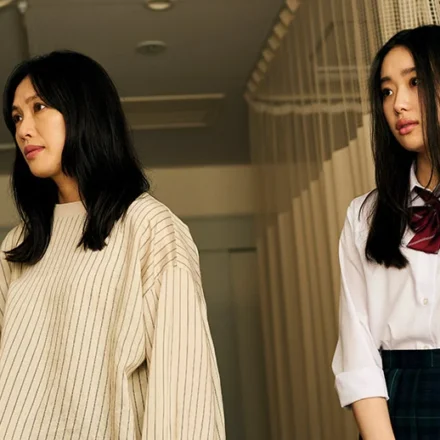
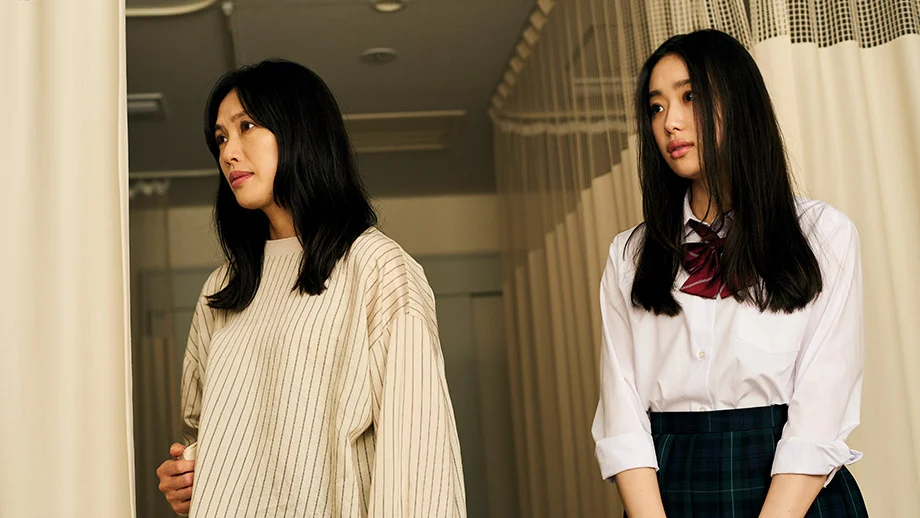
Between Us follows the intertwined destinies of two families who were once close friends but have since been driven apart by a tragic camping accident. The film is anchored by a quartet of formidable female performances, most notably Ririka Kawashima as Makoto and Anna Kurasawa as Kasumi. Supporting them are veteran actresses Akiko Kikuchi and Asami Usuda, who portray the mothers caught in a web of guilt, resentment, and paralyzing sorrow.
Director Shingo Matsumura, known for his delicate touch with interpersonal dynamics, uses the film to explore how grief can become malignant when left unaddressed. The narrative is structured around a high-school drama club production, a "film-within-a-film" or "play-within-a-film" trope that allows the younger characters to navigate the emotional minefield that their parents have spent years avoiding.
Despite its noble intentions, the film’s commercial prospects are likely limited to the international festival circuit and specialist showcases. However, its inclusion in the Tokyo Film Festival underscores Matsumura’s status as a significant "emerging voice" in Japanese cinema—a filmmaker who, while still honing his craft, is unafraid to tackle the heavy, often taboo subject of domestic tragedy.
Chronology: From a Butterfly Net to the Stage
The Prologue: The Day the World Stopped
The film opens with a deceptively tranquil prologue. Ten-year-old Kasumi and her parents are preparing for a countryside camping trip. The plan was for their close friends—the family of Kasumi’s classmate, Makoto—to join them. However, fate intervenes with mundane obstacles: Makoto falls ill with a fever, and her father is unexpectedly called into the office.
In a decision that will haunt both families for a lifetime, Makoto’s eight-year-old brother, Kenji, is sent along with Kasumi’s family. The imagery of this sequence is hauntingly simple: Kenji, a vibrant "scamp" with a butterfly net, scampers through the tall grass while the adults give the standard, distracted warnings not to wander too far. The scene ends without showing the tragedy, leaving the audience to fill in the harrowing blanks.
Six Years Later: Two Portraits of Ruin
The narrative jumps forward six years, revealing the starkly different ways the two families have "recovered." For Makoto’s family, the devastation is total. Now a high-schooler, Makoto (Kawashima) lives in a home defined by absence. Her mother, Emi (Akiko Kikuchi), is a shell of her former self, drifting through life in a state of near-catatonia. The father (Yoichiro Saito) has been physically and emotionally ejected from the domestic sphere; he has lost his white-collar job and now works as a delivery driver, a visual metaphor for his downward social and emotional mobility.
Conversely, Kasumi’s family appears to have moved on. They have a new five-year-old daughter, Chika, and maintain the outward appearance of a stable, happy middle-class unit. However, Matsumura quickly deconstructs this facade. The mother, Fumiko (Asami Usuda), reveals that their youngest child has never seen her father (Takahiro Miura) smile. The guilt of being the "surviving" family has created a different kind of rot—one masked by performative normalcy.
The Intersection: The Drama Club
The paths of the two families converge at a local high school, where Makoto and Kasumi find themselves as the sole members of a struggling drama club. Simultaneously, their mothers cross paths at a library. These coincidental meetings force a confrontation with the past. The central conceit of the film’s second half involves the two girls deciding to produce a play that dramatizes their shared history. Through the safety of the stage, they attempt to articulate the hostility and longing that their parents are too broken to acknowledge.
Supporting Data: Directorial Choices and Critical Analysis
The Heavy Hand of Information
One of the most discussed elements of Matsumura’s direction is a controversial narrative choice early in the film. While the director initially succeeds in portraying grief through subtext and atmosphere, he inserts a car radio news report that explicitly details Kenji’s disappearance. The report mentions that police have not ruled out "foul play."
Critics have noted that this "heavy-handed over-clarification" serves to erase the mystery that gave the first act its tension. Furthermore, it hints at a procedural or "true crime" element that the film never actually explores, leading to a sense of tonal inconsistency. By providing too much data to the audience—data that the characters themselves do not hear—the film momentarily loses its focus on the internal emotional landscape.
Comparative Cinema
Film scholars have drawn parallels between Between Us and Lee Jong-un’s 2019 South Korean masterpiece, Birthday. Both films deal with the aftermath of a child’s death and the paralyzing effect of communal trauma (in Birthday‘s case, the Sewol ferry disaster). Like Lee, Matsumura chooses not to reenact the tragedy itself, focusing instead on the "paralyzing impact" of the void left behind. However, where Birthday found its power in the collective ritual of mourning, Between Us seeks a more individualistic, artistic resolution through the medium of high-school theater.
Performance as the Pillar
The film’s greatest strength lies in its casting. Ririka Kawashima’s portrayal of Makoto is described as "shellshocked," capturing the specific burden of a child who feels she must be the emotional anchor for her collapsing parents. The chemistry between Kawashima and Anna Kurasawa (Kasumi) provides the film’s emotional core. Their ability to transition from teenage awkwardness to profound, shared sorrow is what elevates the film above its script’s occasional shortcomings.
Official Responses and Festival Reception
The reception at the Tokyo International Film Festival was largely positive regarding the film’s intent, though tempered by critiques of its pacing.
- Festival Jurors: Members of the Nippon Cinema Now selection committee praised Matsumura for his "resolve to leave crucial questions unanswered," noting that the film resists the urge to provide a "neat" Hollywood-style ending where the boy is found or the families fully reconcile.
- Industry Analysts: Commercial analysts suggest that while the film may struggle in wide domestic release due to its somber subject matter, it is a strong candidate for "specialist showcases" in Europe and North America, where audiences have a higher appetite for slow-burn Japanese "human dramas."
- Directorial Intent: In post-screening Q&As, Matsumura has emphasized that his goal was to show that the younger generation is often "better equipped emotionally to forgive" than their parents. He posits that the rigidity of adult social structures in Japan makes it harder for the older generation to process shame and guilt.
Implications: Grief, Gender, and the Future of the Genre
The Ineffectual Patriarch
A significant implication of the film is its commentary on Japanese masculinity. Both fathers in the film are portrayed as "utterly ineffectual" in the face of tragedy. One flees the home and loses his status; the other remains but becomes a ghost-like figure who cannot even smile at his own child. This leaves the burden of emotional labor entirely to the women. By centering the narrative on mothers and daughters, Matsumura suggests that the path to healing in Japanese society is being forged by women, while men remain trapped in silent, unproductive stoicism.
The Role of Art in Healing
Between Us serves as a meta-commentary on the role of storytelling. The high school play is not just a plot device; it is an argument for the necessity of "meta-textual experimentation." It suggests that when reality is too painful to confront directly, we must use the "prism" of fiction to find the truth. This theme resonates deeply in a culture where "saving face" often leads to the suppression of vital emotional truths.
Conclusion: A Stepping Stone for Matsumura
While Between Us is described as "only fitfully successful" and "timid" in its approach to conflict, it remains a "tidily assembled little package." It marks a step forward for Shingo Matsumura, showcasing a director who is willing to take risks with non-linear storytelling and difficult themes. For the "Nippon Cinema Now" section, the film represents exactly what the festival hopes to foster: cinema that is ambitious, deeply felt, and unapologetically focused on the internal lives of its characters.
As the film moves from the festival circuit to broader audiences, its legacy will likely be defined by the "welcome glimmer of dramatic ambition" it brandishes, and its role in launching the careers of its talented young leads. It is a film that asks more questions than it answers—a fitting tribute to the messy, unresolved nature of grief itself.