
When writer-director Takashi Yamazaki unveiled his 2023 masterpiece, Godzilla Minus One, the title was widely perceived as a clever bit of marketing shorthand. However, Yamazaki offered a more profound explanation: the "Minus" represented the precarious state of postwar Japan, a nation already at zero, driven into the negative by the arrival of an unstoppable, prehistoric terror. Now, with the release of the direct sequel, Godzilla Minus Zero, Yamazaki has returned to the theater of the absurd with a title that sounds like a mathematical paradox—or, as some critics have quipped, "the day after yesterday." Yet, beneath the nomenclature lies a film that is arguably more emotionally resonant, visually arresting, and thematically complex than its Academy Award-winning predecessor.
The Evolution of the Kaiju Narrative: Main Facts
Godzilla Minus Zero arrives not merely as a blockbuster, but as a continuation of the psychological deconstruction of Japan’s survivalist era. While the first film focused on the immediate, visceral terror of the creature, Minus Zero pivots toward the long-term trauma of a society attempting to reconcile its survival with the looming threat of future catastrophes.
The film picks up in 1949, two years after the events of Minus One. The central protagonist, Kōichi Shikishima (Ryunosuke Kamiki), remains a man haunted by his past as a kamikaze pilot. He is no longer defined by his desire for self-sacrifice, but by the overwhelming, quiet burden of living for his chosen family—his wife, Noriko, and their young daughter, Akiko. However, the equilibrium they have fought to establish is shattered by the arrival of a new, three-headed nightmare: King Ghidorah.
This iteration of the classic monster is presented as a singular, apex threat—a "three-headed asshole," as some have dubbed it—that crash-lands in the mountains of Japan via a meteorite. The film’s brilliance lies in its refusal to treat the monster as a mere CGI spectacle. Instead, it positions the creature as an existential pressure cooker, forcing the survivors of the original attack to answer impossible questions regarding vengeance, growth, and the cost of peace.

A Chronological Descent: The Narrative Timeline
The narrative structure of Godzilla Minus Zero is deliberately paced, favoring character-driven drama over the relentless, non-stop action typical of contemporary Western kaiju films.
- The Interlude (1947–1949): The film establishes the rebuilding efforts of the Japanese populace. Government bureaucracy is largely absent, leaving the burden of defense to civilians and scientists.
- The Arrival (1949): King Ghidorah makes landfall in Matsumoto. Unlike Godzilla, whose origin is rooted in the radioactive fallout of human folly, Ghidorah is an extraterrestrial force of nature, presenting a challenge that humanity is fundamentally ill-equipped to meet.
- The Response: The formation of the Large-Scale Disaster Response Bureau, led by the eccentric Naval engineer Noda and the brilliant meteorologist Makoto Aoyama, provides the intellectual backbone of the resistance.
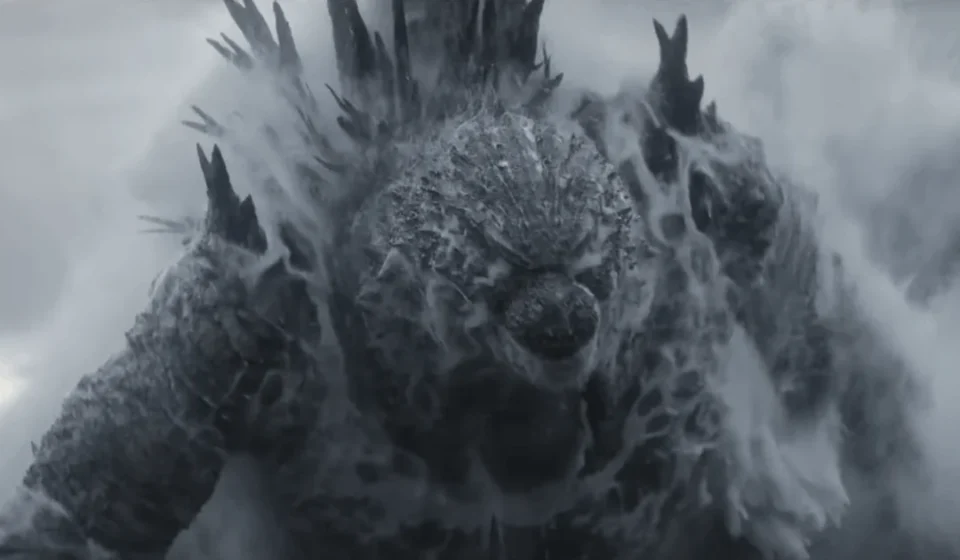
- The Climax: The film culminates in a titanic, grayscale-filtered showdown between the resurrected King of the Monsters and the three-headed invader. This sequence, bolstered by Naoki Satō’s Wagnerian score, marks the first time the franchise has leaned into an "R" rating, delivering a level of brutal, Darwinian intensity rarely seen in the genre.
Supporting Data: The Technical and Thematic Pillars
The visual language of Godzilla Minus Zero represents a significant leap forward in Japanese special effects. Where Minus One was noted for its resourcefulness, Minus Zero is defined by its sheer technical ambition. The aerial combat sequences are IMAX-grade spectacles that manage to feel physically heavy, moving away from the "weightless" feel that often plagues digital monster effects.
Furthermore, the film’s cast provides a masterclass in nuanced performance. Hidetaka Yoshioka’s Noda serves as the moral and intellectual compass, while Min Tanaka’s portrayal of the embittered biologist Kanji Murakami provides the film’s necessary darkness. Murakami, a survivor of Hiroshima and the Ginza attack, acts as the personification of the Japanese public’s potential for radicalized vengeance—a direct mirror to Tsutomu Yamaguchi, the real-world survivor of both atomic bombings.
The inclusion of an American military presence adds a layer of geopolitical cynicism. Unlike the first film, which focused on Japanese self-reliance, Minus Zero acknowledges the occupying U.S. forces, portraying them as pragmatic, power-hungry entities who view the kaiju phenomenon as a strategic opportunity rather than a humanitarian crisis.

Official Responses and Creative Vision
Takashi Yamazaki has remained consistent in his approach to the "Godzilla" brand. He insists that these films are not merely about monsters, but about the "atomic shadow" under which the modern world lives. In press junkets for the film’s premiere at the 2026 New York Film Festival, Yamazaki emphasized that the title Minus Zero signifies the point at which the nation can no longer fall any lower, and must therefore choose to either rebuild or perish.
"The title is meant to be provocative," Yamazaki noted during a roundtable discussion. "If Minus One was the realization that we have lost everything, Minus Zero is the realization that we have everything to lose."
Critics have largely praised this focus. The film’s shift in tone—from the raw, panicked survival of the first film to the complex, moral dilemma of the second—has earned it a B+ rating, with many reviewers noting that it effectively serves as the middle chapter of a planned trilogy.
Implications: The Future of the Franchise
The success of Godzilla Minus Zero signals a shift in the global appetite for the kaiju genre. Audiences are no longer satisfied with mindless destruction; they are seeking narratives that reflect their own anxieties about climate change, geopolitical instability, and the lingering trauma of historical conflict.

By grounding its monsters in a specific, lived-in reality, the film forces the audience to confront the question: What happens when you survive the impossible, only to realize the world is fundamentally unsafe? The film ends on an uncertain note, suggesting that the "King of the Monsters" is less of a villain and more of a recurring, unstoppable weather phenomenon—a force that simply is.
As the credits roll on Godzilla Minus Zero, it becomes clear that the series is doing more than just adding up numbers in its title; it is adding to the historical record of Japanese cinema. By elevating the stakes and deepening the character arcs, Yamazaki has ensured that the King of the Monsters remains relevant not just as an icon of destruction, but as a mirror to our own fragile, resilient humanity.
Godzilla Minus Zero is currently set for a wide U.S. release on November 6, 2026, via GKIDS. Whether or not the final chapter of this trilogy will be titled Godzilla Zero or something equally mathematical remains to be seen, but one thing is certain: the shadow of the monster continues to grow.