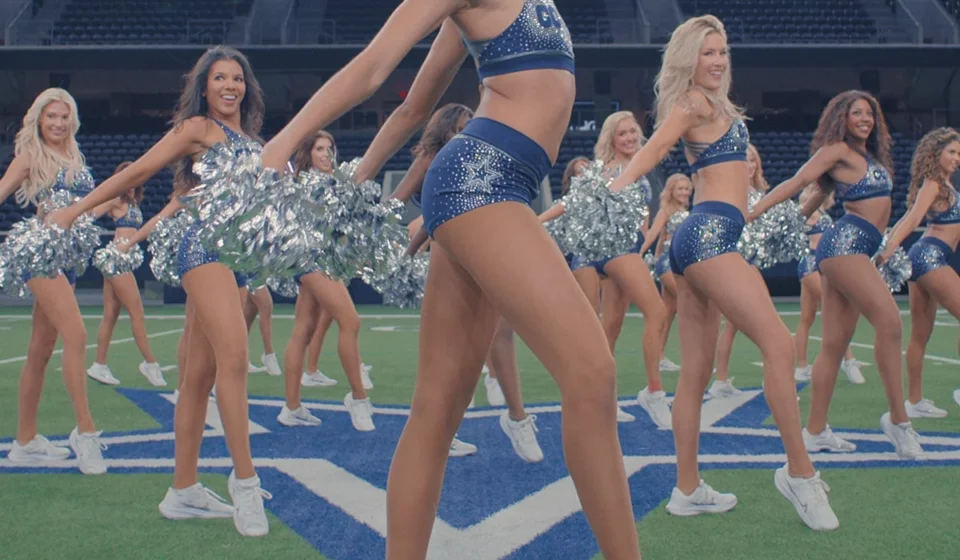
Beyond the Pom-Poms: The Evolution and Economics of the Dallas Cowboys Cheerleaders

For over five decades, the Dallas Cowboys Cheerleaders (DCC) have served as an immutable fixture of American pop culture. While the fortunes of the Dallas Cowboys football team may fluctuate with the volatility of the NFL season, the "America’s Sweethearts" brand remains a global juggernaut of athletic precision, aesthetic discipline, and evolving media influence. As the Netflix docuseries America’s Sweethearts captures the intensity of life inside the locker room, the organization finds itself at a pivotal crossroads: balancing its storied traditions with the modern realities of the influencer economy and professional sports labor standards.
The Financial Paradigm Shift: From Minimum Wage to Market Power
For years, the compensation of NFL cheerleaders was a subject of intense public scrutiny. Investigations, including a 2017 report by ESPN, highlighted a stark reality: many performers were earning near-minimum wage, often taking home between $75 and $150 per game. For a squad that serves as one of the most visible faces of a multi-billion-dollar sports franchise, this pay scale was increasingly viewed as untenable.
However, the landscape shifted dramatically in June 2025, when a 400% pay increase was announced for the DCC roster. This adjustment—combined with hourly wages for rehearsals, public appearances, and game-day duties—has fundamentally altered the professional profile of the squad.
Beyond the team-issued salary, a new revenue stream has emerged: the influencer economy. Longtime choreographer Judy Trammell, a veteran of the organization, has observed this transition firsthand. "The girls are now becoming influencers, which I have fought in the past," Trammell noted during the third season of the Netflix series. "But they’re becoming so successful with it, so they’re not having to kill themselves with a 9-to-5 job."
This sentiment is echoed by alumni like Jada McLean, who transitioned from the field to full-time content creation. McLean, who was instrumental in advocating for the team’s historic pay bump, noted that brand partnerships with companies like Bumble, Dove, Maybelline, and Caraway provide a lucrative, if variable, income. Depending on the scale of the campaign, these earnings can range from $5,000 to as high as $50,000 per partnership, effectively turning the DCC uniform into a launchpad for long-term career independence.
A Chronology of "America’s Sweethearts"
The journey of the DCC is a study in consistency and adaptation. While the squad’s iconic star-spangled uniform made its debut in 1972, the modern era of the cheerleaders began in earnest with the 2006 premiere of the CMT reality series Dallas Cowboys Cheerleaders: Making the Team. For 16 seasons, fans were given an unprecedented look at the brutal audition process, the high-stakes training camps, and the technical mastery required to perform the signature jump splits.
When that series concluded in 2022, it left a void in sports entertainment that Netflix’s America’s Sweethearts eventually filled. This new chapter has prioritized a deeper, more humanizing look at the dancers—moving past the glossy exterior to explore the physical tolls, the mental health challenges, and the post-DCC career trajectories. From Reece Weaver’s transition from a local florist to a Broadway star in Chicago to the everyday administrative hurdles faced by dancers balancing full-time corporate careers with nightly rehearsals, the narrative has shifted from "the audition" to "the lifestyle."
The Physical Toll: The Price of Performance
The glamour of the uniform belies the punishing physical reality of the sport. The signature DCC jump split is more than just a dance move; it is a high-impact athletic maneuver that, over time, can lead to chronic injury.
Caroline Sundvold, who starred in the first season of the Netflix series alongside her sister Anna Kate, serves as a poignant example of the physical investment required. After four seasons of elite-level performance, Sundvold was advised by physicians to undergo major hip surgery—a procedure requiring a three-to-six-month recovery period. Her decision to delay the surgery to complete one final season speaks to the profound dedication inherent in the organization.
"The foot has so many nerves in it," Sundvold later shared, noting that a subsequent foot surgery proved even more traumatic than the hip procedure. This physical vulnerability is managed through an increasingly sophisticated support system. Today’s squad utilizes advanced sports medicine, including chiropractic care and specialized rehab at facilities like the Kinetic Centre. Practitioners like Dr. Kristina Myles work with the dancers to address muscular stiffness, range-of-motion issues, and the strain of constant training, ensuring that the "world-class dancer" designation remains a reality rather than a slogan.
Official Responses and Organizational Philosophy
Director Kelli Finglass, who has led the organization since 1991, has been at the forefront of the DCC’s evolution. In recent years, she has pivoted the organization away from the "body-image-obsessed" culture of the past toward a more holistic, wellness-oriented approach.
"Trying to make that uniform fit and have the most beautiful lines, we don’t talk about weight," Finglass stated. Instead, the organization provides access to nutritionists, mental health professionals, and on-site gym facilities. The focus has shifted toward individual health rather than mandated metrics. The official audition requirements reflect this: there are no specific height or weight requirements, only the expectation that the dancer appears "well-proportioned in dancewear."
Furthermore, the organization acts as a finishing school of sorts. Finglass emphasizes the importance of etiquette and professional development, noting that dancers are frequently placed in rooms with high-ranking military officials and global dignitaries. The goal is to provide these young women—often as young as 18 or 19—with the tools to remain "polished, poised, and prepared" regardless of the professional environment.
Implications: The Legacy and the Future
The modern DCC is far more than a sideline act. They are a brand, a community, and an alumni network. The institution of "The Spirit of DCC"—an active alumni association—highlights the transition from team member to lifelong member. As Finglass notes, the end of a cheering career is often a "big lifestyle change," and the organization works to maintain those bonds long after the final game of the season.
However, the challenges remain. The requirement for nude hosiery, the strict aesthetic rules (such as the bans on red lips and red nails), and the mandatory masking of tattoos ensure that the DCC remains a tightly controlled visual entity. While they are encouraged to be influencers, they must do so within the bounds of the "America’s Sweethearts" brand identity.
As we look toward the future, the implications for the squad are clear: they are increasingly defined by their agency. They are no longer just symbols of a football team; they are individual entrepreneurs using the platform of the Dallas Cowboys to secure their own futures. Whether through Broadway, social media, or corporate marketing careers, the women of the DCC are redefining what it means to be a professional cheerleader in the 21st century.
The choreography may remain the same, and the jump splits may still be as grueling as ever, but the women performing them are now in command of their own narratives—a change that is perhaps the most significant in the 52-year history of the most famous squad in sports.