Eighty Years of Resilience: The Karlovy Vary International Film Festival at a Crossroads of History

The Karlovy Vary International Film Festival (KVIFF) is not merely an annual gathering of cinephiles; it is a living monument to survival. As the festival marks its 60th edition—spanning an improbable 80-year history—it stands as a testament to the endurance of culture in the face of geopolitical upheaval. From its post-war inception in 1946 to its current status as a premier global stage, KVIFF has navigated the shifting sands of Nazi occupation, Soviet hegemony, and the eventual rebirth of the Czech Republic.
This year’s "Vary Special" edition served as both a retrospective of its turbulent past and a bold assertion of its progressive, eclectic future.
A Chronology of Survival: From Occupation to Global Stature
The festival’s origins are rooted in the immediate aftermath of World War II. Founded in 1946, just weeks before the inaugural Cannes Film Festival, KVIFF was an act of national defiance and cultural reconstruction. It was a declaration that Czechoslovakia, having been liberated from Nazi rule, was ready to rejoin the global intellectual community.
However, the path forward was far from linear. By 1958, the festival had attained the prestigious Category-A designation from the International Federation of Film Producers Associations (FIAPF), placing it among the most influential festivals in the world. Yet, this honor came with strings attached. Under the shadow of state communism, the Soviet Union imposed a rigid structure, mandating that Karlovy Vary alternate years with the Moscow International Film Festival. This stifling arrangement persisted until 1994, two years after the peaceful dissolution of Czechoslovakia and the emergence of the independent Czech Republic.

Today, the festival operates with a unique identity: it is a proudly progressive European hub that acknowledges its Communist-era architectural inheritance—most notably the Brutalist Hotel Thermal—while stripping away the ideological shackles of the past. The venue itself acts as a metaphor for the festival: a nostalgic, sanatorium-like space where the trauma of the past is processed through the lens of modern, diverse cinema.
The Rituals of Cinema: Traditions and Programming
For the seasoned attendee, KVIFF is a masterclass in tradition. Central to the festival’s charm are the eccentric black-and-white festival trailers directed by Ivan Zachariáš. These short, irreverent films feature past Crystal Globe winners—such as Mel Gibson defending his award from bumbling robbers or Stellan Skarsgård using his statuette as bait for a fishing trip—bridging the gap between celebrity culture and the festival’s whimsical, grounded personality.
Artistic Director Karel Och has also curated a long-running, informal masterclass, screening a film by John Cassavetes at every edition. This commitment to specific, deep-dive auteurism is complemented by a programming philosophy that favors balance. The festival offers a "three-ticket-per-day" cap, a deliberate measure to prevent attendee burnout and encourage a more thoughtful, curated experience. This allows the audience to oscillate between regional debuts of high-profile films from Sundance and Berlinale and the obscure, often radical, deep cuts of Eastern European cinema.
Out of the Past: The 60/80 Retrospective
The heart of this year’s celebration was the Out of the Past — KVIFF 60/80 section, a comprehensive journey through the milestones of the festival’s history. The retrospective reminded audiences that KVIFF has always served as a bridge between the East and the West.

Selections included Powell and Pressburger’s 1946 fabulist war melodrama, A Matter of Life and Death, which reached Czech audiences just as the country began to emerge from the darkness of occupation. The section also highlighted the winners of the festival’s centerpiece prize, the Crystal Globe. From Ján Kadár and Elmar Klos’s biting 1964 courtroom drama The Defendant to Ken Loach’s Kes (1970)—which won shortly after the suppression of the Prague Spring—the retrospective mapped the political pulse of the 20th century.
Perhaps most significantly, the section shone a light on previously suppressed works, such as Juraj Jakubisko’s Birds, Orphans and Fools (1969), a film that remained shelved by censors until 1990. The festival also underscored its long-standing internationalism by revisiting Glauber Rocha’s Barravento (1962), a foundational text of Brazilian Cinema Novo, proving that KVIFF’s curiosity has never been confined by the borders of the Eastern Bloc.
Modern Masterpieces: Cannes Highlights and New Voices
While the retrospective looked back, the competition sections provided a window into the current state of global storytelling. Two standouts from the recent Cannes cycle, Emmanuel Marre’s A Man of His Time and Sandra Wollner’s Everytime, dominated the discourse.
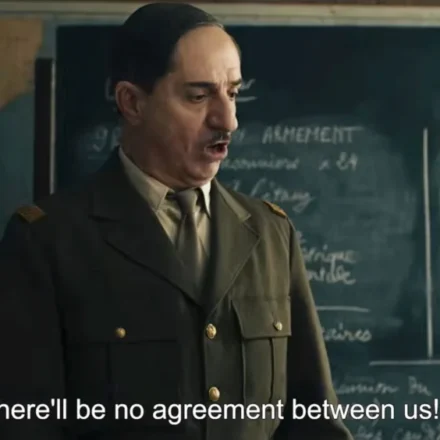
A Man of His Time is a sprawling, 155-minute examination of moral decay. Set within the Vichy regime, the film follows Henri, a man whose ambition is matched only by his mediocrity. Swann Arlaud delivers a chilling, paradoxical performance, capturing the banality of evil in a way that feels uncomfortably contemporary. Olivier Boonjing’s static, voyeuristic cinematography forces the viewer to confront the protagonist’s descent into complicity, making the film a stark reminder of how fascism often creeps into society through the guise of administrative normalcy.

Contrasting this heavy political drama was Sandra Wollner’s Everytime, a film that explores the fluid nature of grief and memory. Sharing a cinematographer, Gregory Oke, with the acclaimed Aftersun, the film maintains a hallucinogenic, dreamlike quality while grounding itself in the stark reality of a family’s irreparable fracture. Wollner’s ability to weave urban realism with the ethereal nature of childhood trauma makes Everytime a landmark of contemporary emotional storytelling.
Proxima and the Crystal Globe: A New Generation
The Proxima section, which replaced the old "East of the West" competition, continues to evolve as a borderless incubator for emerging talent. The Grand Prix winner, Lover, Not a Fighter by Slovak director Martina Buchelová, was the breakout of the festival. Utilizing a fragmented, frantic montage of vertical phone footage and reflexive subtitles, Buchelová captures the existential dread of a generation staring down the barrel of an uncertain future. The film feels less like a traditional narrative and more like a visceral, intimate document of youth culture, characterized by the juxtaposition of self-destructive romance and the looming threat of global collapse.
In the main Crystal Globe competition, the scope was wider and the stakes felt higher. While Aung Phyoe’s Fruit Gathering took home the top prize for its tender, nuanced portrayal of life in Yangon, it was the Bulgarian entry, Black Money for White Nights, that left the most lasting impression on critics.
Directed by Kristina Grozeva and Petar Valchanov, the film follows an elderly couple whose life savings—painstakingly accumulated through small, corrupt bribes—are destined for a dream trip to St. Petersburg. The tragedy of the film lies in their denial; even as the invasion of Ukraine begins, they refuse to cancel their trip, blinded by a romanticized, literary version of Russia found in the pages of Pushkin and Esenin. It is a brilliant, tragic satire on the human capacity for self-delusion and the failure of nostalgia in the face of modern atrocity.

Implications: The Festival as a Mirror
The absence of a prize for Black Money for White Nights sparked significant debate among attendees. Some suggested the subject matter was too close to home, touching on the very political tensions that the festival’s home region continues to navigate. However, to label the film merely as an exposé of corruption is to miss the point. It is, in essence, a fable about the dangers of living in a dreamworld when reality demands attention.
As the 60th edition of KVIFF concludes, the takeaway is clear: the festival has successfully reclaimed its history. By refusing to shy away from its complex, often painful, Communist past and by aggressively platforming the voices of tomorrow, Karlovy Vary has secured its relevance. It remains a rare space where the history of cinema is not just preserved in archives but is allowed to converse with the volatile realities of the present.
In a world increasingly fractured by political polarization and historical revisionism, the Karlovy Vary International Film Festival stands as a vital, breathing entity—a place where the past is not a burden, but a foundation for a more honest, and ultimately more human, future.