Unveiling the Unseen: ‘What Happened to Doris?’ Brings a Notorious Paranormal Case Back to the Screen

The horror genre has long maintained a symbiotic relationship with the "true story" label. While audiences are frequently promised that a film is "based on actual events," few projects carry the weight of historical infamy that accompanies the upcoming feature What Happened to Doris?. Set to make its highly anticipated World Premiere at the prestigious Fantastic Fest, the film promises to peel back the layers of one of the most chilling and contentious paranormal investigations in American history.
Directed by Nick Simon, the filmmaker behind the atmospheric The Girl in the Photographs, What Happened to Doris? serves as a spiritual successor—and perhaps a more grounded retelling—of the events that famously inspired the 1982 classic The Entity. With Heather Graham leading the cast in a performance that genre enthusiasts are already comparing to her recent, critically lauded turn in Suitable Flesh, the film is positioned to be a landmark release in the current cycle of supernatural cinema.
The Core Narrative: A Mother’s Worst Nightmare
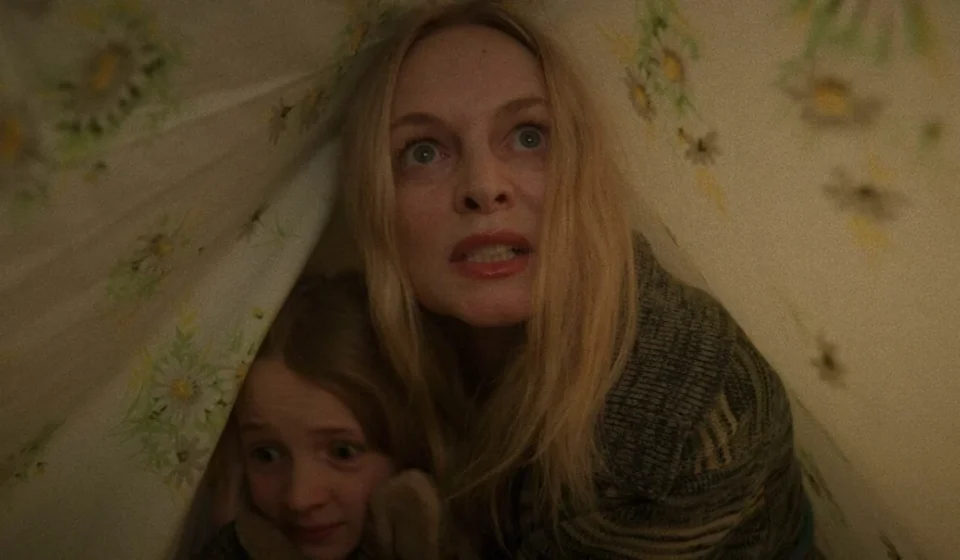
The premise of What Happened to Doris? is deceptively simple, yet steeped in an undercurrent of dread. The film follows a single mother, portrayed by Heather Graham, whose life descends into chaos when her daughter begins speaking of a "mysterious man" living beneath her bed. What begins as a parent’s concern over an imaginary friend quickly spirals into a terrifying reality as the mother finds herself targeted by an unseen, increasingly violent force.
The film’s marketing, highlighted by an exclusive clip shared ahead of the Fantastic Fest premiere, leans heavily into the psychological toll of such an intrusion. As Graham’s character grapples with the realization that the threat to her home is not a hallucination, but a tangible, predatory entity, the audience is invited to witness the slow erosion of safety that defines the best of the "haunted house" sub-genre.
Joining Graham in this harrowing journey are Mimi Rogers, Marcus Coloma, Kevin Keppy, Daniel Reed Ferrell, and Margo Parker. With a screenplay penned by Thomas Fenton, the film is designed to be more than a series of jump scares; it aims to examine the systemic failure of science to explain the inexplicable.
Chronology: The Real-Life Origins of the Doris Case
To understand the gravity of What Happened to Doris?, one must look back at the historical bedrock of the story. The film is rooted in the infamous 1974 case of Doris Bither, a woman residing in Culver City, California, who claimed to be the victim of repeated physical and sexual assaults by an invisible, non-human entity.
The 1974 Investigations
In the mid-1970s, Bither sought help from the parapsychology department at UCLA, specifically contacting Dr. Barry Taff and his research team. What the investigators documented over the course of several months remains a polarizing topic in the annals of paranormal research. Bither’s claims included being lifted off her bed, bruised, and experiencing localized temperature drops—phenomena that the researchers allegedly documented with cameras and sensory equipment.
The Shift from Research to Cinema
The documentation of the Bither case was so compelling that it served as the direct inspiration for Frank De Felitta’s novel The Entity, which was subsequently adapted into the Barbara Hershey film of the same name. However, What Happened to Doris? distinguishes itself by positioning its narrative as a more direct exploration of the events as they were perceived by the family involved, rather than the dramatized, high-octane version audiences saw in the 80s.
By focusing on the "Doris" perspective, the film aims to ground the paranormal elements in the human cost of the haunting, highlighting the trauma of a mother trying to protect her children from an adversary that defies the laws of physics.
Supporting Data: Why This Case Matters to Paranormal Scholars
The case of Doris Bither is frequently cited by enthusiasts of "high-strangeness" as one of the few instances where paranormal activity was allegedly witnessed by multiple academics simultaneously.
The UCLA Connection
The involvement of university-affiliated investigators gave the case a veneer of scientific legitimacy that was rare for the era. The researchers reported witnessing flashes of light, materializations of human-like forms, and electrical disturbances that could not be attributed to standard wiring failures. For the producers of What Happened to Doris?, this historical data provides a robust foundation for the film’s authenticity.

Parapsychology in the 1970s
The 1970s was a golden era for the investigation of the occult, with institutions like UCLA and Duke University taking a serious, albeit cautious, look at psychic phenomena. What Happened to Doris? utilizes this historical context to frame the film’s narrative. The inclusion of "UCLA investigators" as characters in the film serves as a bridge between the clinical, academic world and the visceral, terrifying world of the supernatural. This duality is expected to be a primary driver of the film’s tension.
Official Responses and Creative Vision
Director Nick Simon has been vocal about the importance of respecting the source material while crafting a modern cinematic experience. In early discussions regarding the project, Simon noted that his goal was to avoid the "slasher" tropes that have diluted the supernatural genre, opting instead for a slow-burn approach that prioritizes character development.
Heather Graham, who has seen a resurgence in her career within the horror space, has expressed a deep fascination with the script. Speaking on her role, she remarked on the challenge of playing a character who is simultaneously trying to maintain the stability of her family unit while her reality is systematically dismantled by forces beyond her control. For Graham, the role represents a return to the intense, character-driven horror she successfully navigated in Suitable Flesh.
The production team has worked closely with researchers familiar with the Bither files to ensure that the "phenomena" depicted on screen—such as the specific way the entity interacts with the environment—remain consistent with the accounts documented in 1974.
Implications: The Legacy of the "True Story" Horror
The release of What Happened to Doris? comes at a time when the "true crime/paranormal" hybrid genre is at its zenith. Audiences are increasingly demanding stories that feel grounded in history, even when they deal with the impossible.
Re-evaluating the "Entity"
The film serves as a cultural re-evaluation of the original The Entity story. While the 1982 film was a product of its time—relying on practical effects and a more aggressive, monster-movie approach—What Happened to Doris? appears to be leaning into the psychological ramifications of the event. By re-centering the narrative on the mother’s struggle, the film invites viewers to consider the trauma of the Bither family, rather than just the spectacle of the haunting.
The Future of Paranormal Cinema
If the film succeeds at Fantastic Fest, it could signal a shift in how studios approach paranormal adaptations. Rather than chasing the "jump scare" market, the success of a film like What Happened to Doris? could prove that audiences are hungry for "prestige horror"—films that value atmosphere, historical context, and strong acting performances over CGI-heavy spectacle.
Conclusion: A Must-Watch for the Genre Faithful
As the industry prepares for the World Premiere at Fantastic Fest, the buzz surrounding What Happened to Doris? continues to build. With a combination of a legendary, documented case, a seasoned director at the helm, and a lead actress who has proven her mettle in the genre, the film has all the ingredients of a modern classic.
Whether one is a skeptic looking for the flaws in the historical record or a believer searching for the next great chilling tale, What Happened to Doris? promises to be an essential viewing experience. It asks us to look at the shadows in our own homes and wonder: if the stories about Doris Bither were true, what else might be lurking just out of sight, waiting for the lights to go out?
The film stands as a testament to the enduring power of the unknown and the lengths to which a parent will go to protect their own, even when the enemy is something that science cannot explain and the world refuses to believe. As we await the wider release following its festival run, one thing is certain: the legacy of the Doris Bither case is far from closed.