
When Chris Nash’s In A Violent Nature debuted in 2024, it acted as a polarizing lightning rod for the horror community. By forcing audiences to inhabit the lumbering, unstoppable perspective of its antagonist, Johnny—a supernatural force of nature reminiscent of the Friday the 13th icons—Nash challenged the very architecture of the slasher film. It was meditative, agonizingly paced, and deeply experimental.
However, the 2026 surprise screening of In A Violent Nature Part 2 at Fantastic Fest has signaled a seismic shift. Co-directed by Nash and Nate Wilson, the sequel abandons the contemplative "art-house" aesthetic of its predecessor in favor of something far more conventional, visceral, and—perhaps intentionally—cynical.
The Evolution of the Franchise: From Meditation to Massacre
To understand the trajectory of Part 2, one must first acknowledge the radical departure in intent. The original film was a deconstructionist exercise. It wasn’t just about the kills; it was about the travel time between them, the silence of the woods, and the cold, mechanical nature of a killer driven by a singular, mundane goal: the retrieval of a locket.
In A Violent Nature Part 2 drops the experimental "shamble-cam" approach almost entirely. In its place, the directors have pivoted toward a more traditional narrative structure. The film follows Alex (Lucas Nguyen), a 14-year-old camper who finds himself trapped at Camp Puddingstone after a series of unfortunate social exclusions.
The film’s chronology is swift. Following the immediate aftermath of the first film’s events, we learn of a new piece of lore: Johnny can be summoned via a specific sonic ritual—a triple whistle. When Alex, a bullied and isolated teen, unwittingly triggers this ritual, he inadvertently invites a slaughterhouse to his doorstep. The film then transitions from a slow-burn supernatural mystery into a high-octane, blood-drenched survival horror that prioritizes pacing and "tableaus of death" over the introspective silence that defined the 2024 original.
Chronology of the Narrative Shift
The narrative arc of the sequel is split into two distinct, clashing halves.
Phase I: The Coming-of-Age Setup
The first half of the film functions as a classic teen slasher setup. Alex, missing his bus home due to intense bullying, is forced to spend the night at Camp Puddingstone with his older sister, a camp counselor. This segment of the film explores the "liminal space" of adolescence—the awkward transition between childhood and adulthood. We witness Alex navigating the fringes of the counselors’ end-of-summer party, sneaking sips of alcohol, and observing the romantic lives of those older than him. This is standard genre fodder, elevated slightly by Nguyen’s performance, which captures the volatile, undirected rage of an emotionally stunted youth.
Phase II: The Arrival of Johnny
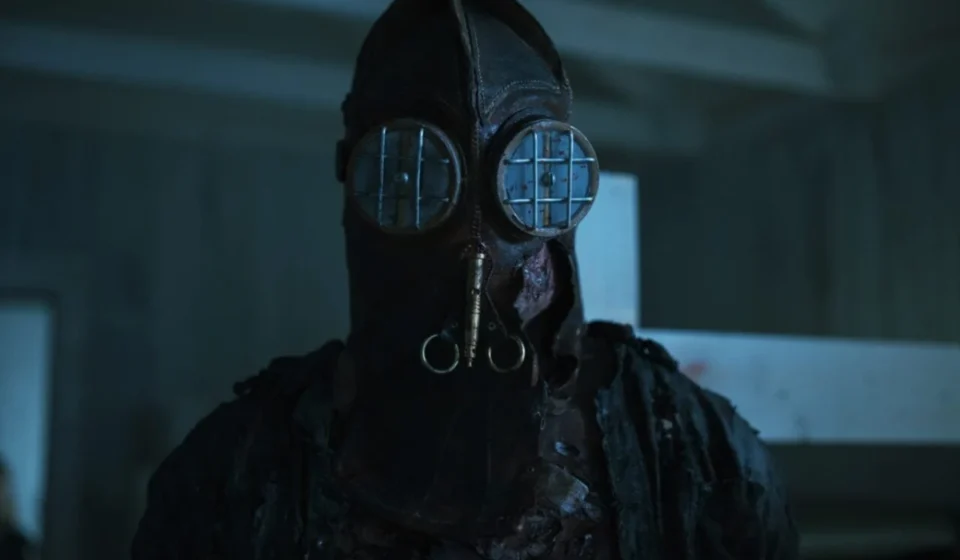
Once the whistle is blown, the film undergoes a tonal whiplash. The internal emotional struggle of Alex is abruptly discarded as Johnny (once again portrayed with physical intensity by Ry Barrett) enters the frame. From this point forward, the film discards character development in favor of what can only be described as an escalation of carnage. The practical effects team, clearly emboldened by a larger budget or a more ambitious mandate, delivers kill sequences that are arguably some of the most grotesque in modern cinema.
![‘In a Violent Nature 2’ Review: A Shocking Crowd Pleaser Chock Full of Guts [Fantastic Fest]](https://www.dreadcentral.com/wp-content/uploads/2026/02/PS-378-DUCK-AND-COVER-photo-by-D-scaled-e1789918851973.jpg)
Supporting Data: The Technical Proficiency of the Gore
While critics of the first film often cited its "boredom" as a flaw, Part 2 addresses these complaints with an aggressive, almost compensatory level of violence. The film’s practical effects are nothing short of masterful, drawing comparisons to the surreal, body-horror aesthetic of Clive Barker’s Hellraiser series.
- The Practical Effects Escalation: Unlike modern slashers that rely heavily on CGI, Part 2 doubles down on tactile, "wet" effects. Every dismemberment, impalement, and decapitation is rendered with surgical precision.
- The "Tableau" Aesthetic: The filmmakers treat death as an art form. Each kill is designed to leave the environment in a state of "horrendous beauty." The camp is slowly transformed from a pastoral retreat into a landscape of viscera.
- The Reversion to Pacing: Interestingly, in the final act, the film attempts to reintegrate the slower, long-take style of the first movie. However, this creates a clunky juxtaposition. The frantic energy of the first hour clashes with the deliberate, lingering shots of the final act, leaving the viewer to wonder if the creative team was conflicted about the film’s identity.
Official and Critical Perspectives
The consensus among those who attended the secret screening at Fantastic Fest is one of profound confusion followed by begrudging respect. The film acts as a "crowd-pleaser," a term that feels inherently at odds with the prestige-horror branding of the 2024 original.
"It’s a bizarre pivot," notes one industry observer. "It’s as if the filmmakers looked at the complaints regarding the first film’s slow pace and decided to create a sequel that is its exact antithesis, almost as a form of meta-commentary on what audiences think they want versus what they actually get."
The directors have yet to provide a definitive statement on whether this shift was a critique of the slasher subgenre or a genuine attempt to satisfy the mainstream horror demographic. However, the performance of Ry Barrett remains the anchor. Despite the shift in tone, Barrett’s portrayal of Johnny remains consistent—cold, unfeeling, and terrifyingly efficient.
Implications for the Future of the Franchise
What does this mean for the future of the In A Violent Nature brand?
- The Meta-Slasher Trap: By moving from experimental horror to a "paint-by-the-numbers" slasher, the series risks alienating the very audience that championed the first film. If the series continues in this direction, it may lose its status as an "art-house" staple and be relegated to the standard slasher heap.
- The "Crowd-Pleaser" Dilemma: The success of Part 2 will likely be measured by its box office returns and its effectiveness as a "scare machine." If it succeeds financially, the studio may demand further entries that prioritize gore over narrative experimentation, effectively killing the unique soul of the franchise.
- The Identity Crisis: The film feels like a struggle between two masters. It wants to be an intellectual deconstruction of the slasher, but it also wants to be the ultimate slasher itself. This internal friction, while interesting to analyze, makes for a disjointed viewing experience.
Final Thoughts
In A Violent Nature Part 2 is a film that demands to be seen, if only for the sheer audacity of its pivot. It takes a bold, if not entirely successful, swing at balancing the high-art sensibilities of the first film with the low-brow requirements of a franchise sequel.
Ultimately, the film succeeds as a spectacle but struggles as a successor. It provides the audience with what they ostensibly wanted—more violence, more speed, more "action"—but in doing so, it strips away the haunting silence that made Johnny’s first outing so memorable. Whether this was a calculated move to "psych out" the audience or a genuine shift in creative direction remains to be seen. What is clear, however, is that Johnny has officially evolved from a wandering, mournful specter into an industry-standard killing machine. For some, this will be a welcome evolution; for others, it is the death of a unique cinematic experiment.