Finding Grace in the Final Act: Isabel Coixet’s "Three Goodbyes" Explores the Human Legacy

Early in her distinguished career, Spanish filmmaker Isabel Coixet etched her name into the international cinematic consciousness with the poignant drama My Life Without Me. Featuring a breakout performance by Sarah Polley as a young mother grappling with a terminal cancer diagnosis, the film became a benchmark for intimate, emotionally resonant storytelling. Yet, for years, Coixet resisted the temptation to revisit the thematic territory of illness and mortality. When the opportunity arose to adapt Michela Murgia’s Italian bestseller, Tre Ciotole (Three Bowls), a semi-autobiographical collection of stories centered on a kidney cancer diagnosis, Coixet’s initial instinct was one of hesitation.
"After My Life Without Me, I was inundated with scripts—dozens of them—all centering on women with cancer," Coixet admits. "I didn’t want to repeat myself. I felt I had said what I needed to say on that subject."
However, persistent advocacy from Italian producer Riccardo Tozzi eventually led Coixet to engage with Murgia’s text. Upon reading the stories, her perspective shifted. She found in Murgia’s writing a profound truth: that even in the act of saying goodbye, there exists a unique grace, and even within the crushing weight of sorrow, there is necessary space for joy. The result of this creative convergence is Three Goodbyes, a film that recently held its world premiere at the Toronto International Film Festival and is slated for an Italian theatrical release on October 9 via Vision Distribution.
A Narrative of Connection and Withdrawal
At the heart of Three Goodbyes lies the fractured relationship between Marta (Alba Rohrwacher) and Antonio (Elio Germano). The narrative begins in the wake of a seemingly trivial argument that triggers an irreparable rift between the couple.
Marta, portrayed with haunting interiority by Rohrwacher—fresh off her performance in Pablo Larraín’s Maria—responds to the separation by retreating into a shell of isolation. Her physical manifestation of grief is a sudden, inexplicable loss of appetite. Conversely, Antonio, an ambitious rising chef played by Cannes-laureate Elio Germano (Our Life), attempts to bury his lingering feelings for Marta beneath the frantic pace of his professional life.
The story takes a seismic turn when Marta discovers that her symptoms are not merely psychosomatic, but rooted in a life-altering health crisis. Faced with the reality of time running out, the film shifts from a study of a breakup to a powerful meditation on how one confronts the inevitable with vital resolve.
A Legacy of Simple Truths
For Coixet, the film is less about the clinical realities of illness and more about the "human legacy"—the small, often overlooked ways we impact those around us. "The stories are very simple, but they contain something I always wanted to say," the director explains. "I wanted to create something about this sweet and human legacy that we experience with the people we love, and even with those with whom we’ve had only a simple, fleeting human exchange."
This sentiment is echoed by Alba Rohrwacher, who describes the film as a meeting of souls. "When I heard Isabel wanted to work with me, that was enough," Rohrwacher says. "I didn’t need to know the plot. After reading the script, I realized it was not a coincidence that Isabel was the one adapting Murgia’s work. They share an uncanny ability to peel back the layers of reality and offer a fresh, clear-headed perspective on what it means to be alive."
Chronology of a Creative Collaboration
The production of Three Goodbyes was marked by a deliberate, collaborative process that leaned heavily into the trust between director and cast.

- The Discovery: Following the success of Tre Ciotole in Italy, producer Riccardo Tozzi secured the rights, identifying Coixet as the ideal visionary to translate Murgia’s prose to the screen.
- The Casting: Coixet, having long admired Rohrwacher’s unique screen presence, tailored the role of Marta with the actress in mind before the script was even finalized.
- The Chemistry: Rohrwacher and Elio Germano, who first worked together in the acclaimed My Brother Is an Only Child, brought a shorthand to the set that allowed for improvisation. "We go beyond the written page," Rohrwacher notes.
- The Premiere: After an intensive filming schedule in Rome, the film reached its global debut at the Toronto International Film Festival, garnering critical attention for its delicate handling of Murgia’s legacy.
The Specificity of Symbols: K-Pop and Culinary Identity
One of the most striking elements of the film is its inclusion of an obsession with K-Pop, specifically a cardboard cutout of a fictional idol named Jirko. In the context of Murgia’s life, this was an authentic passion, and Coixet felt it was essential to preserve it.
"I am not a K-Pop expert," Coixet confesses with a laugh. "But it was Michela’s obsession. In the film, the cutout represents Marta’s profound loneliness. It becomes her alter ego—the only entity to whom she can speak with total honesty while she struggles to communicate her reality to her sister or colleagues."
Furthermore, food serves as a critical thematic anchor. For Coixet, culinary choices are not merely backdrop; they are character studies. "Food says everything about us," she explains. "What we eat, what we refuse to eat, how we prepare it—these are manifestations of our internal state. When Marta eats crackers and ketchup, it is an act of self-punishment. But the ice cream scene? That is an act of defiance and joy. I believe in ice cream."
Rome as a Character
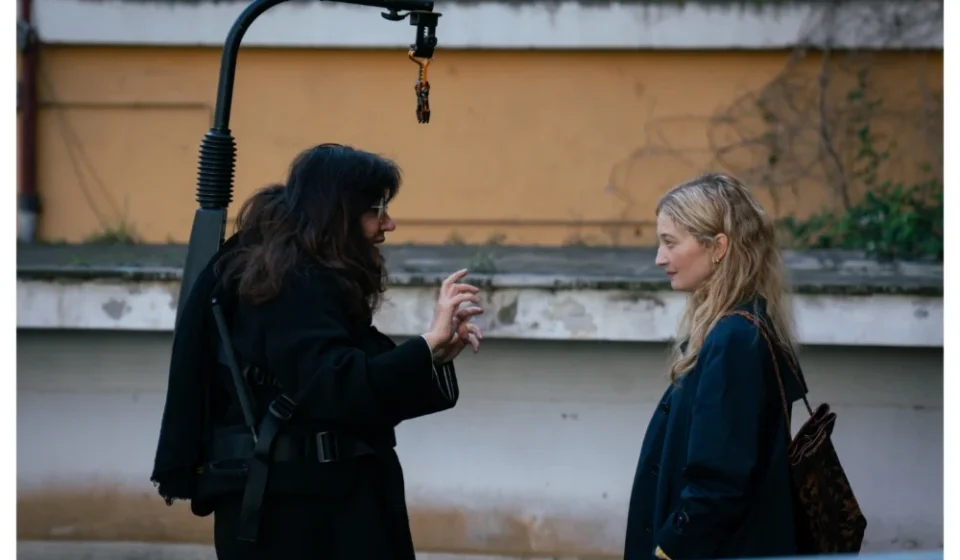
Three Goodbyes marks Coixet’s first production shot entirely in the Italian capital. The director was acutely aware of the "postcard trap" often associated with Rome, choosing instead to focus on the textures and tones of the city. By filming in neighborhoods like Pigneto, Testaccio, and Trastevere, she aimed to capture a lived-in, authentic atmosphere.
"Rome has a thousand different tones of orange in its walls," Coixet observes. "Alba’s suggestion to include a line about the ‘Madonnas looking down from above’ perfectly captured the city’s omnipresent sense of history. I think I had been preparing my entire life to make a film in this city."
Implications and Reflections
As Three Goodbyes prepares for its October 9 release, its impact is already being measured by the dialogue it fosters regarding end-of-life care and the nature of grief. By avoiding the melodramatic tropes typically associated with terminal illness films, Coixet and her cast have crafted a work that prioritizes the complexity of human connection.
The collaboration between Coixet, Rohrwacher, and Germano highlights the value of artistic freedom. As the director notes, while the script provides the foundation, the moments of "truth and freedom" that occur between actors often define the final product. "When things happen on set that are full of life and truth, I am the first one to say, ‘Andiamo’—let’s go," says Coixet.
In the final assessment, Three Goodbyes stands as a tribute to Michela Murgia’s voice, filtered through the lens of a director who has finally made peace with the subject matter that defined her early career. It is a film that reminds audiences that while death may be an ending, the legacy of our interactions, our loves, and even our trivial obsessions, persists in the stories we leave behind. Through the lens of Rome, the nuance of a shared meal, and the quiet dignity of its protagonists, Three Goodbyes invites viewers to find the grace that lingers in the wake of loss.