
The Invisible Architecture of Spectacle: How ‘Spider-Man: Brand New Day’ Rebuilt New York City in Scotland

In the landscape of modern blockbuster filmmaking, visual effects (VFX) are often synonymous with explosions, super-powered battles, and sprawling digital vistas. Yet, the most significant technical achievement in Spider-Man: Brand New Day—the record-shattering film that recently surpassed Star Wars: The Force Awakens as the highest-grossing domestic release in history—is not a spectacle of destruction. It is, paradoxically, the art of being invisible.
Behind the high-octane sequences featuring Tom Holland’s Peter Parker battling a rampaging Hulk and navigating the machinations of The Hand lies a Herculean effort to synthesize two disparate worlds: the streets of Glasgow, Scotland, and the iconic, bustling urban fabric of New York City. Through the work of Sony Pictures Imageworks, led by VFX supervisor Chris Waegner, the production team achieved a level of digital environmental mastery that sets a new industry benchmark for immersion.
The Mandate of Realism: The Glasgow-to-New York Pipeline
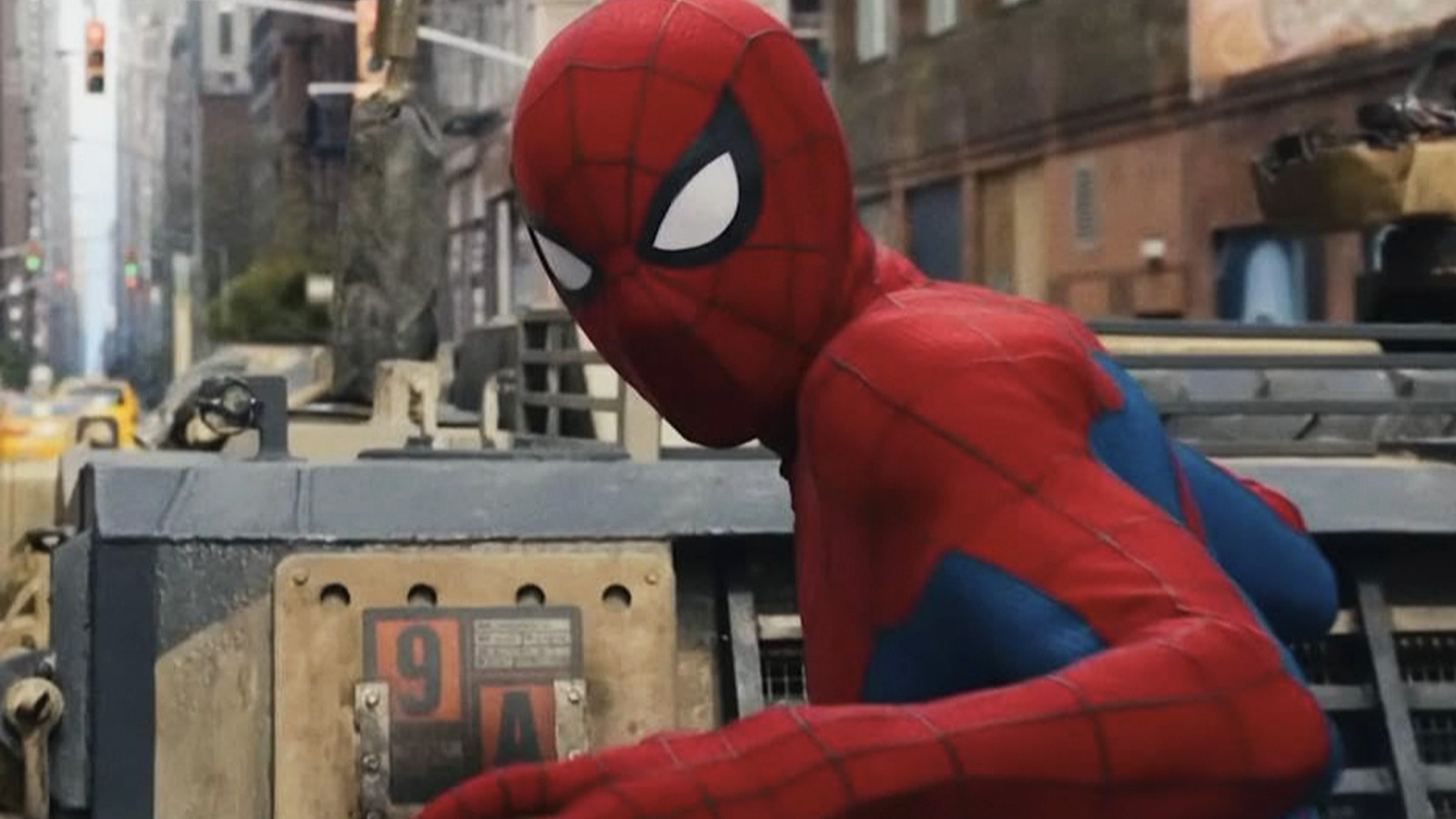
The primary challenge facing the production team was rooted in logistics. Director Destin Daniel Cretton required a specific aesthetic for the film’s opening tank chase—an sequence characterized by rapid movement, shifting lighting, and urban density. While Glasgow offered the necessary infrastructure for the physical stunts, it could not replicate the specific "Big Apple" vernacular required by the narrative.
As Chris Waegner explained in an exclusive discussion, the team could not simply apply a "New York filter" to the Scottish footage. "There’s only so much they can really do to physically augment the streets of Glasgow to look like New York City," Waegner noted. The resulting process required a total digital reconstruction of the environment.
A Chronology of Digital Construction
The process began in pre-production, where storyboards dictated the flow of action. However, once the cameras rolled in Scotland, the reality of location shooting clashed with the requirements of a seamless cinematic experience.
- Editorial Assembly: Following the shoot, the editorial team reassembled the sequence from various streets and disparate shots.
- Environmental Normalization: The VFX team was then tasked with unifying the footage. This involved reconciling inconsistent weather, cloud cover, and time-of-day shifts across the sequence. If one street was filmed in overcast conditions while the connecting shot was sunny, the VFX team had to manually re-light and re-texture the entire environment.
- Architectural Overhaul: Perhaps the most arduous task was the "building replacement" phase. Because Glasgow’s architecture differs fundamentally from New York’s, the team replaced significant portions of the background with a library of digital assets—meticulously modeled skyscrapers, brownstones, and office complexes—to ensure the skyline and street-level facades felt authentically American.
Supporting Data: The Scale of the "Brand New Day" VFX
To understand the sheer magnitude of the work, one must look at the technical requirements. Waegner’s team utilized "billions and billions of polygons" to construct a fully digital, interactive version of New York City. This was not a static backdrop; it was a living, breathing simulated environment.
- Asset Density: The digital environment included simulated river water, volumetric steam rising from rooftops, and thousands of independent digital pedestrians and vehicles.
- Volumetric Consistency: For the nearly 500 shots involving this digital NYC, the team had to account for atmospheric conditions, including light scattering through fog and rain.
- Evolutionary Leap: When compared to the work completed on Spider-Man: Homecoming roughly a decade ago, Waegner categorizes the Brand New Day pipeline as a "huge step forward." The ability to map cameras to tracked streets and integrate digital buildings into live-action plates at this scale represents a significant evolution in compositing technology.
Cultural Specificity: The Details That Sell the Illusion
The "uncanny valley" is often avoided not by perfecting the big movements, but by mastering the micro-details. Waegner emphasized that audience immersion is fragile; if a viewer notices a single element that feels "off," the illusion of the film collapses.
The "Street-Level" Audit
The VFX team conducted what could be described as a cultural audit of the film’s street scenes. To transform Glasgow into New York, the artists had to replace:
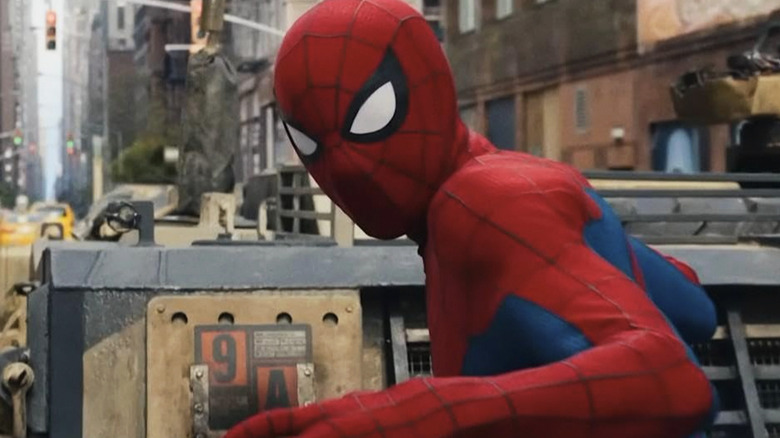
- Signage: Changing everything from traffic light layouts to window advertisements for "New York style pizza," which are distinctively non-Glasgow.
- Urban Infrastructure: Replacing mailboxes, garbage cans, dumpsters, and construction barricades with their US counterparts.
- The Bus Problem: In a classic example of "cascading consequences," a recurring bus that disappeared in the editorial cut forced the team to build a fully digital, populated replacement vehicle to maintain visual continuity.
The most subtle, yet critical, element mentioned by Waegner was the management of reflections. When a digital building is inserted into a shot, its window reflections must accurately mirror the environment of the live-action plate. Failure to match these reflections would create a "ghosting" effect that the human brain would register as unnatural, even if the viewer could not pinpoint the cause.
The "House of Cards" Effect: Layering Reality
The effort to achieve realism created a "house of cards" dynamic for the artists. The process of adding a digital asset—such as a fire escape—rarely ended with the object itself.
"You start adding bicycles, you start adding clothes, you start adding plants," Waegner noted. "The visual layering that needs to be done to make it believable is intense." To satisfy the vision of director Destin Daniel Cretton and VFX supervisor Jerome Chen, the buildings could not look pristine. They required "staining," ivy, and signs of decay to match the gritty tone of the film.
This eventually extended to foliage. Adding trees meant adding movement—the leaves had to sway in the wind in a way that felt consistent with the ambient air pressure of the scene. By the time a shot was finalized, it contained layers upon layers of digital augmentation that the average viewer would never consciously register, yet which collectively provide the "texture" of reality.

Implications for the Future of VFX
The success of Spider-Man: Brand New Day carries significant implications for the future of the blockbuster format.
The Democratization of Location
First, it proves that location shooting, while still vital for actor performance and physical interaction, is becoming increasingly decoupled from the "look" of the film. Filmmakers can prioritize locations that offer logistical advantages (like tax incentives or ease of access in Scotland) while retaining the creative freedom to set those stories anywhere in the world.
The Rise of "Invisible VFX"
Furthermore, the industry is moving toward a model where "invisible" VFX are becoming as valuable as the "hero" effects. While audiences often flock to see digital monsters or space battles, the critical acclaim and box-office dominance of Brand New Day suggest that the audience’s subconscious appetite for high-fidelity, grounded environments is higher than ever.
As Chris Waegner concludes, the work done by his team was not meant to be a showcase of technology, but a testament to the effort required to keep the audience inside the story. "Next time you give Spider-Man: Brand New Day a spin," Waegner suggests, "watch it with an extra appreciation for the unsung heroes… the teams of artists who toiled away on these tiny details to make sure we all were sucked into the action and never taken out of the story."
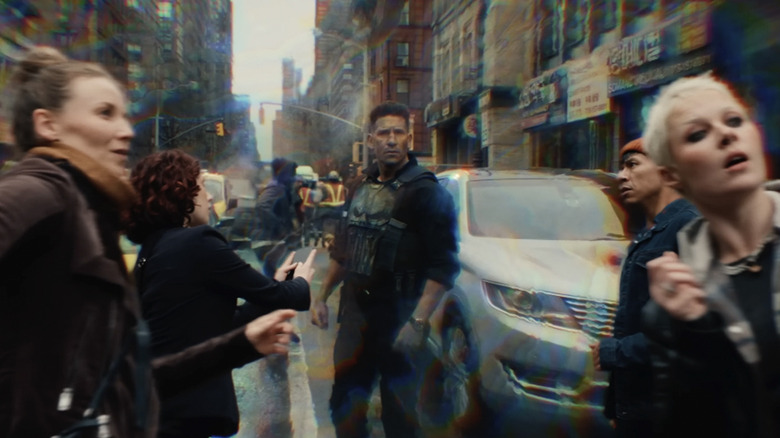
In an era where audiences are increasingly savvy about digital trickery, Brand New Day stands as a reminder that the most impressive visual effect is the one that convinces the viewer they are looking at something real, even when they are staring at a digital reconstruction built from millions of polygons and painstaking, frame-by-frame attention to detail.